
From Snow Peaks to Warm Smiles — My Days in the Himalaya
This journey to Himachal was not just a trip, but a collection of beautiful memories I will cherish for a lifetime.

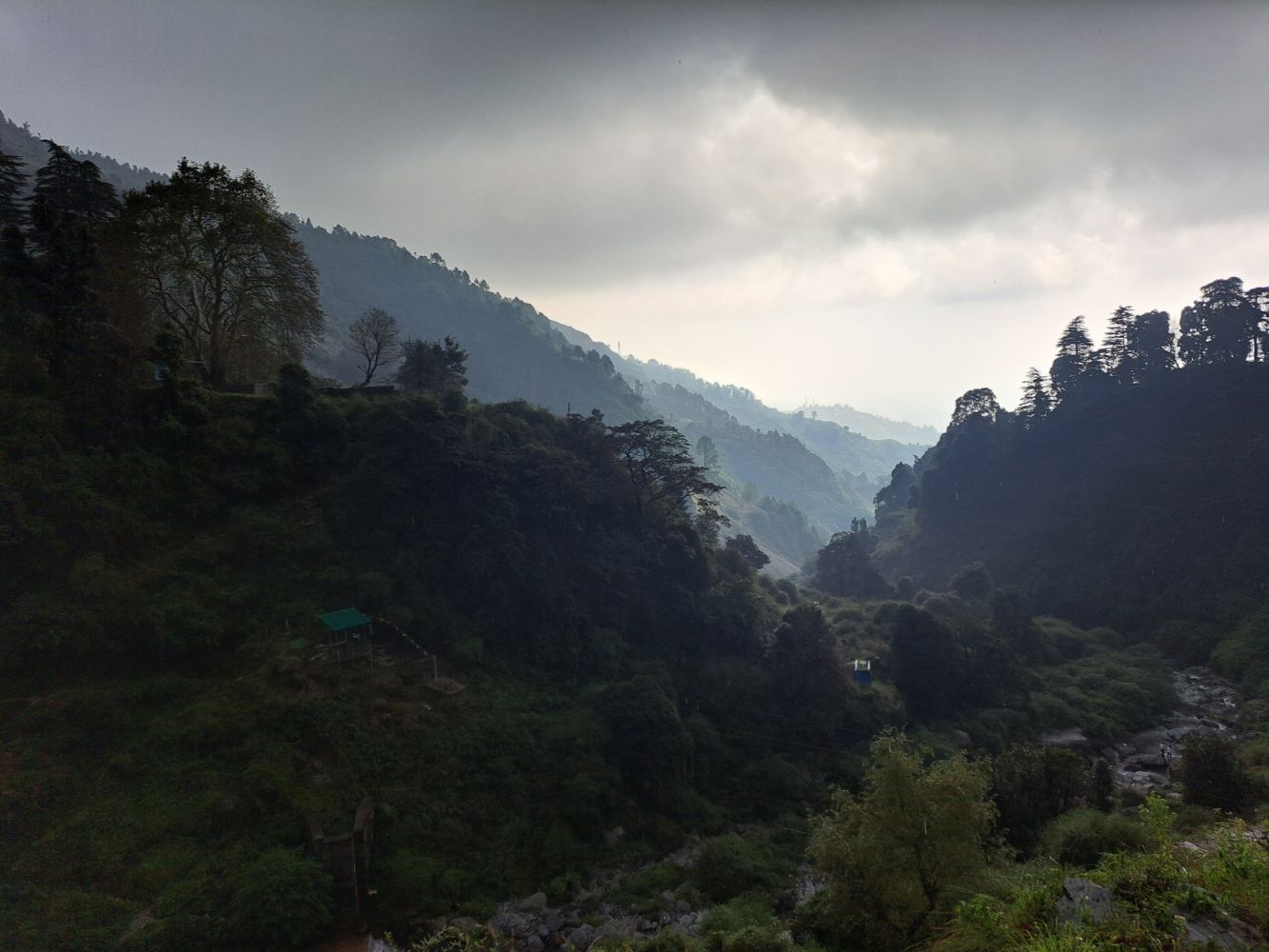
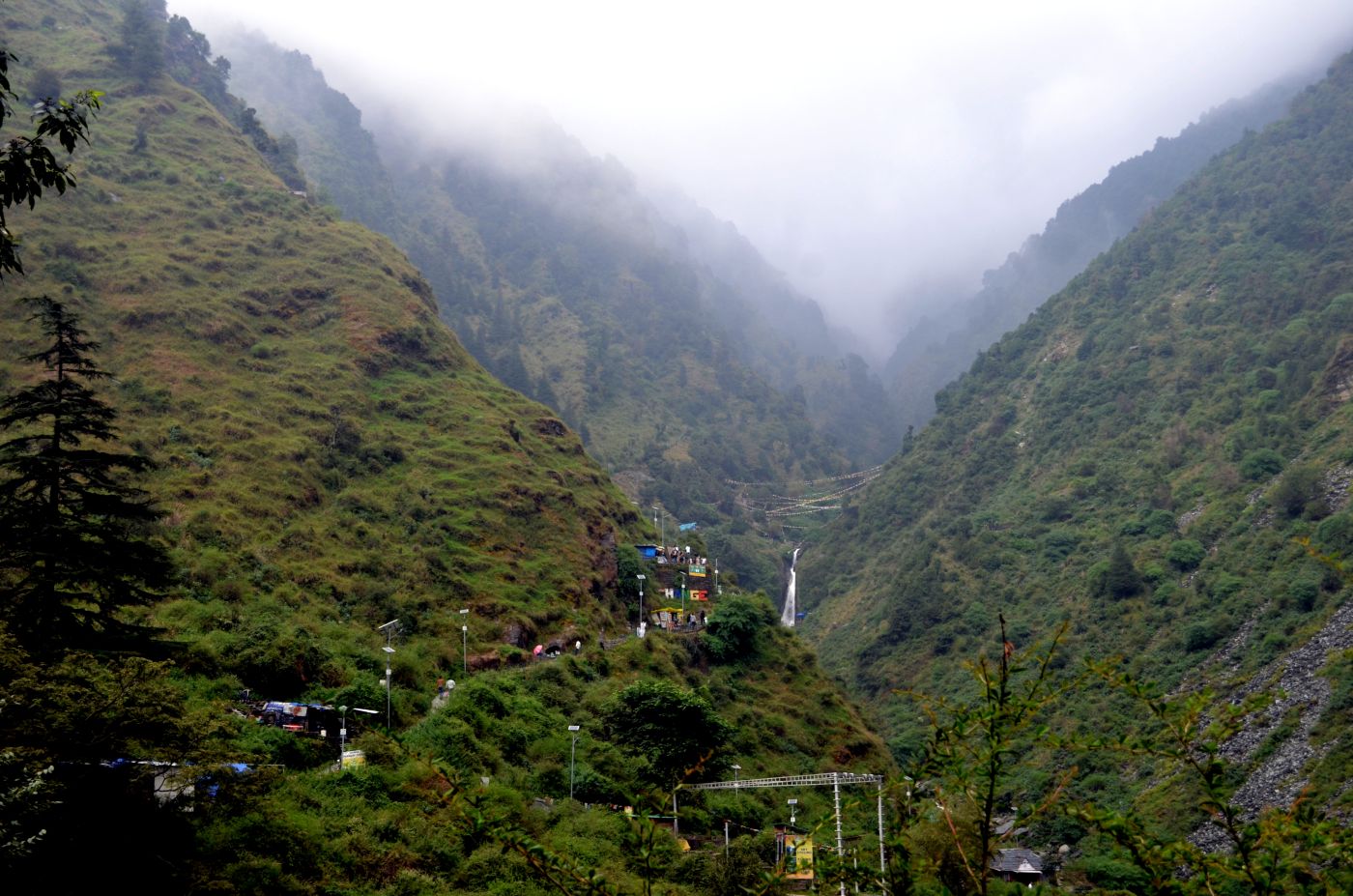
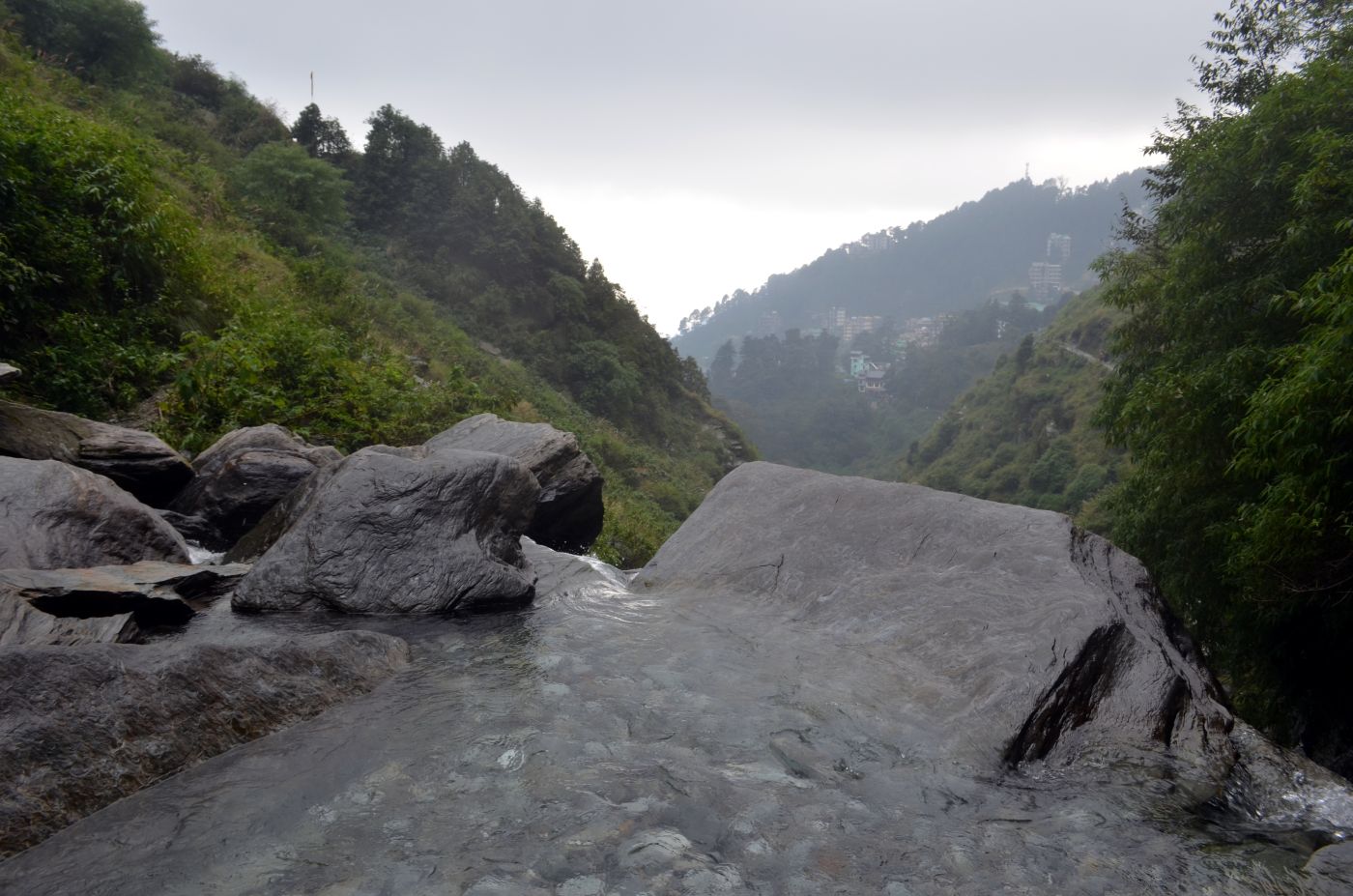
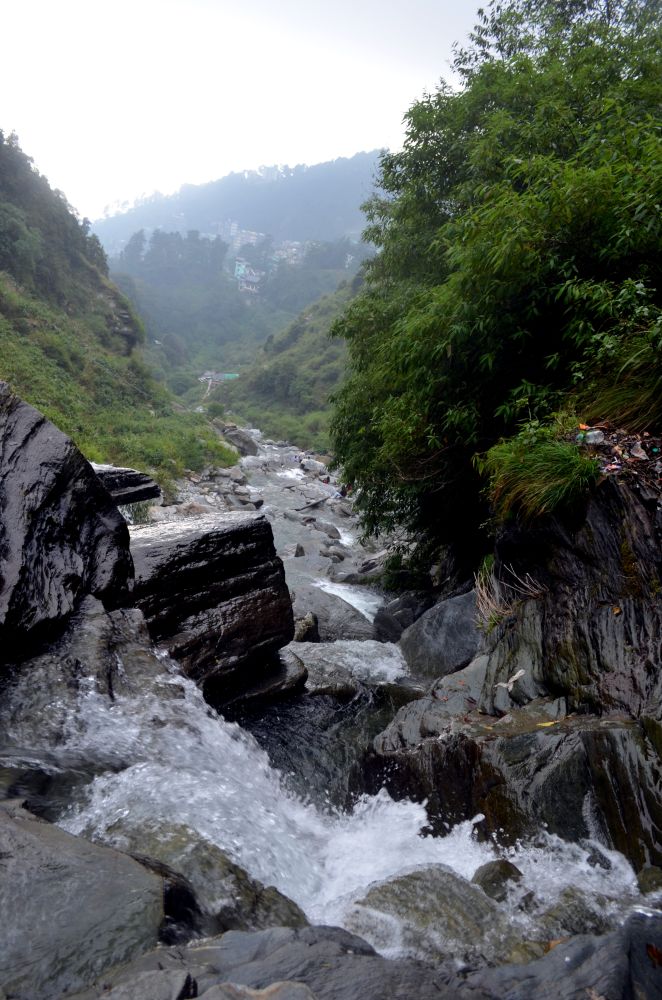

This journey to the Himalayas was completely different from our usual tours. We went for my cousin’s wedding, held in Bilaspur, a small town in Himachal Pradesh resting on the banks of the serene Govind Sagar Lake, and also visited a small village named Naddi, near McLeod Ganj, nestled in the lap of the Dhauladhar Range. What began as a family occasion slowly turned into a discovery of what India truly offers to the world — from the serene landscapes that soothe the eyes to the warmth, humility, and simplicity of the people that gently nurture the heart.
We experienced traditions, cuisines, and customs that beautifully create a strong sense of community and bring people closer. The locals nurture their roots with pride, yet they embrace other cultures with open hearts.
It was a 9-day travel plan, of which the first four days were spent enjoying the wedding in Bilaspur, along with half-days of local sightseeing. We began our journey from Bangalore and caught a flight to Chandigarh at 1:30 PM. The flight took around three hours. Once we reached Chandigarh, a prebooked cab from Make My Trip was waiting for us at the airport. We began our onward journey from the airport around 5 PM. Feeling hungry, we wanted to stop at a restaurant. Our cab driver suggested one that was a bit far—about an hour and a half from Bilaspur. The restaurant and food were both good. We had initially planned to have light snacks, but after 9 hours of travel, the tasty Gobi paratha turned out to be much more satisfying than we expected. We finally reached Bilaspur around 8:30 PM.

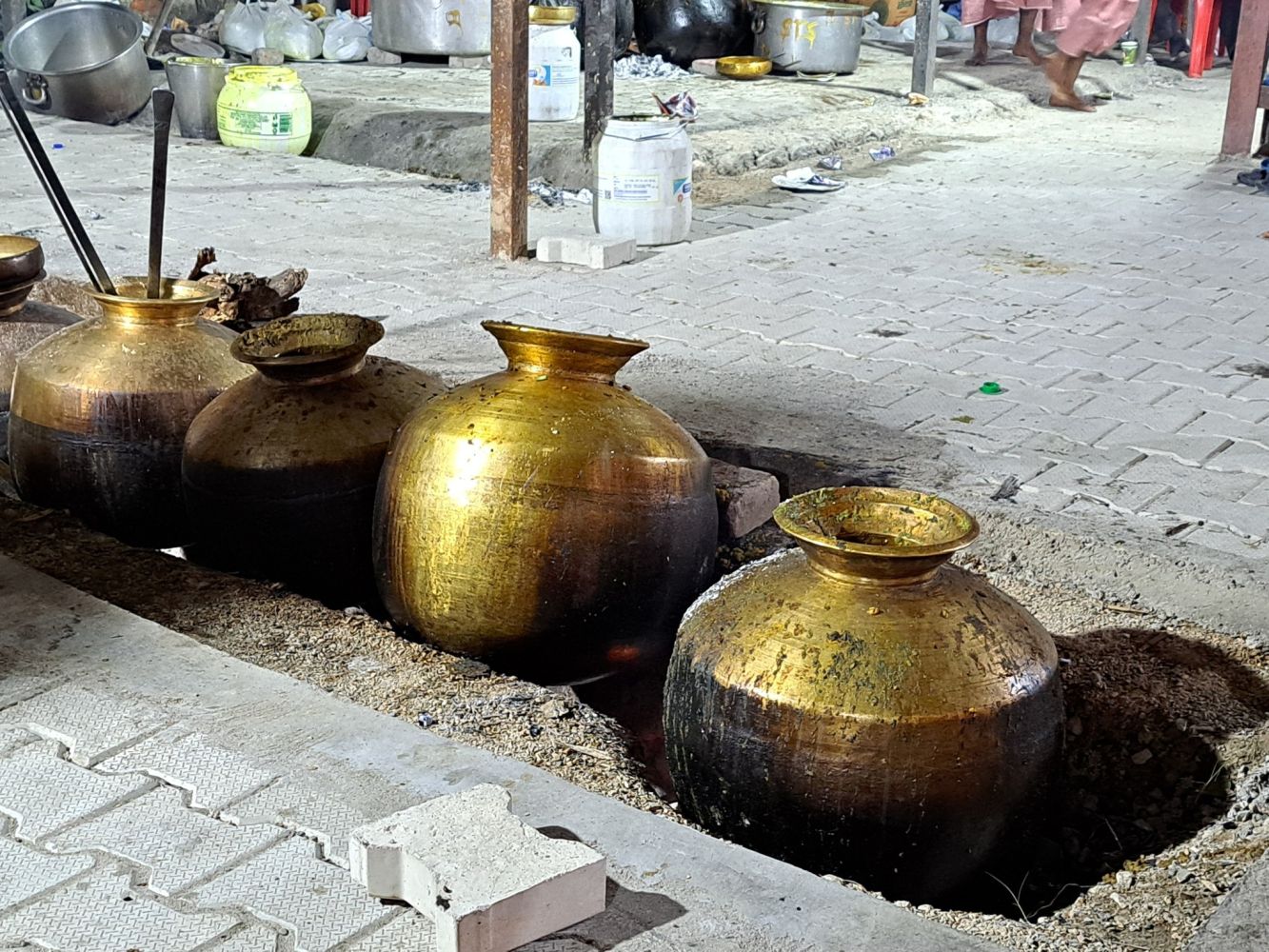
We were introduced to a mini ‘Dhaam’, a traditional Himachali feast, at dinner. Dhaam is served during festivals, weddings, and other special occasions. It is a purely vegetarian meal, cooked without onion and garlic, traditionally prepared by Botis (hereditary Brahmin cooks) and served on pattal (leaf plates).
Generally, Dhaam includes Dham Rice, White Kidney Beans Madra, Chana Madra, pulses curry, Sepu, chutneys, and a sweet dish at the end. It is rich in ghee and subtle spices, with ghee being the signature element of Himachali Dhaam.
This was a mini Dhaam, containing three items, but it was very tasty, and we all thoroughly enjoyed the dinner. After the long day of travel, we went straight to bed once the meal was over.
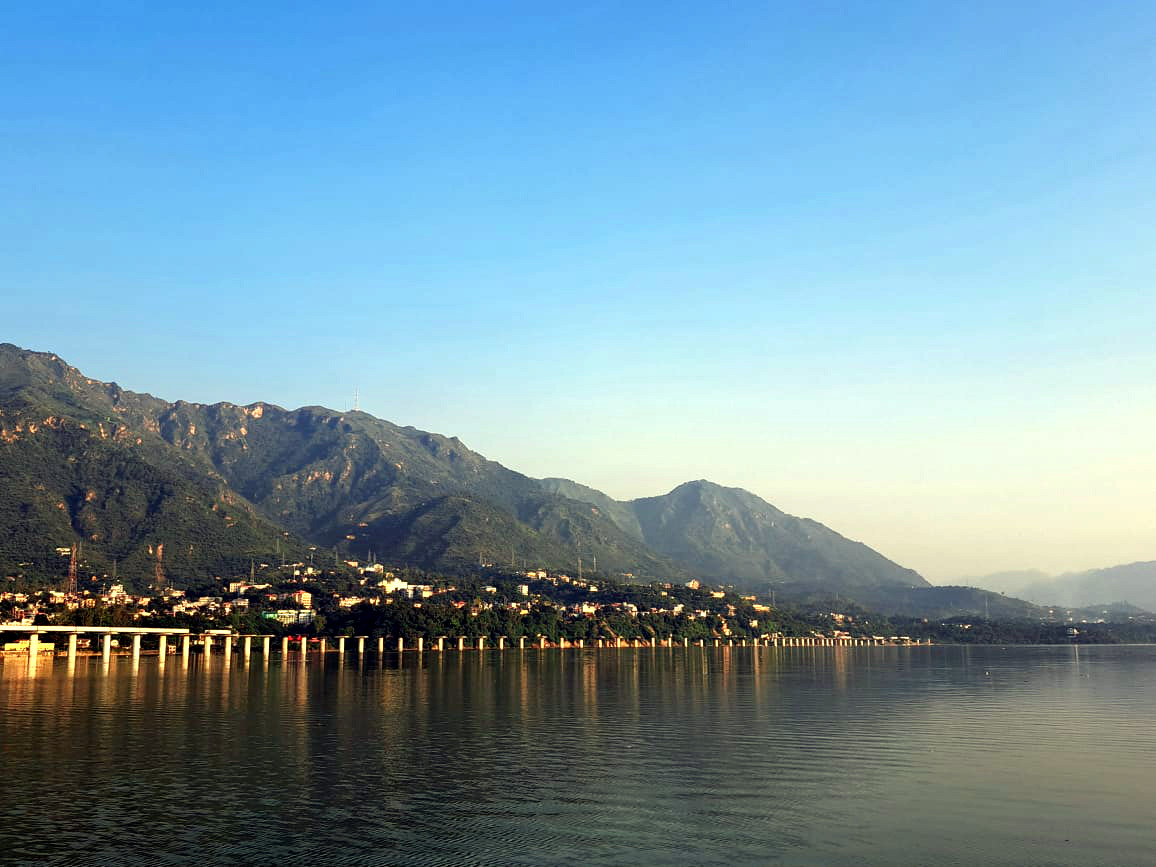
We stayed at the Himachal Pradesh Tourism Hotel, located on the banks of the serene Govind Sagar Lake in Bilaspur. The lake, a vast reservoir formed by the Bhakra Dam on the Sutlej River, stretches gracefully across the Bilaspur district. The old town of Bilaspur once stood along the Sutlej River but was eventually submerged when the Bhakra Dam was built, giving rise to the vast Govind Sagar Lake.

When India dreamed of progress in the early years of freedom, the Bhakra Nangal Dam became a symbol of national pride, a project that promised light, irrigation, and growth for millions. Yet, that light came at a cost. The people of Bilaspur surrendered their land, their homes, and their roots so that the nation could rise.
When we talk about the Partition of India — in Punjab and Bengal, it’s not just about losing ancestral homes, but about losing an emotional connection to one’s land, community, and people. It was a sacrifice made for the sake of decisions taken in the name of the country’s betterment. At least in that tragedy, people were remembered, their loss acknowledged, their pain shared. But the people of Bilaspur experienced a quieter, lesser-known loss.
Bilaspur was once a beautiful historic town in Himachal Pradesh, nestled on the banks of the Sutlej River. It was the capital of the princely state of Bilaspur, one of the oldest hill states in India. As the dam filled up, the rising waters of Govind Sagar Lake, the reservoir created behind the dam, completely submerged the old Bilaspur town, including its houses, markets, ancient temples, palaces, and heritage buildings. The residents were relocated to a newly planned settlement, New Bilaspur, built on higher ground.
Locals still recall “Purana Bilaspur” (Old Bilaspur) with nostalgia and sadness, streets where people once walked, temples where bells once rang, and homes filled with laughter now lie silent under the depths. As I stood by the calm, peaceful, and endless stretch of Govind Sagar Lake, it was hard to imagine that beneath its serene surface rests a story that India rarely tells, but one that deserves to be remembered.
I was eagerly waiting for the morning light to appear so I could see the lake from the balcony at the back of our hotel. Wherever I travel, I’m always excited to witness the morning of a new place — it’s something I truly look forward to.
Half-asleep, I suddenly noticed some light outside and thought it was already dawn. I quickly pulled the curtain aside, only to find it was still dark. A glance at the clock revealed it was just 2:30 AM. Finally, I woke up properly at 6:30 AM and rushed to the balcony to see the lake. But to my surprise, it was completely covered in fog. I stepped outside and spent some quiet time soaking in the cool air and the calm silence of the morning.
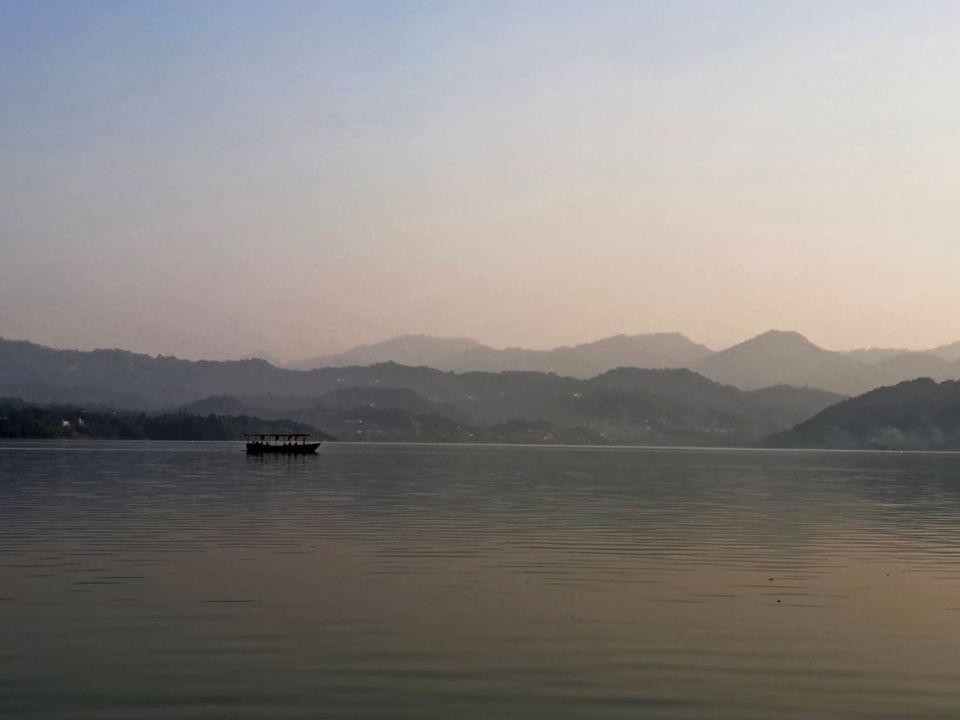
The wedding rituals started in the morning. Around 10 o’clock, Govind Sagar Lake and the hills on the opposite side became clearly visible. We went to the groom’s house to perform a ritual, where we were warmly welcomed by everyone. It was heartwarming to see their openness in embracing other traditions and cultures. We enjoyed a delicious lunch at their home.
We had a ritual to be performed near a waterbody invthe evening after it becomes dark. So, in Bilaspur, we went to Govind Sagar Lake for this ritual. We couldn’t find any cemented bank along the lake, only a quiet slope leading down through the darkness. We used our mobile torches at night to climb down the hill and reach the ghat. A well-designed cemented ghat and a small park along the banks of Govind Sagar Lake would greatly enhance the charm and accessibility of this beautiful spot.
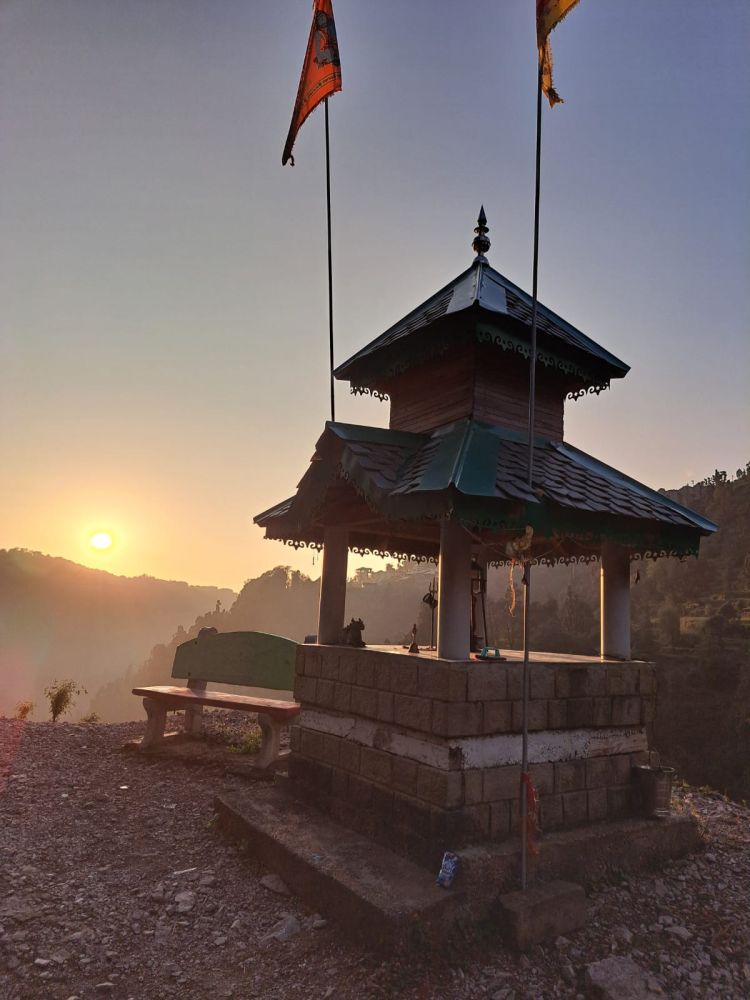
On the morning of the wedding, a group of our relatives, including the bride’s mother, set out for a walk. It was the fifth day of Durga Puja, and the celebrations were in full swing at the Baba Nahar Singh Bajiya Ji Temple.
The temple holds a story that every local knows by heart. When Raja Deep Chand of the princely state of Bilaspur married the Princess of Kullu, Rani Kumkum Devi, and brought her to Bilaspur (then called Bikaspur), the queen began experiencing mysterious fainting spells. The royal priests discovered that the local deity of Kullu, Baba Nahar Singh Ji, had accompanied the princess and wished to be ritually honoured in his new home. Realizing the divine will, Raja Deep Chand ordered a shrine to be built on the sacred banks of the Sutlej River, thus establishing the revered Baba Nahar Singh Ji Temple.
As we reached the temple that morning, the air was filled with the sound of drums and conch shells from the Durga Puja rituals. A priest from Kolkata, who had come especially for the festival, welcomed us warmly and shared his experience of conducting the puja here amidst the hills of Himachal.

We walked to the back side of the temple and saw the beautiful view of Govind Sagar Lake with green hills standing quietly behind it. After a few quiet moments by the lake, we turned back and walked back to the hotel along the side of the hill, with greenery all around.
We walked through the fresh morning air, surrounded by greenery, and once back, sat together for a hot cup of tea. Soon after, the wedding rituals started, filling the entire day and night with joy.
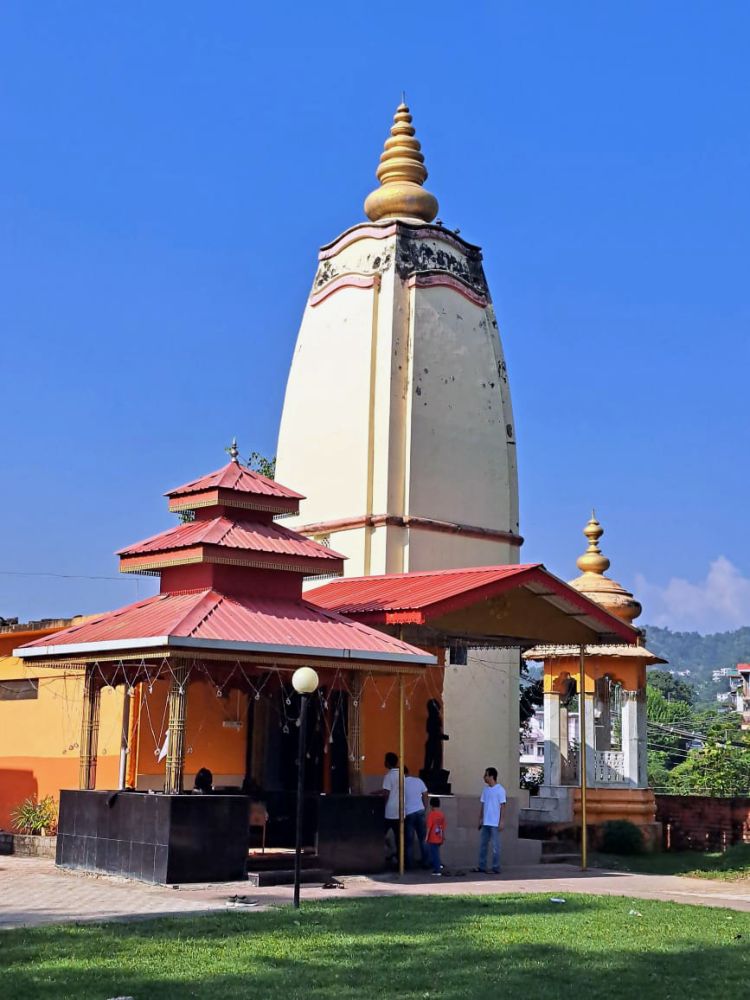
The next day, we, the relatives of the bride, arranged a short tour of Bilaspur by Toto. Our first stop was the Laxmi Narayan Temple, which we visited before lunch. This temple was originally part of the old Bilaspur city. After the construction of the Bhakra Dam, when the original site was submerged under the waters of Govind Sagar Lake, the temple was re-established in the heart of the city.
Built in the Shikhara style of architecture, the temple has a spacious courtyard that adds to its serenity. We spent some quiet moments there, and my son was introduced to Lord Shiva in the calm surroundings.
While deciding where to have lunch, one of my cousins asked the Toto driver for a suggestion. He recommended a dhaba famous for its mutton dishes. However, I chose a restaurant just opposite the dhaba, where I had Siddu—a traditional Himachali steamed bread made from wheat flour and filled with lentils, dry fruits, and spices. It is usually served hot with ghee or chutney and is quite popular in the Kullu–Manali region. Tasting it felt like enjoying a true local flavour of Himachal.
Later, we visited Govind Sagar Lake. We had no initial plan to go boating, but suddenly everyone agreed to take a one-hour boat ride. Being on the boat felt different. The lake was beautiful, yet there was a parallel feeling of destruction, as old Bilaspur lay submerged beneath the water. As we reached the middle of the lake, we truly realized its vastness. The picturesque view of the lake surrounded by hills brought a deep sense of calm to the mindin front of the vast nature. As the sun began to set, the vast waters of the reservoir reflected the colours of the sky.

Even as I was enjoying the beauty of the lake, I had a parallel realization. The waters of Govind Sagar reflect not only the sky but also the memories of a town that once existed here. Beneath the calm surface lie the streets, temples, and homes of old Bilaspur, along with the lives and stories of a community that made a great sacrifice for the nation’s future. Even today, locals remember “Purana Bilaspur” with a mix of nostalgia and sadness.
After returning to the hotel, we got ready for the groom’s side reception and the much-awaited Himachali Dham. The groom’s uncle beautifully explained the significance of Dhaam, how it is prepared, and how the entire community sits together on the floor to eat. Experiencing Dhaam in this traditional way made it even more special. Among all the dishes, we loved Sepu Bori so much that the groom thoughtfully bought several ready-made packets for us before we left Bilaspur.
The next morning, after breakfast around 10 a.m., we started our journey to Naddi, a small village nestled in the lap of the Dhauladhar range, about 3 km from McLeod Ganj and 7 km from Dharamshala. We stopped for lunch at a small dhaba after Hamirpur, as my son was hungry. The dhaba was very small, with only two or three seating arrangements, and my first thought was about how the food would be. After placing our order, I watched as the person prepared everything fresh and in a very clean manner. By the time we finished our meal, we were completely satisfied—the food was fresh, delicious, and had a comforting, homely taste.

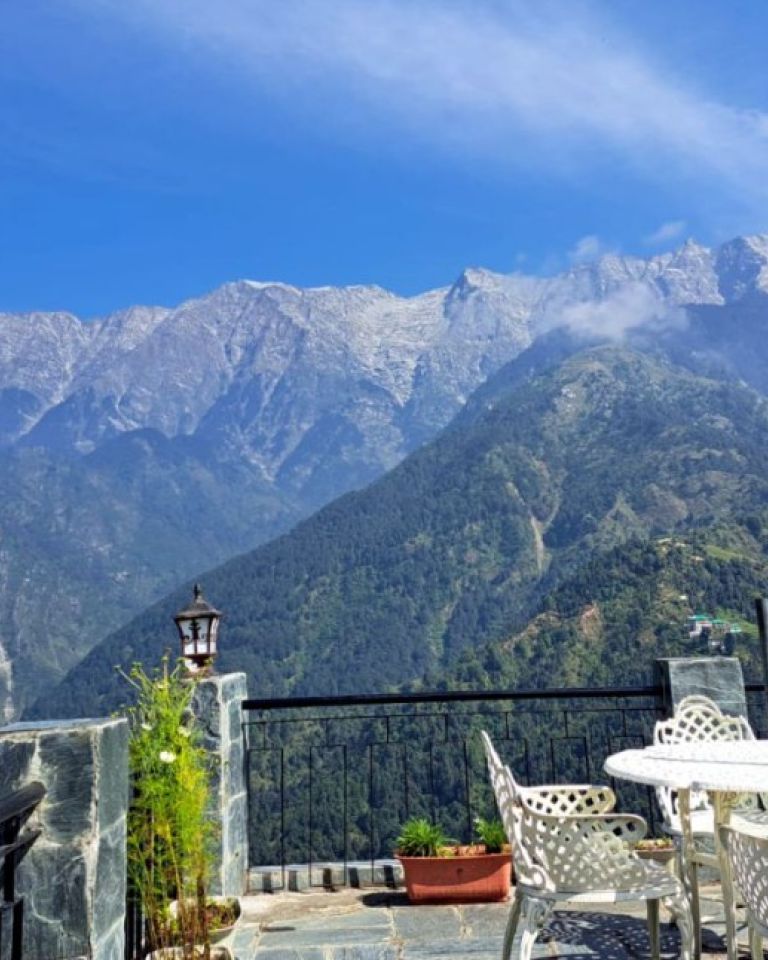
We finally reached Naddi around 4 o’clock. We checked into the same hotel, Udechee Huts, where we had stayed for a night back in 2018. The hotel itself is located at Naddi View Point, which is a tourist spot known for its panoramic views of the snow-covered Dhauladhar range—in fact, the view from the hotel felt even more expansive than the viewpoint itself.
The staff welcomed us with a refreshing glass of rhododendron juice, and within minutes, we felt as though we had arrived at a Himachali home. All the formalities were completed smoothly and without any fuss.

The room was beautifully designed. The floor tiles reflected Rajasthani craftsmanship, while the cot and divan had the elegance of traditional Rajasthani royal furniture. Later, we learned that the owner of the hotel, Mr. Yaduraj, belongs to a royal family, and his mother is from the royal family of Rajasthan.
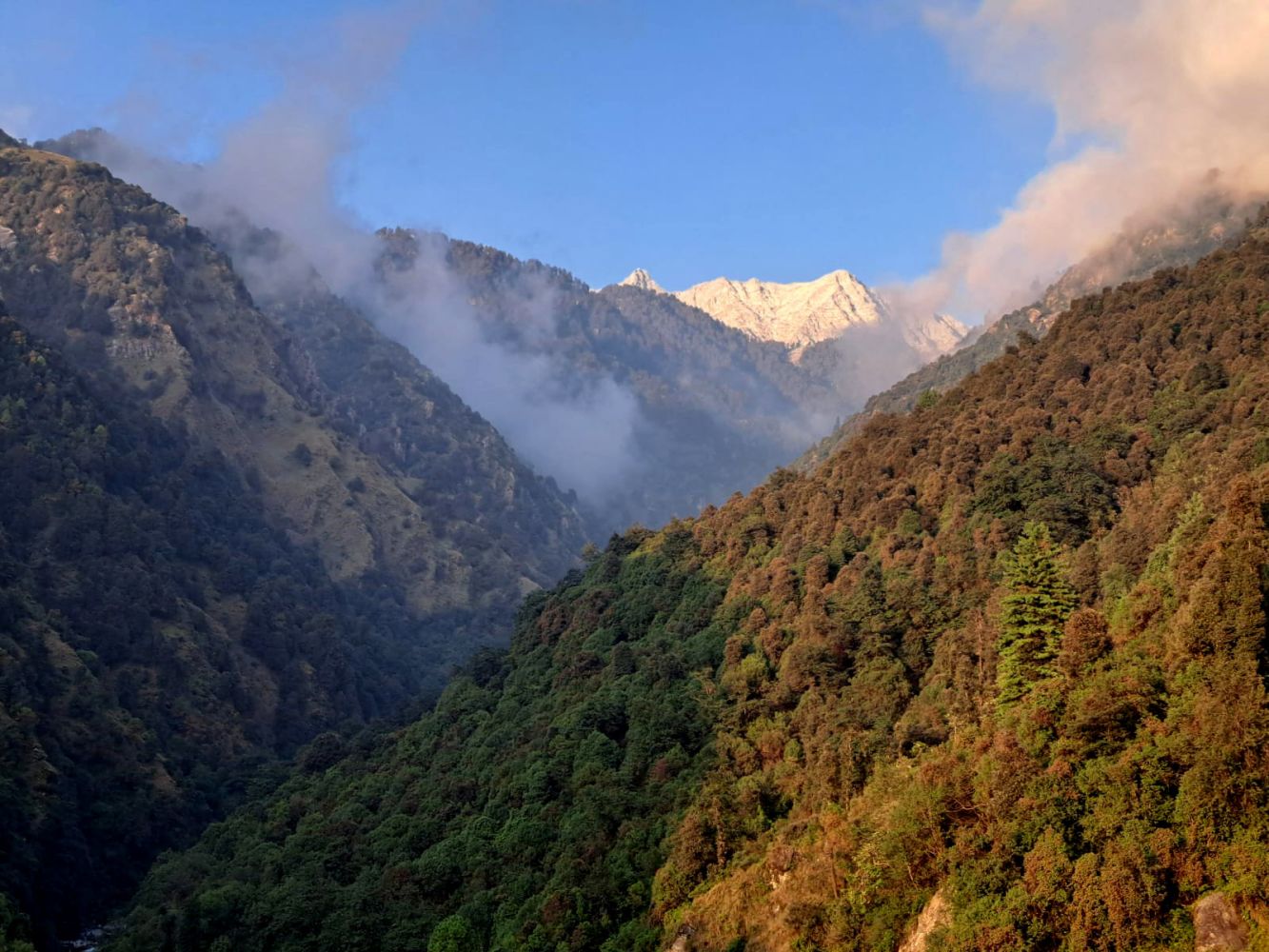
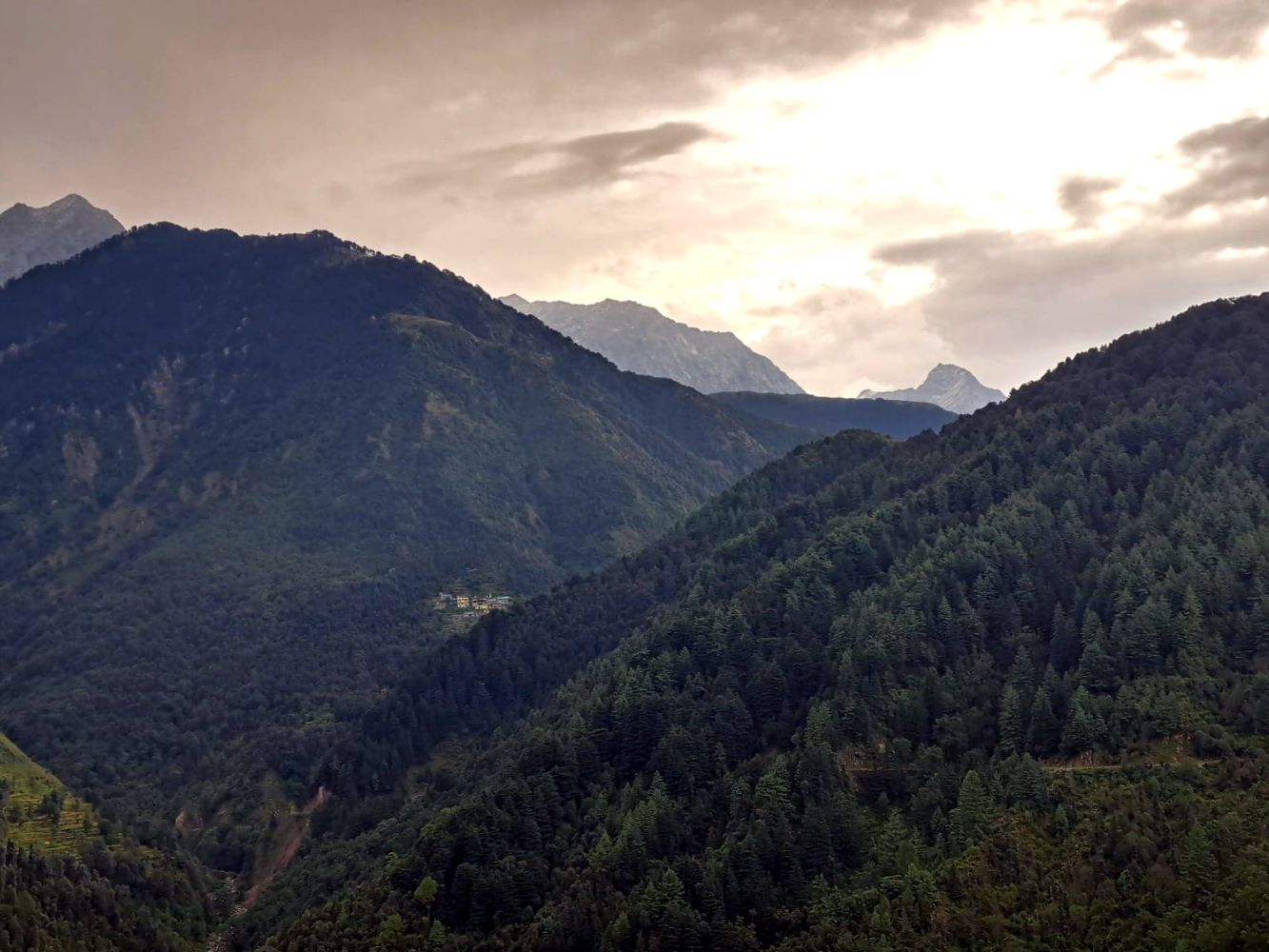
The most beautiful part of the room was the balcony, which offered a breathtaking view of the Dhauladhar range, almost at a touching distance. Standing there, looking at the sheer size and grandeur of the mountains, one truly understands why the Himalayas are regarded as the king of mountains.
In the evening, we ordered tea in our room and enjoyed it with the snacks that the groom’s mother had lovingly given to all the families from the bride’s side. We also placed our dinner order in advance. The staff informed us that they would call once the food was ready.
When we went to the dining room after receiving the call, we noticed the owner’s passion displayed through the beautiful wildlife photographs hanging on the walls. He is, in fact, a wildlife photographer, and his love for nature was clearly visible in every frame.
Since I usually drink a lot of water, I asked for extra mineral water. The staff politely informed us that they do not serve bottled water, but instead provide UV and RO purified drinking water. As I needed around four litres, they thoughtfully gave us a portable water container with a capacity of ten litres, which I found quite impressive.
That night, I slept peacefully, though with a quiet excitement to witness the morning fog and the snow-covered Himalayas. I woke up at 6 a.m., but it was still dim, and the mountains were not clearly visible. When I opened the balcony door around 7:15 a.m., the cold morning air welcomed me, and I could see a faint outline of the Dhauladhar range through the mist.

At 9 o’clock, as the sound of the National Anthem—“Jana Gana Mana”—floated through the air from a nearby school in the small village of Naddi, we headed for breakfast. It was a simple yet deeply touching start to the day.
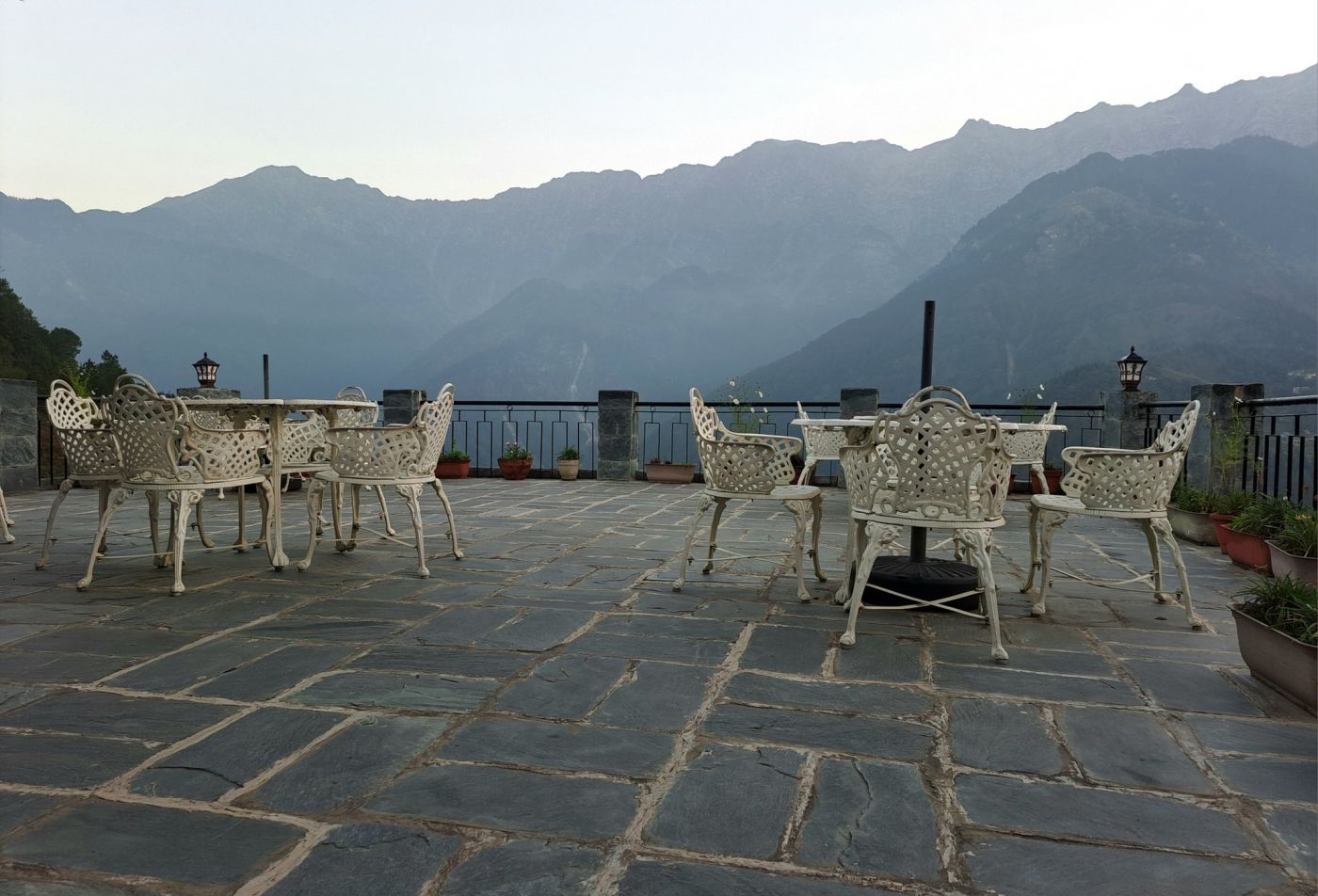
After breakfast, my husband attended an online meeting. Meanwhile, I spent time with my son in the play area inside the hotel premises and later on the terrace attached to the hotel library, from where the view of the Dhauladhar range looked even more beautiful than from the viewpoint. For the first time, my son took my photograph, which made the moment even more special.
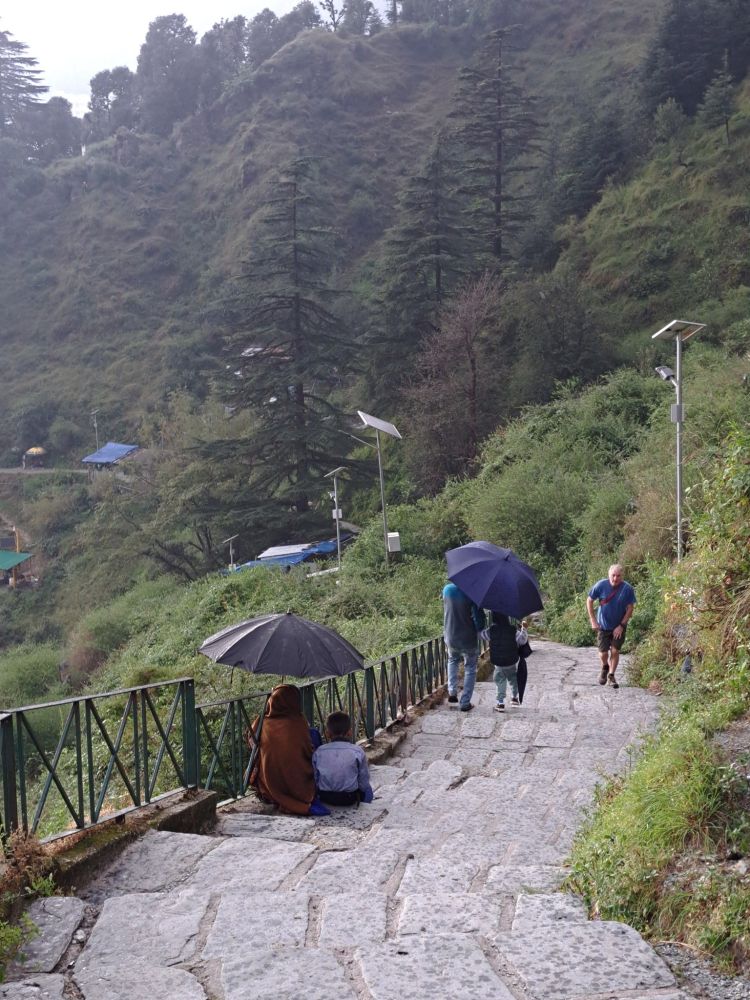
After lunch, we set out for trekking to Bhagsu Waterfall and also planned to visit Dharamkot. We hired a car from the hotel, and the driver dropped us near the market close to Bhagsunag Temple. From there, we began walking towards the falls.

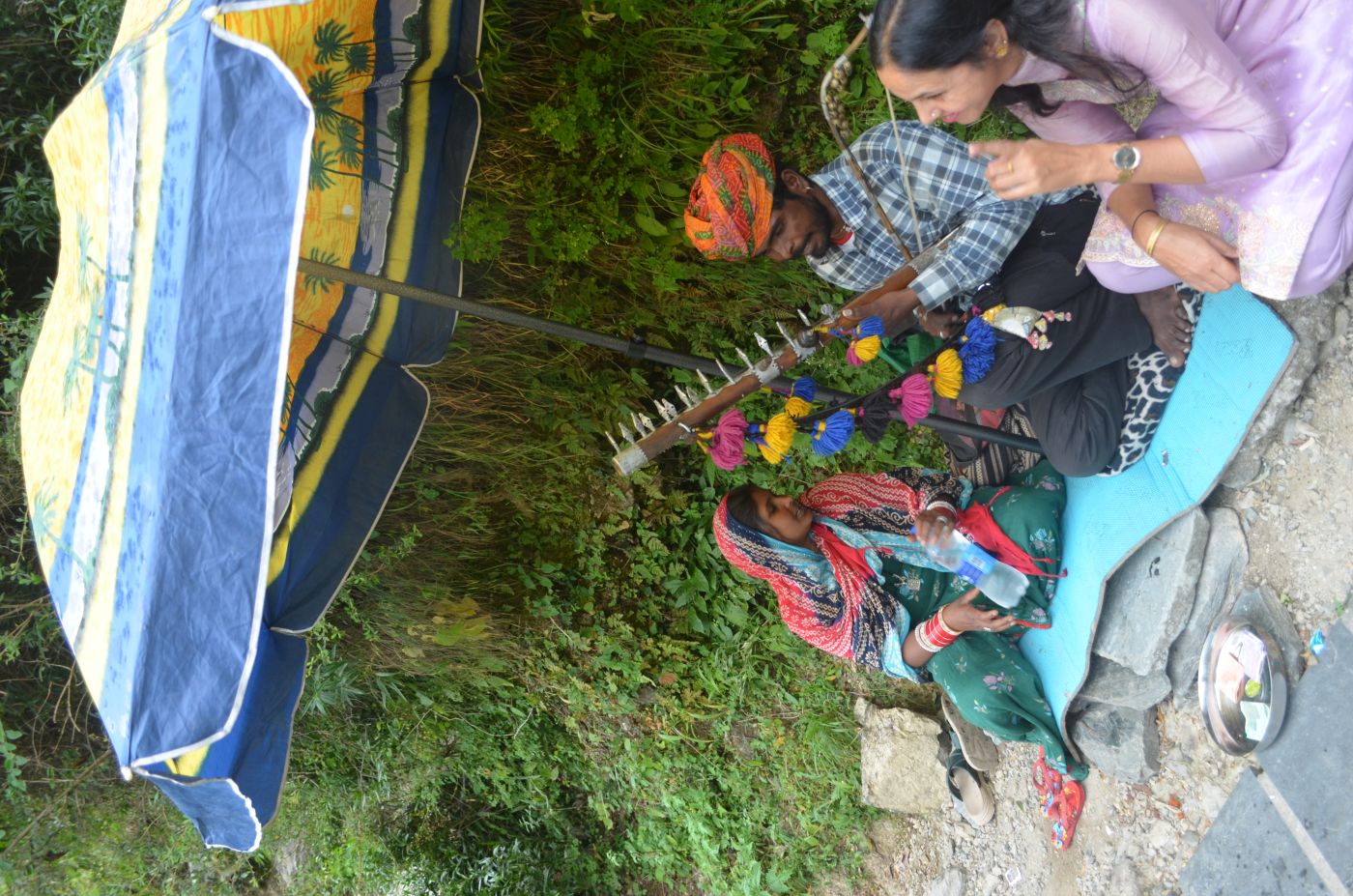
On the way, we came across a couple from Rajasthan. The husband, Lalchand ji, was playing the Ravanhatha, while his wife sang Rajasthani folk songs and sometimes Bollywood numbers. I stood there for a while, listening to “Ek Pyar Ka Nagma Hai” played on the Ravanhatha, with the lush green Himalayas in the background and sunlight peeking through dark clouds. It was a beautiful and memorable moment.
We then continued walking. My husband felt slightly breathless and rested for some time, while I walked slowly ahead with my son. At one point, the path became narrow and a bit risky—on one side there was a steep drop, and the road was uneven, allowing only one person to pass at a time. I felt unsure whether to continue further with my child. Just then, my husband caught up with us, took our son in his arms, and moved ahead confidently.
When we reached near the waterfall, we realized we had to cross the flowing water of the two-tiered falls by stepping carefully over stones near where the water cascaded from the upper level. Initially, my husband said he wouldn’t cross with our son. After crossing, there were two small shops selling tea, Maggi, and snacks. I decided to cross first to take some photographs from close to the falls and return. After a while, my husband also crossed over with our son. He was delighted when he got a packet of Bourbon biscuits from the shop.
We came back from Bhagsu Falls and got busy shopping for Kullu dresses and jackets for my kid and husband. I also bought a few Himachali earrings for myself and other relatives.
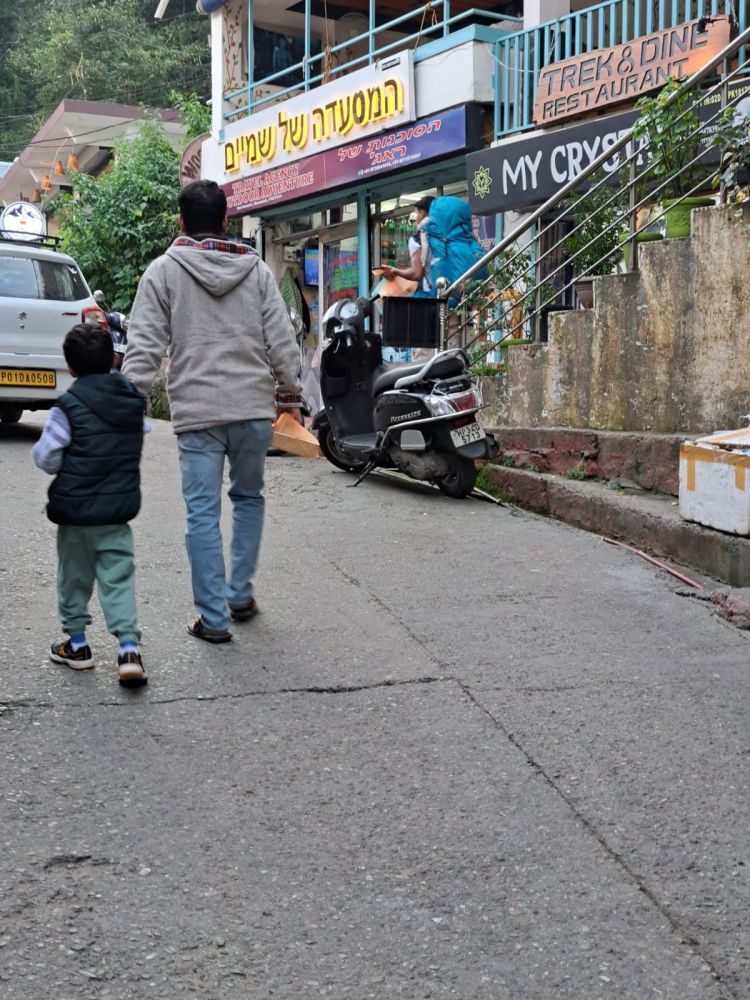
After that, we headed towards Dharamkot. Dharamkot feels very different from other parts of the McLeodganj area. We were going to the Trek and Dine restaurant there. The lane was quite small, with shops, restaurants, and hotels lined up on both sides. We also noticed a few hostels.

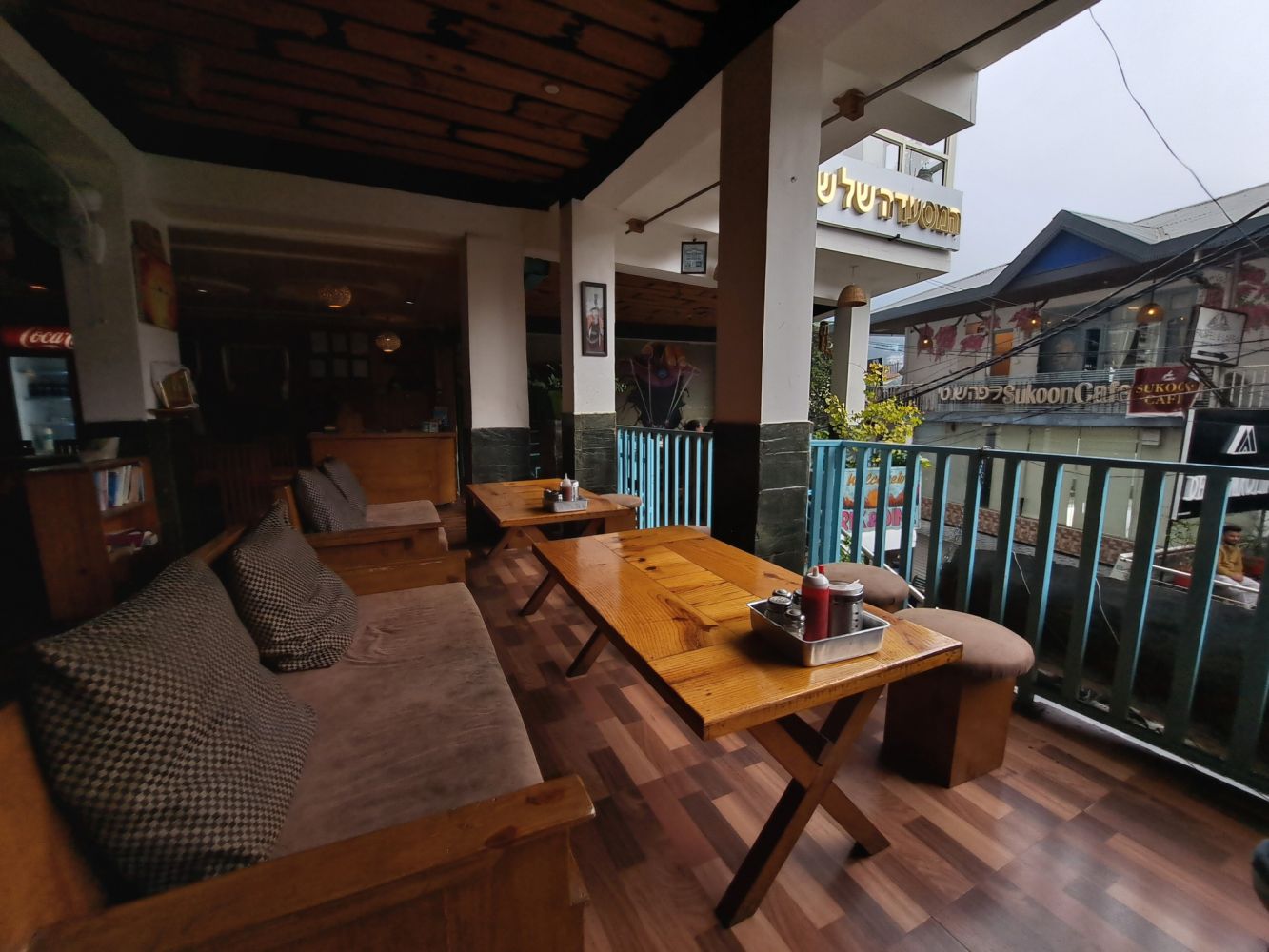
Interestingly, most of the shop and restaurant names were written in Hebrew. The seating arrangement in the restaurant was a bit different, and the place was filled mostly with foreigners. It felt like we had stepped into another country altogether.
My husband ordered Shakshuka with chips, tahini salad, pita bread, and lemongrass tea. I ordered hummus with pita bread and green ginger ale. My son wanted only noodles, so we ordered noodles for him. I must say, the food was really good. We truly enjoyed both the food and the unique cultural vibe of the place.
We returned to the hotel in the evening and had an early dinner because we were planning to visit Masroor Rock Cut Temple (about 52 km from our hotel) and Kangra Fort the next day.
The next morning, after breakfast, we set out for the day’s sightseeing. Our first destination was the Masroor Rock Cut Temple. We chose the route that passes through Gaggal, where the Dharamshala airport is located, and continued towards the Kangra Valley.
The scenery along the Gaggal–Lanj road felt quite different from the typical Himalayan beauty I had imagined. It did not have the lush, snow-clad charm of the higher mountains. Instead, the landscape had a rugged and somewhat harsh beauty, reminding me of the Eastern Ghats. The trees along the road were covered in dust, giving them a greyish appearance. The red dry soil and stones, combined with the grey trees and the warm weather in the last week of November, created a tough yet striking landscape.

And yet, when such a dry and dusty view still makes someone pause and say, “I am impressed,” it means the place carries a certain spark of nature’s own character—raw, strong, and quietly captivating.
As soon as we reached the temple, my son said he was very hungry and wanted to have Maggi from a small makeshift stall just in front of the temple complex. My husband ordered a plate of vegetable Maggi for him and our son, and a plate of momos for me. The Maggi was so tasty that my husband insisted I try some. I liked it so much that we ended up ordering another plate for ourselves. The momos were equally delicious, making our simple meal truly enjoyable.
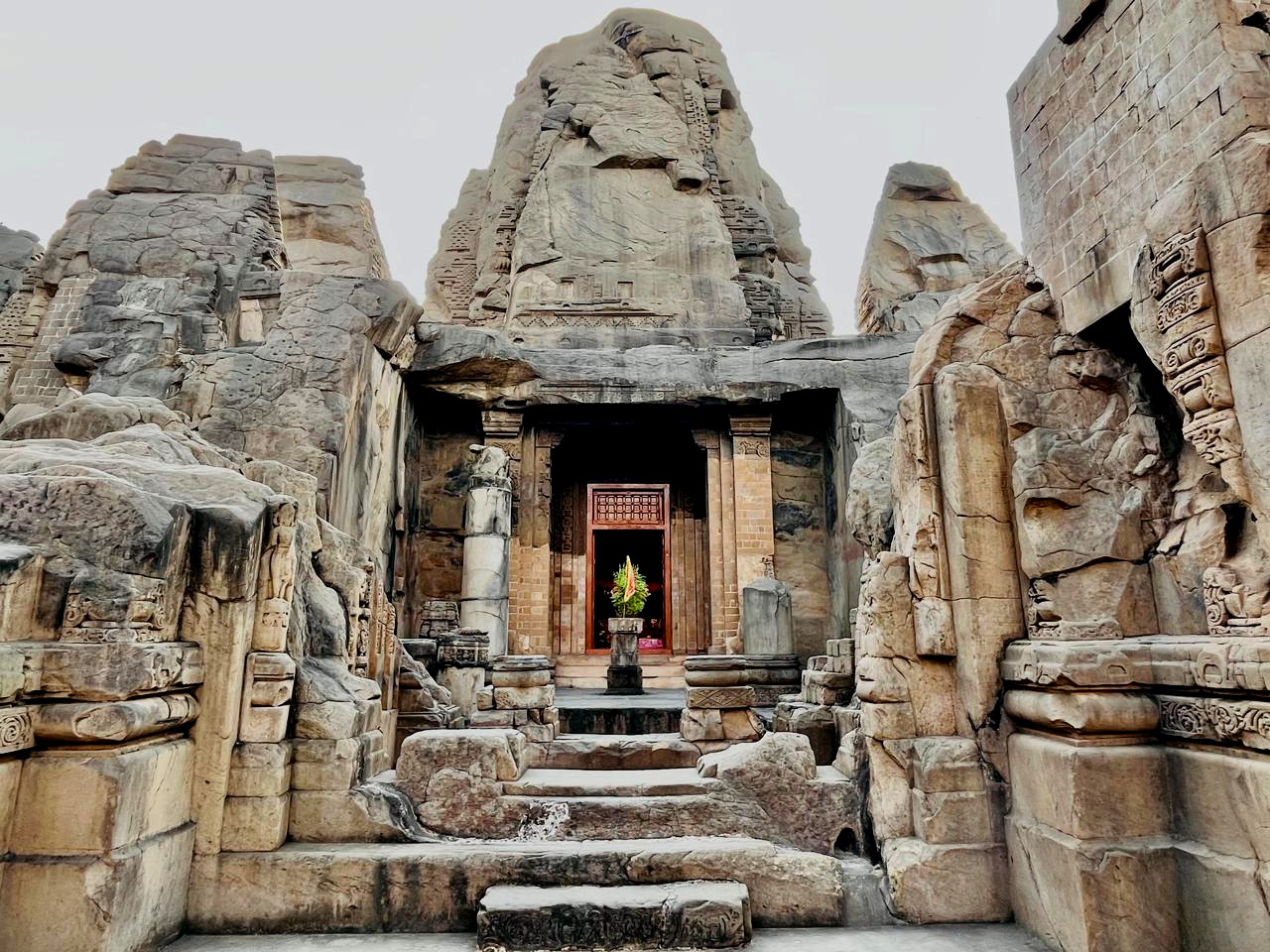
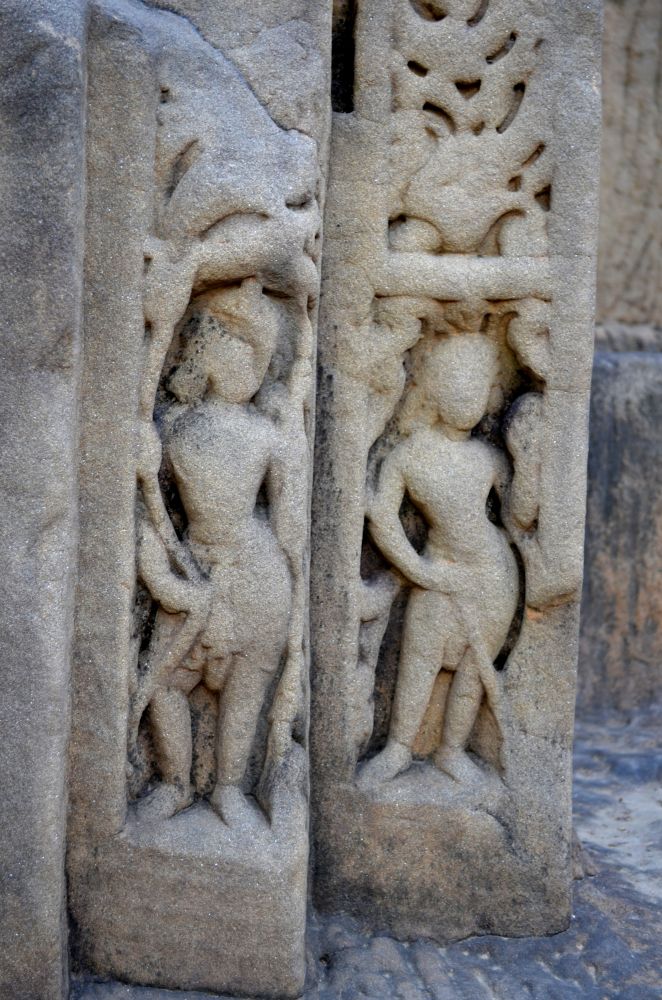
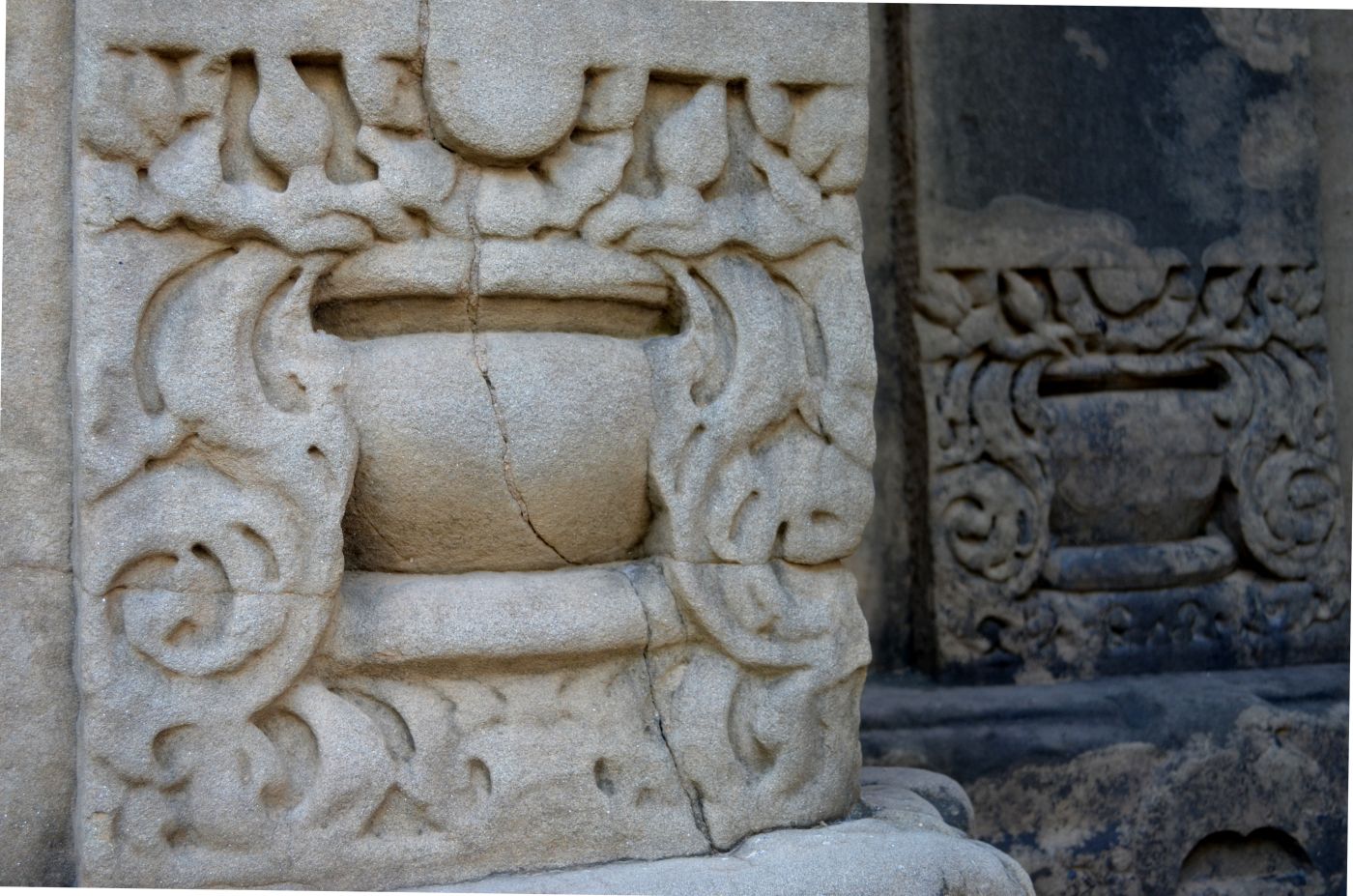
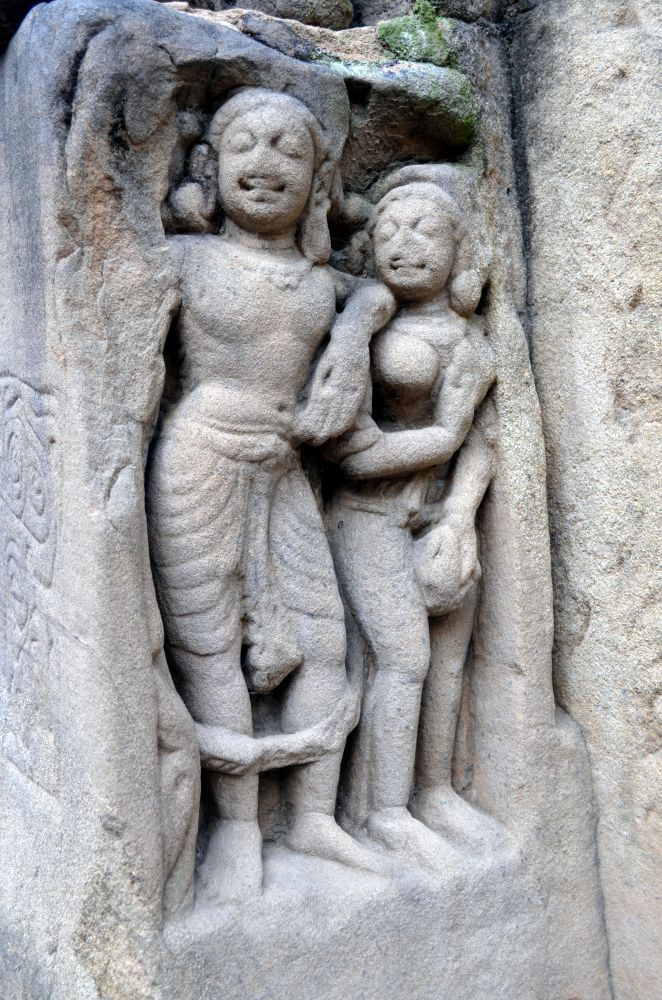
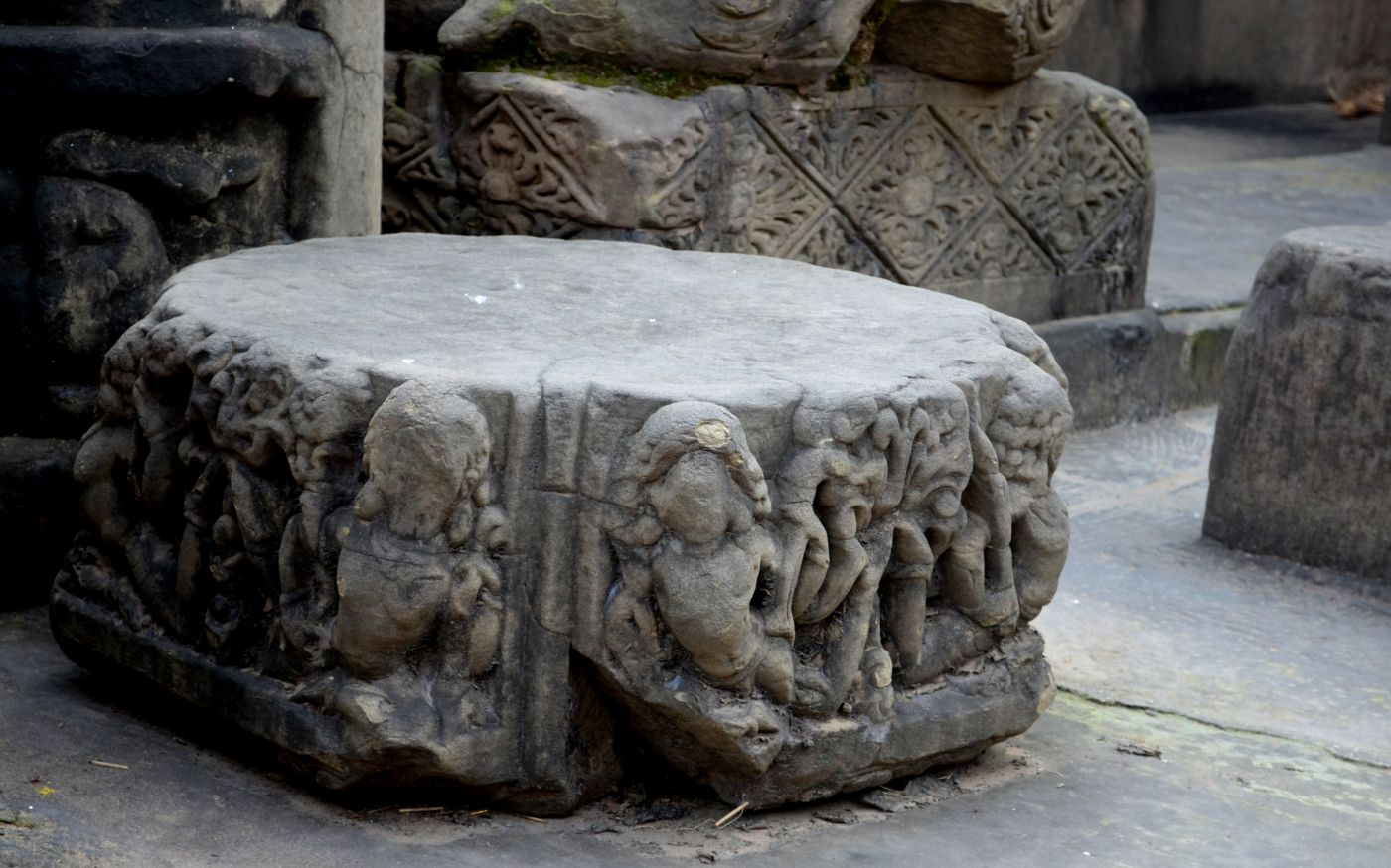
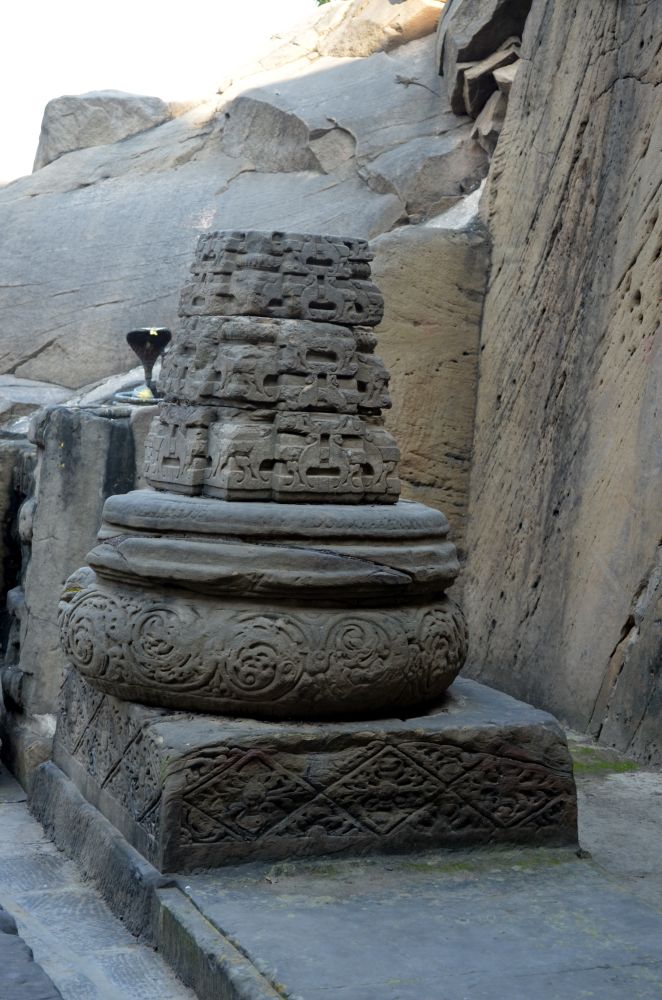
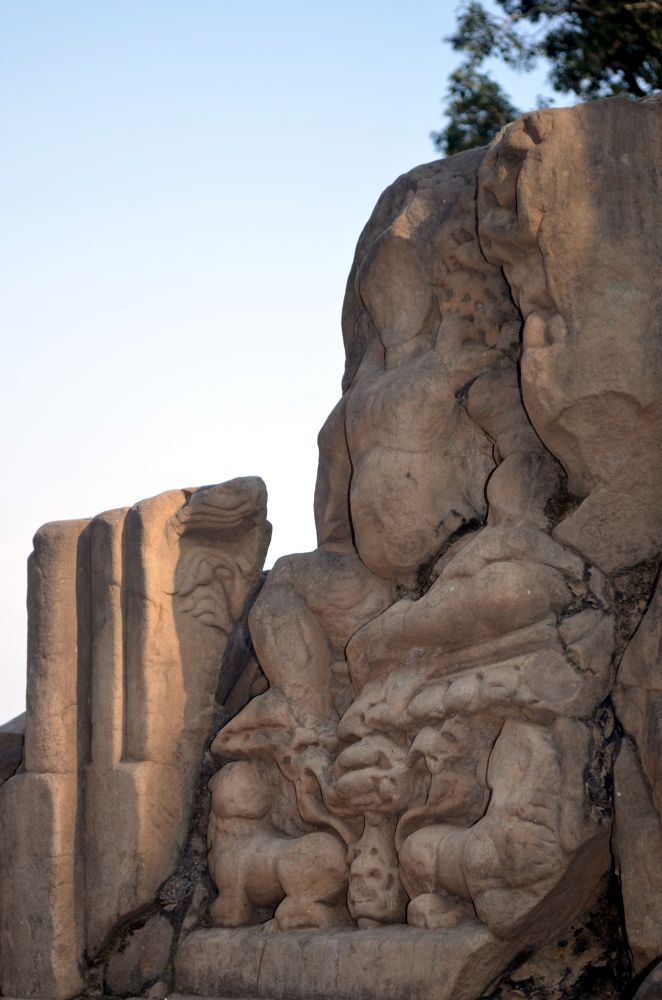
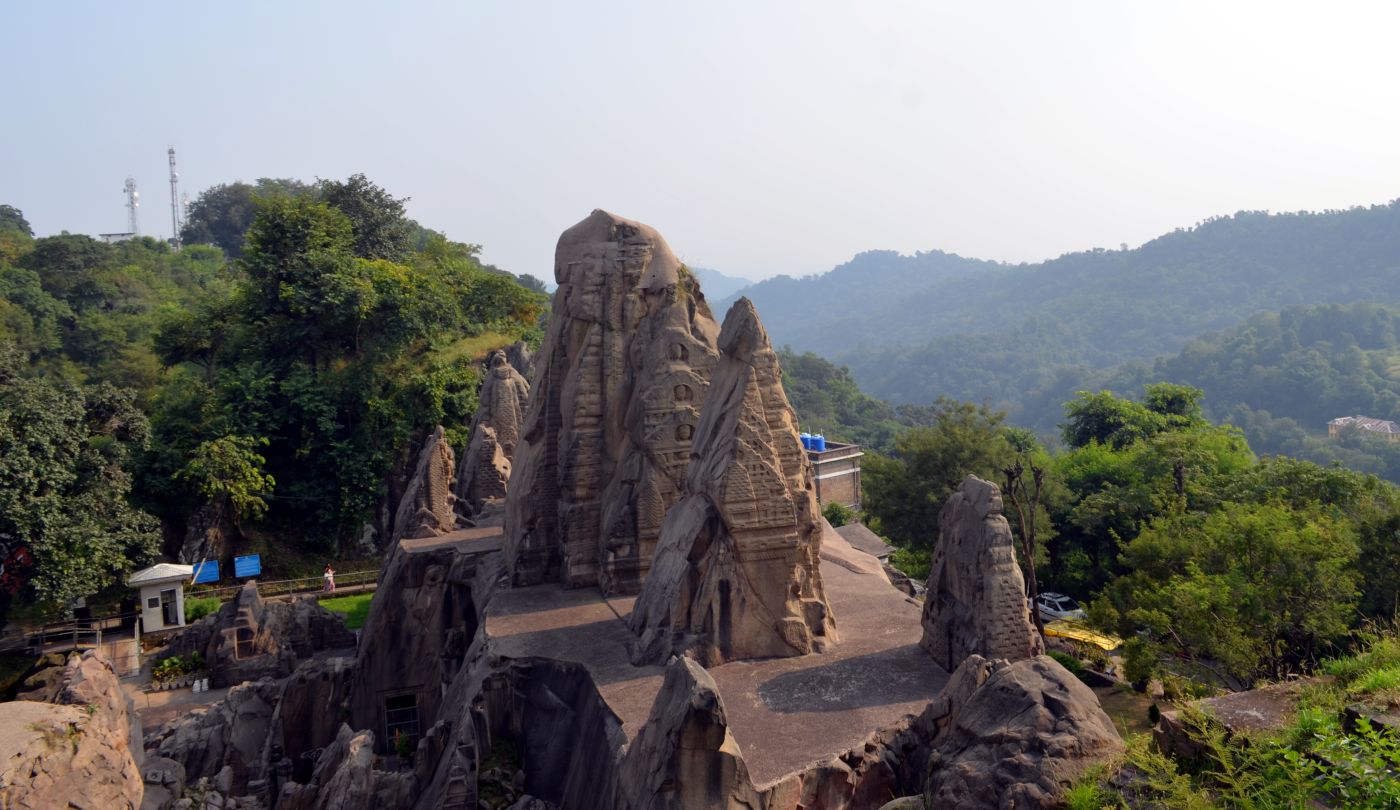
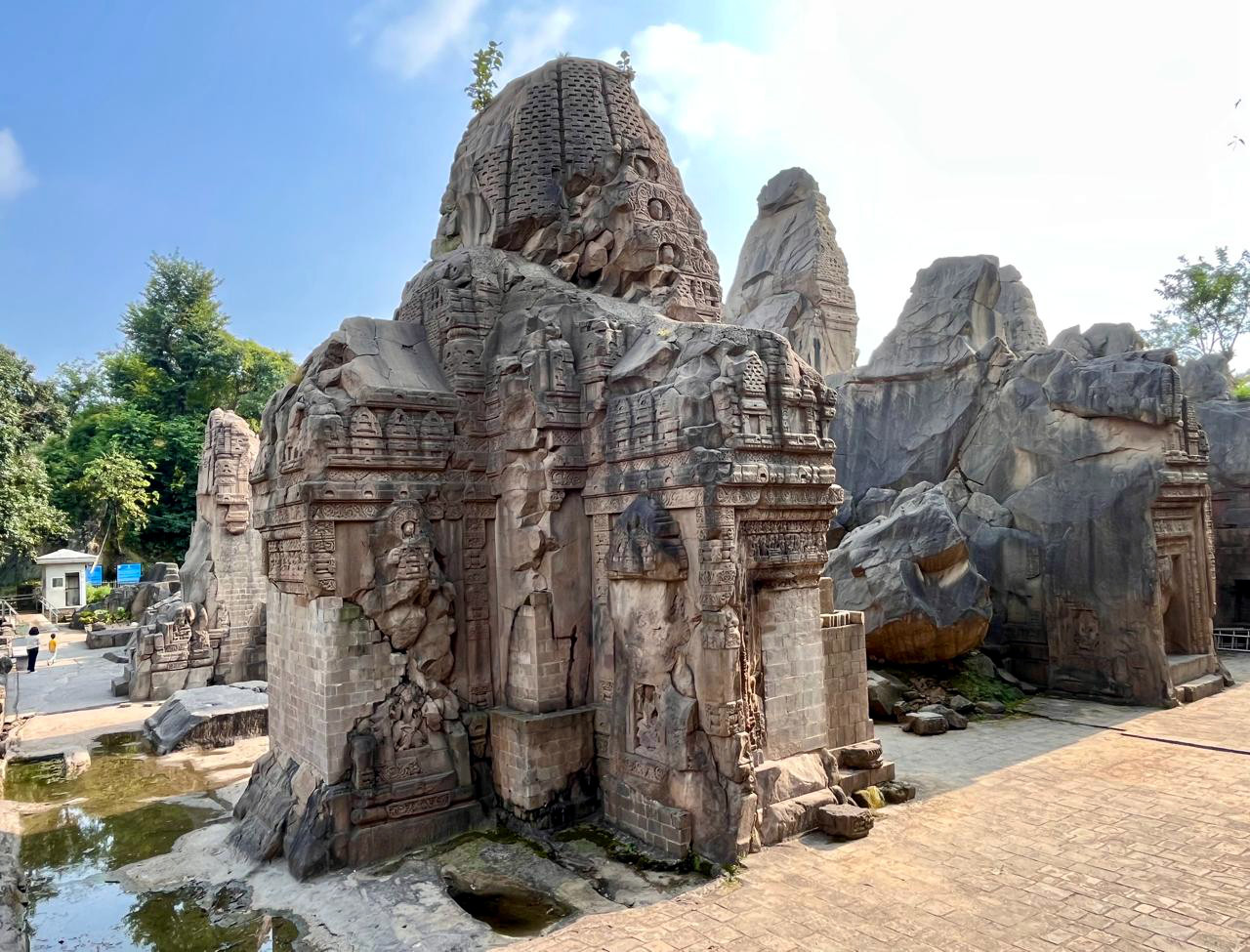
The Masroor Rock Cut Temple is a remarkable 8th-century monolithic temple complex carved entirely from a single sandstone rock. It consists of 15 interconnected temples built in the Indo-Aryan style of architecture. In front of the temple lies a serene water tank that beautifully reflects the main stone structure. Even after being damaged by earthquakes over the centuries, the temple still stands with its intricate carvings. The site is maintained by the Archaeological Survey of India, and its peaceful, less-crowded surroundings give it a calm and scenic atmosphere.
The temple is open from 9 a.m. to 5 p.m. We booked our tickets by scanning the QR code provided by the Archaeological Survey of India at the entrance. We spent more than half an hour exploring the serene temple complex, enjoying its calm atmosphere and ancient beauty.
After that, we started for Kangra Fort, which is about 33 km from the temple. We reached the fort around 4 p.m. Its visiting hours are also from 9 a.m. to 5 p.m., so we had only about an hour to explore. To save time, we skipped lunch and bought our entry tickets at the gate for ₹150 per person before entering the vast fort complex.

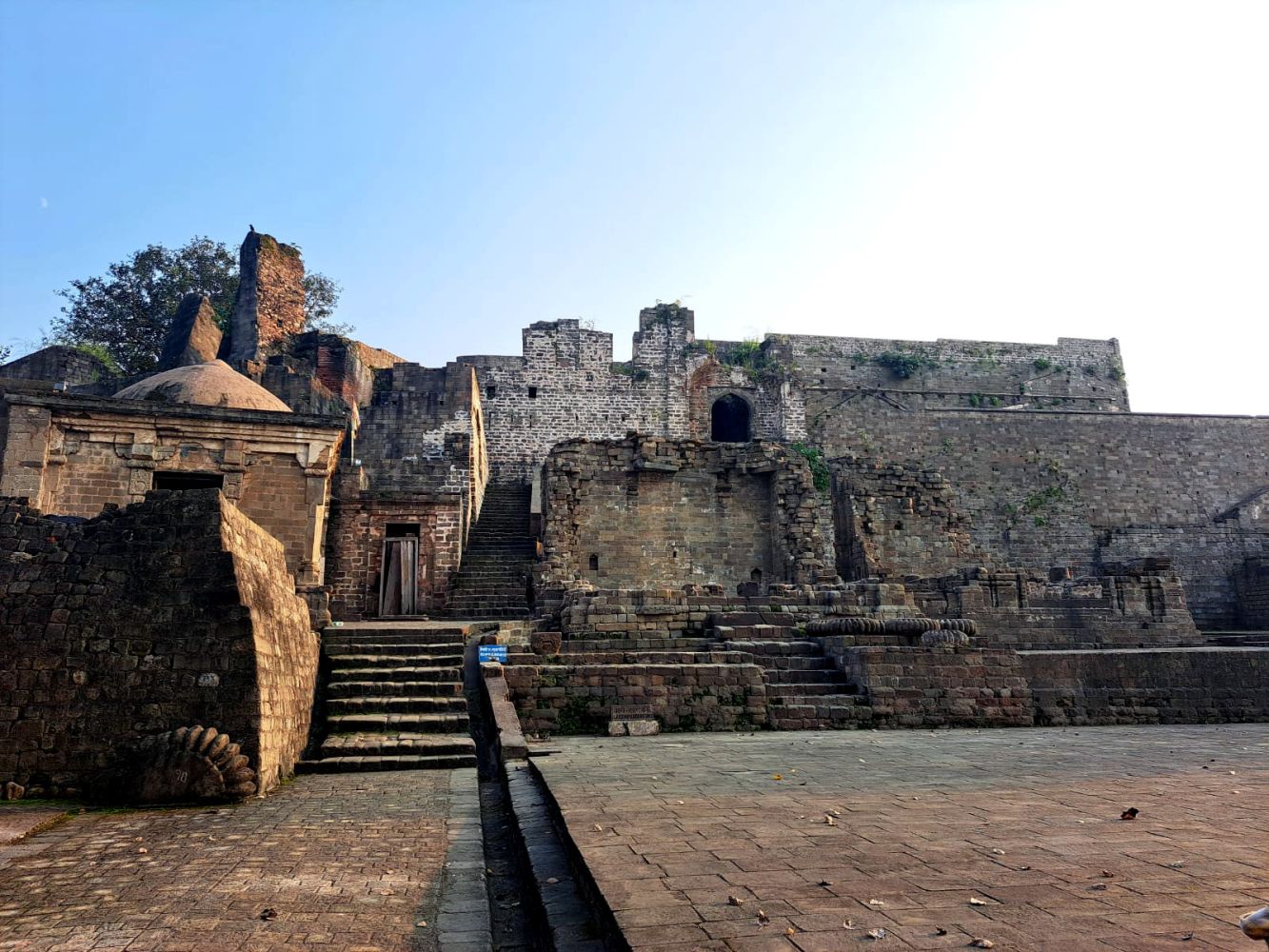
Kangra Fort, more than a thousand years old, has witnessed numerous battles and rulers over the centuries. It was originally built by the Katoch dynasty, one of the oldest surviving royal families in the world. In 1009 AD, Mahmud of Ghazni attacked and looted the fort. Later, it was invaded by Muhammad bin Tughluq and his successor Firuz Shah Tughluq. In the 16th century, the fort came under Mughal control during the reign of Emperor Akbar. During the Mughal period, a mosque was built inside the fort complex.
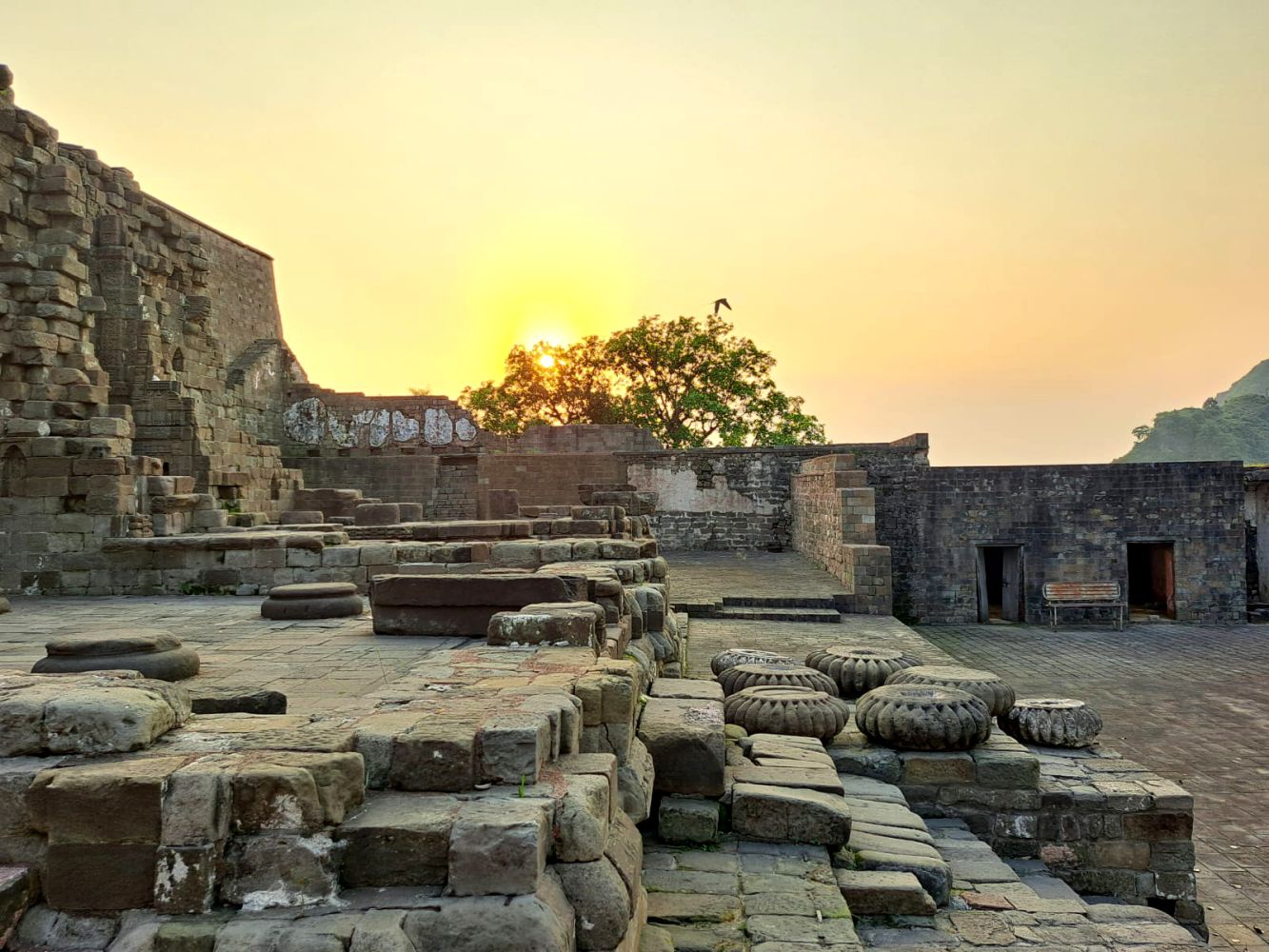
After the decline of the Mughal Empire, the fort passed into the hands of the Sikh rulers and was later taken over by Maharaja Ranjit Singh in the early 19th century. Eventually, it came under British control. In 1905, a massive earthquake caused severe damage, and many parts of the fort fell into ruins.

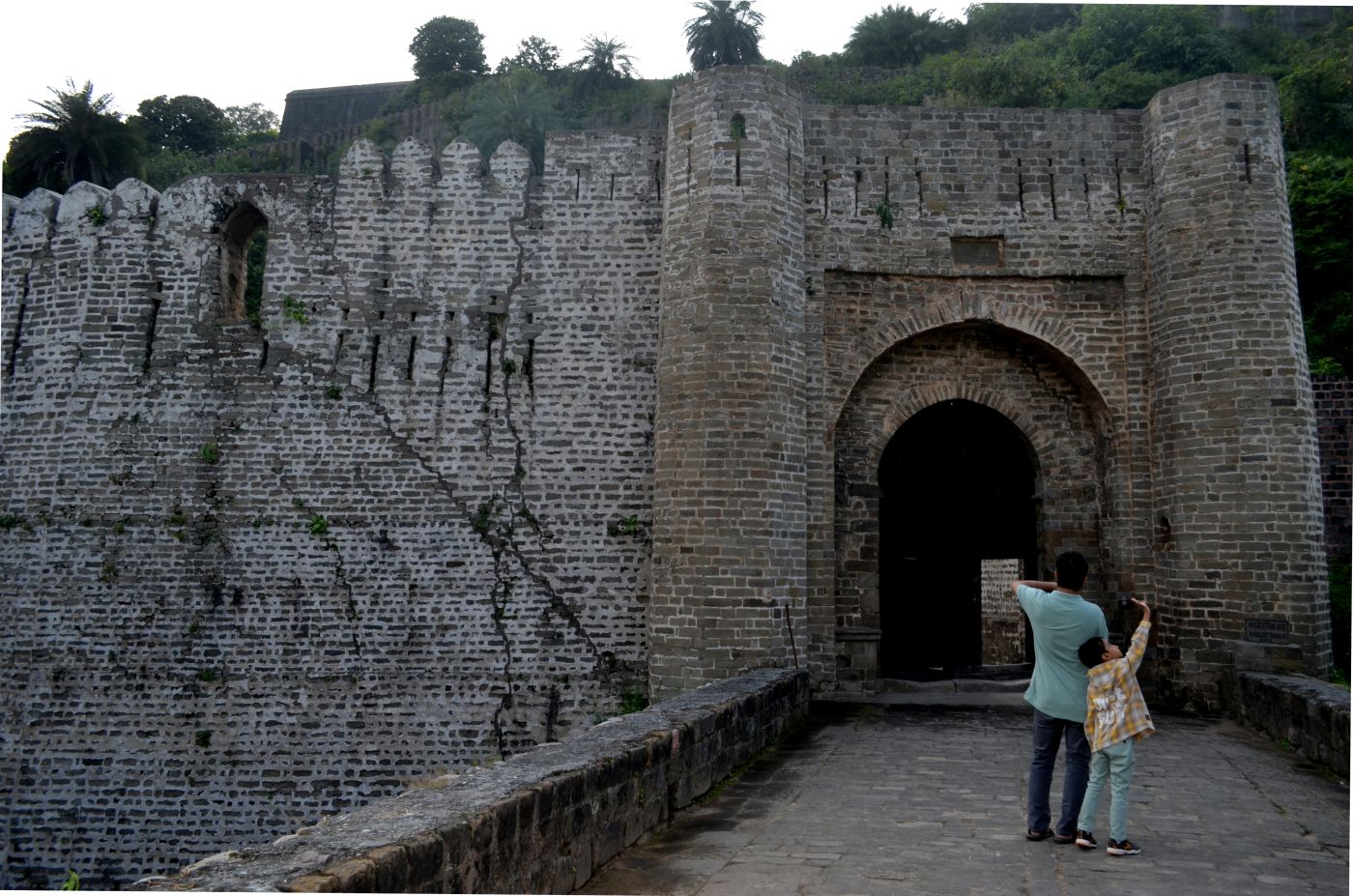
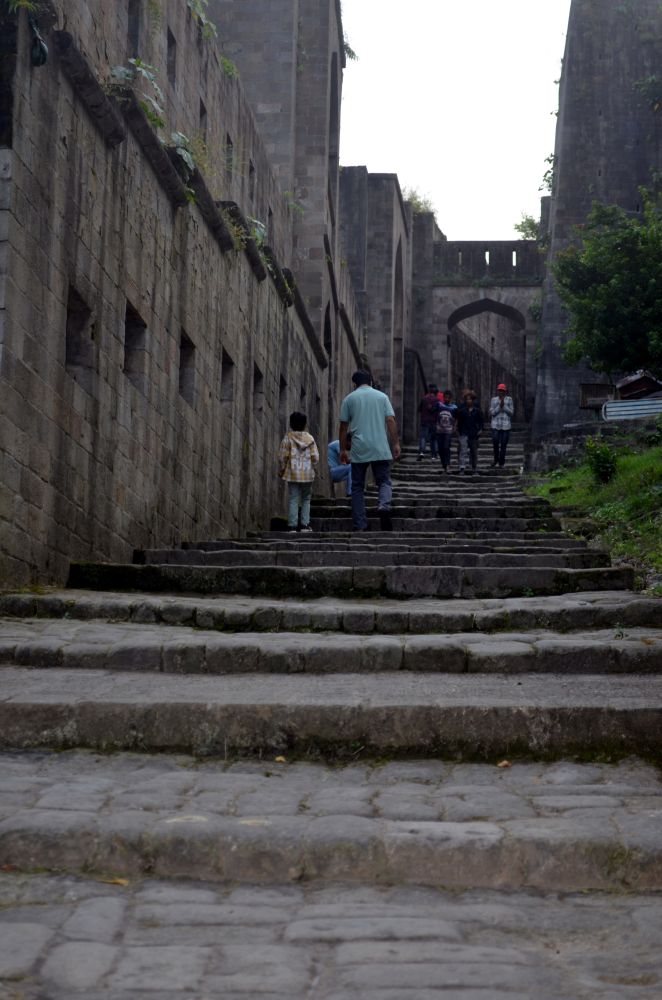
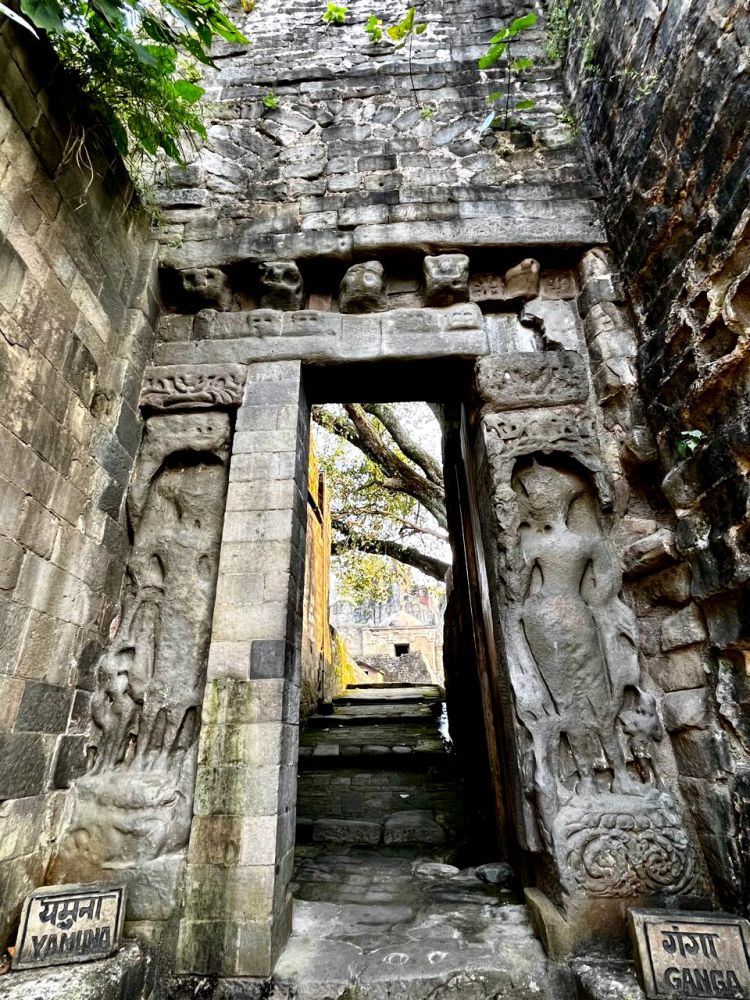
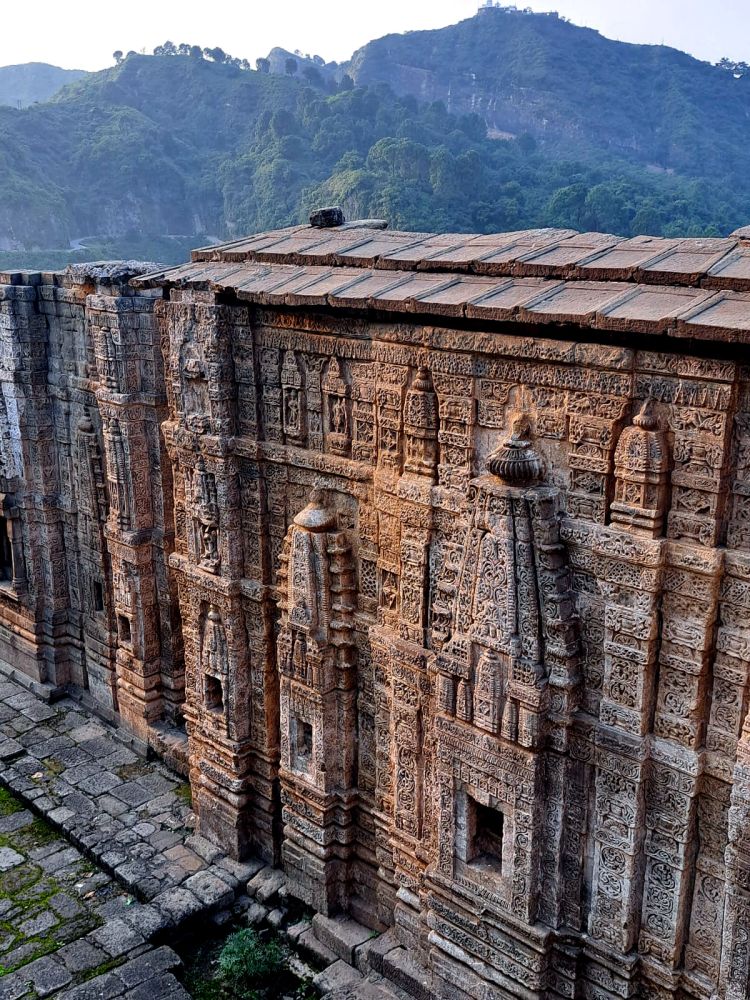
During the Sikh period, Maharaja Ranjit Singh built a prominent entrance known as the Ranjit Singh Darwaza. As we walked through the narrow gateways, we noticed beautifully carved panels of Hindu deities such as Durga and Ganesha on the walls. The gateways show Mughal architectural influence in their arches, while the walls preserve carvings from earlier Hindu temple structures. It is truly a remarkable example of layered history—Hindu temple art coexisting within later Mughal and Sikh additions.
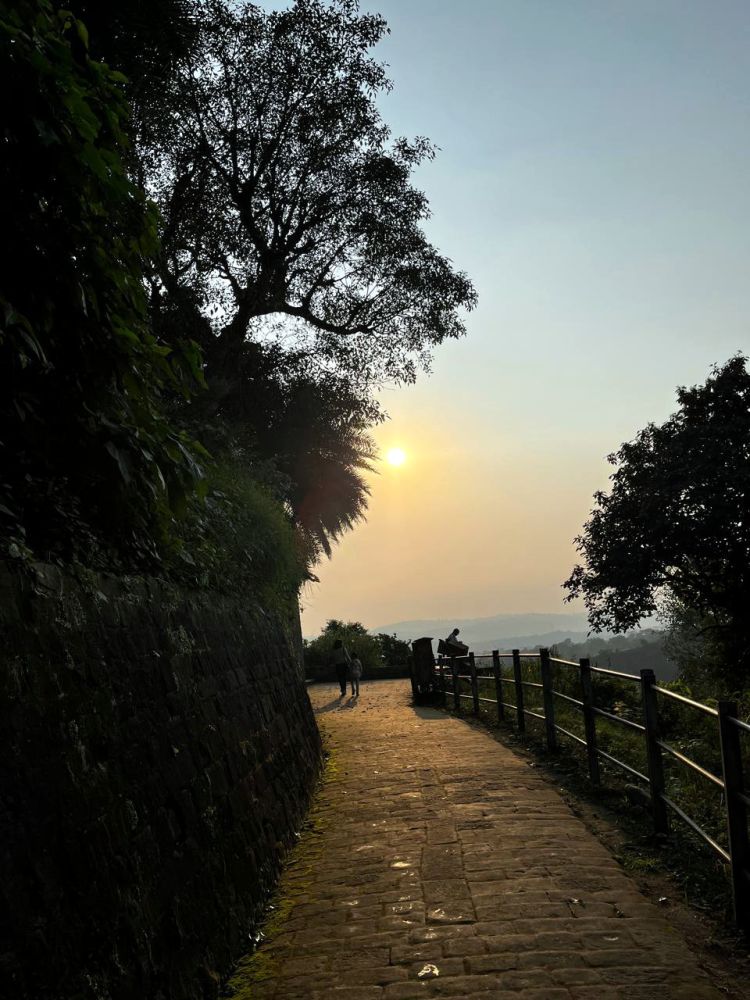
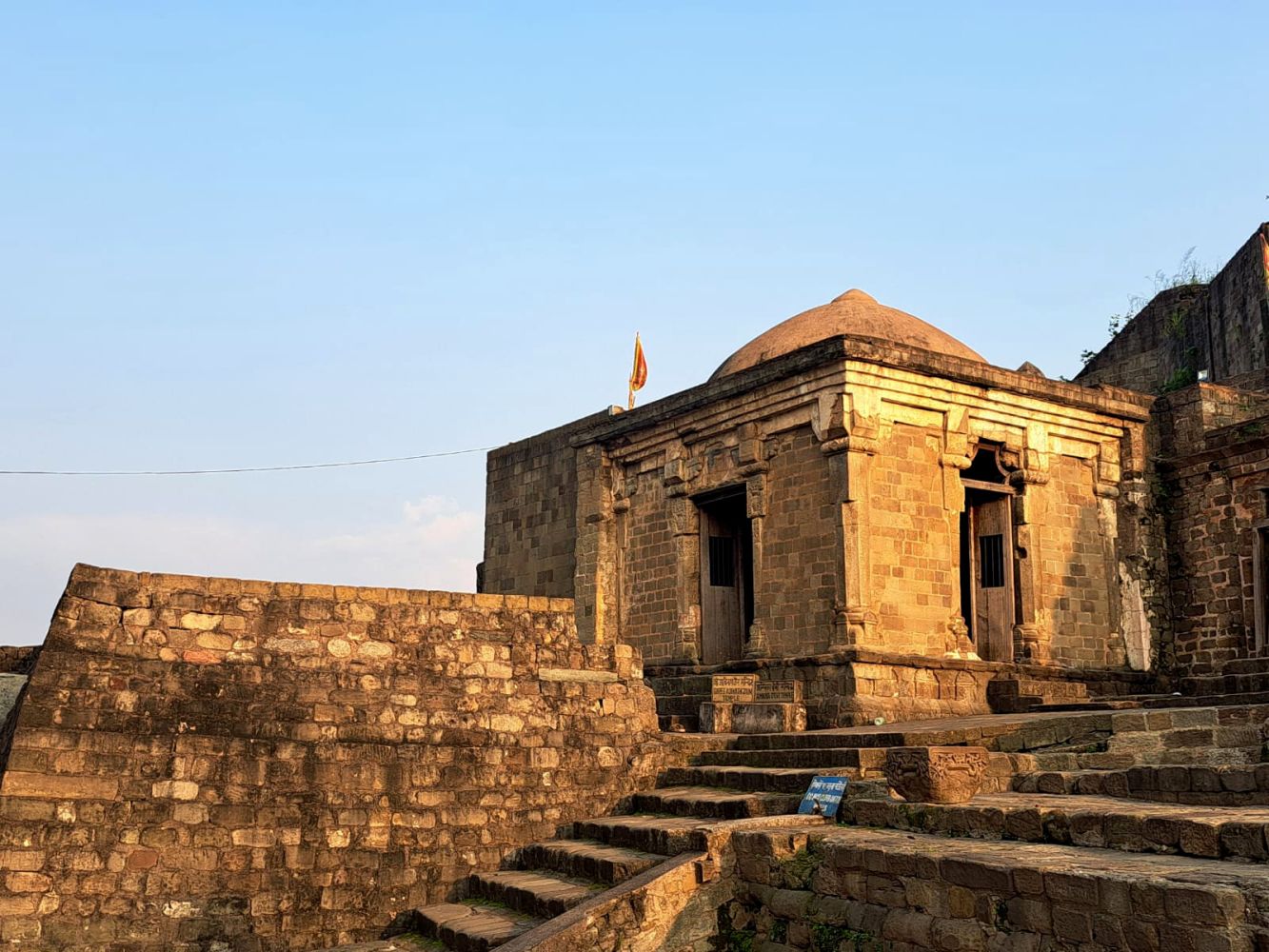
The Jehangiri Darwaza stands at a sharp turn along the ascending pathway. Inside the fort complex are ancient temples such as the Lakshmi Narayan Temple, Ambika Mata Temple, and a Jain temple, along with open courtyards. The fort reflects a blend of architectural styles, where ancient Hindu temple carvings exist alongside Mughal structural elements. From the top, the panoramic view of the surrounding valley is breathtaking, especially as dusk approaches.
We spent about an hour exploring and taking photographs, as the evening light made the view even more beautiful. By the time we came down, our son was extremely hungry since we had skipped lunch. He could hardly bear it, so we asked the driver to quickly find a restaurant where he could have an early dinner. After he finished eating, we returned to Naddi around 8 p.m.
One thing we noticed in Himachal is that even in restaurants, the staff continue talking warmly after serving food, making you feel as though you are dining at someone’s home. Later, we had our own dinner around 9 p.m. at Udichee Hut and ended the day early after a long and tiring yet memorable day.

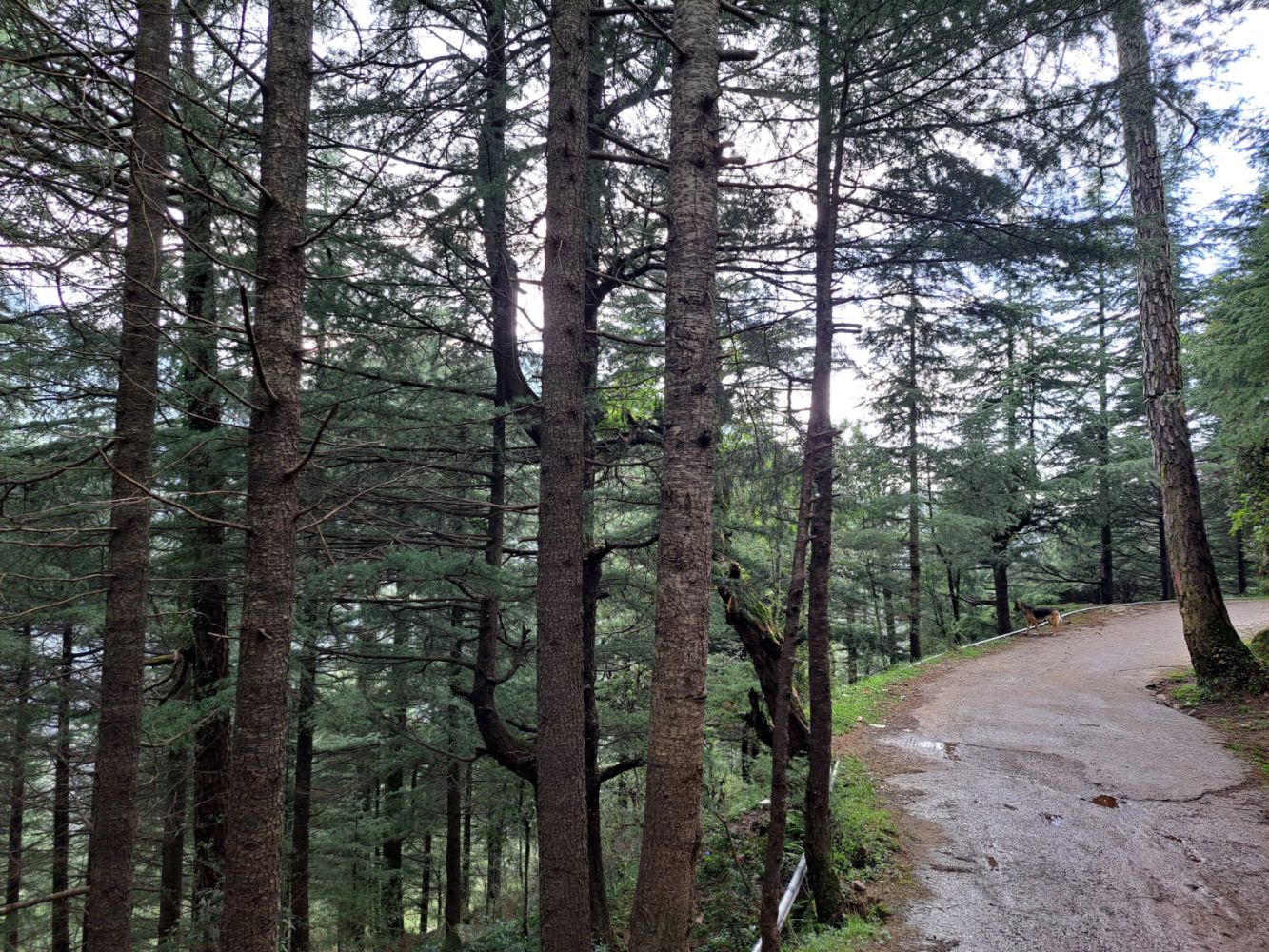
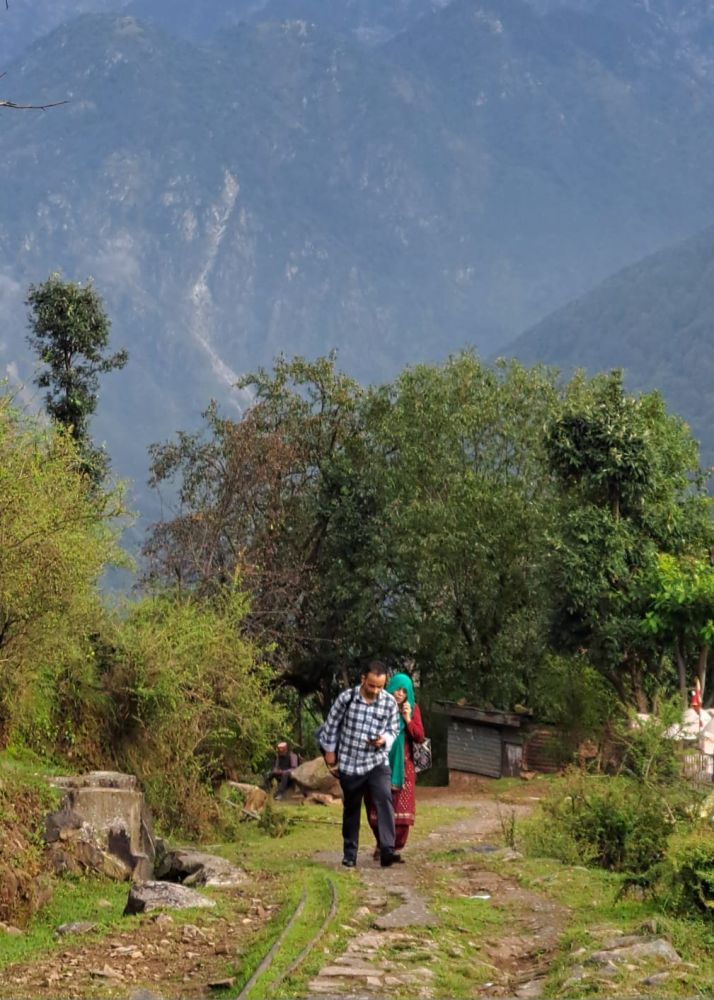
The next morning when I woke up I had a feeling that today is the last day at Naddi in this trip. I am giving this morning to myself. I woke up alone and went for walking with the intention of knowing the place with exploring the villagers’ lifestyle as much as I could. At first, I walked through a forest of tall Devdaru trees, as the staff from my hotel had told me there was an international school at the end of the hill. When I reached, I didn’t find any school children there. Instead, I saw a famous spiritual studies school adjacent to the international school, where many local people were gathering.
I then turned back and began walking toward the village, from where the sound of morning prayers drifts through the air each day, reaching even the terrace of my hotel room. This time, I followed that path and arrived at the small school.
There, I saw a small, cute boy, like a little Hrithik Roshan, sitting outside the school gate at 8:15 AM, even though classes wouldn’t begin until 9. He told me he lived further down the hills, which explained his early arrival.
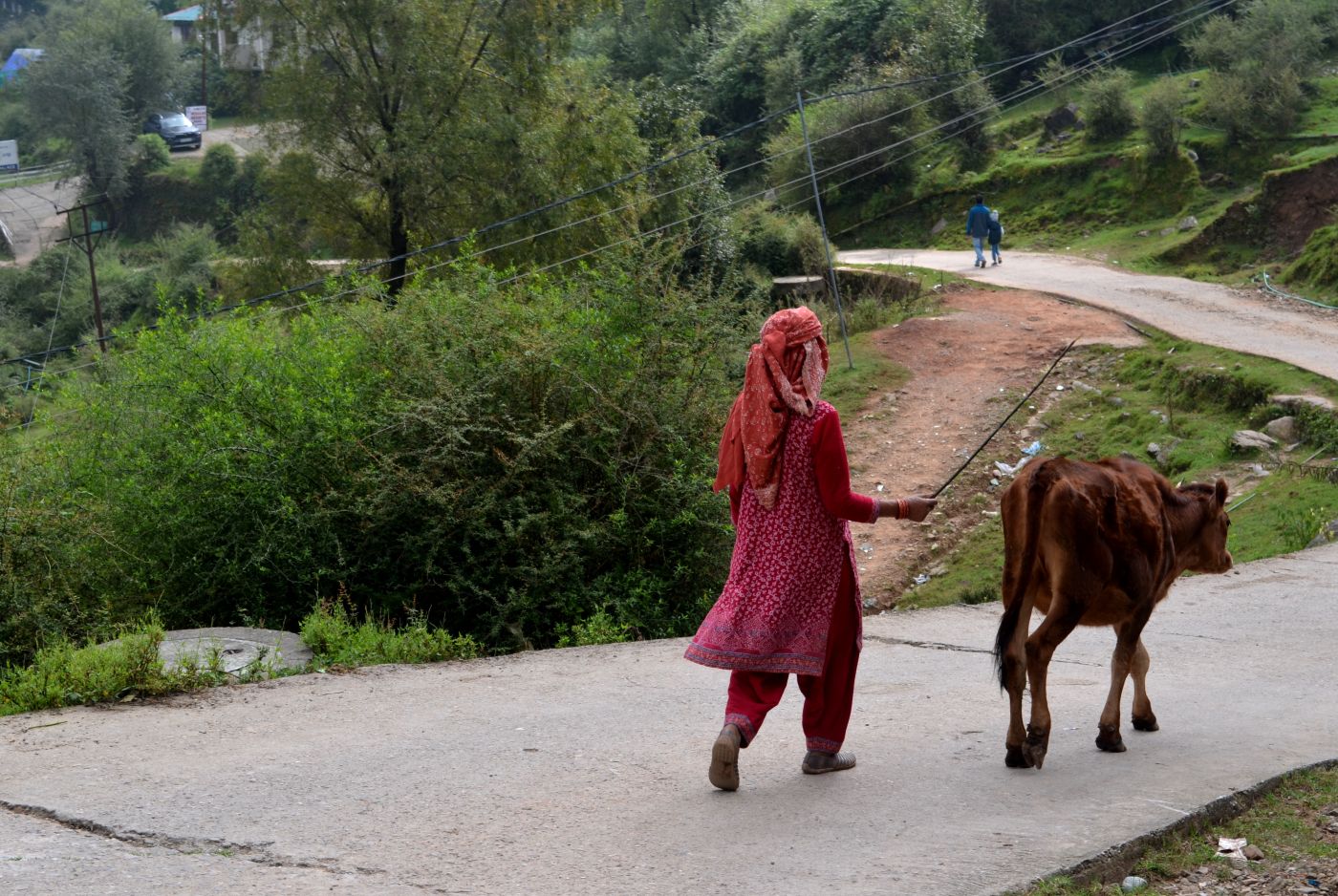
On my way, I passed many men and women heading off to work, both within the village and to places outside. The school itself is a modest English-medium school up to 8th standard.
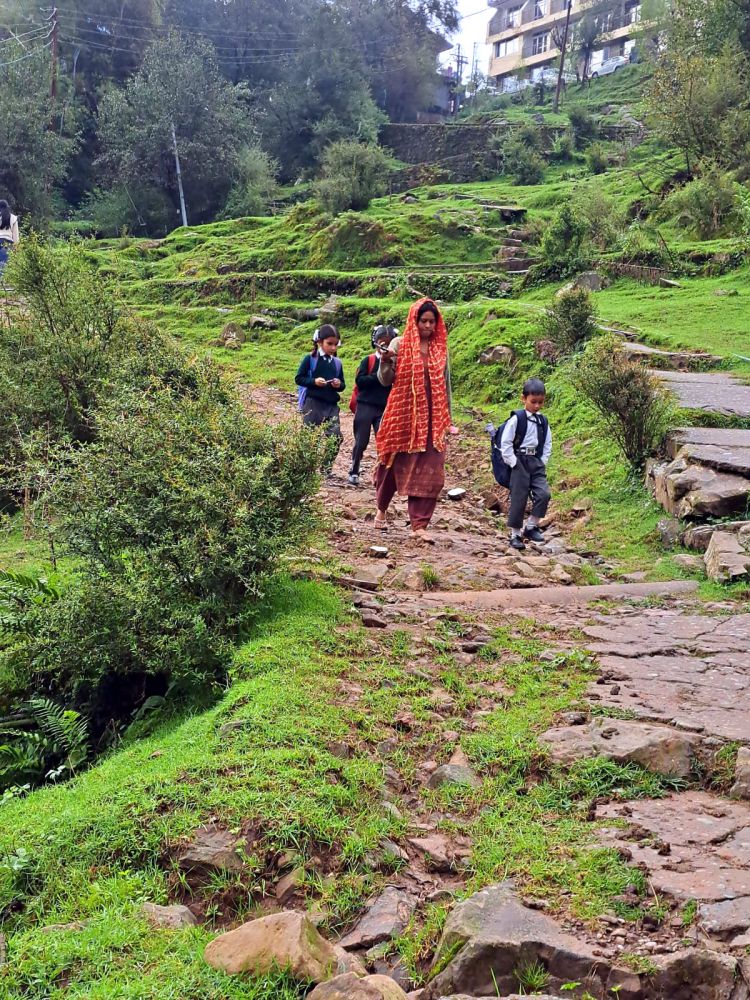
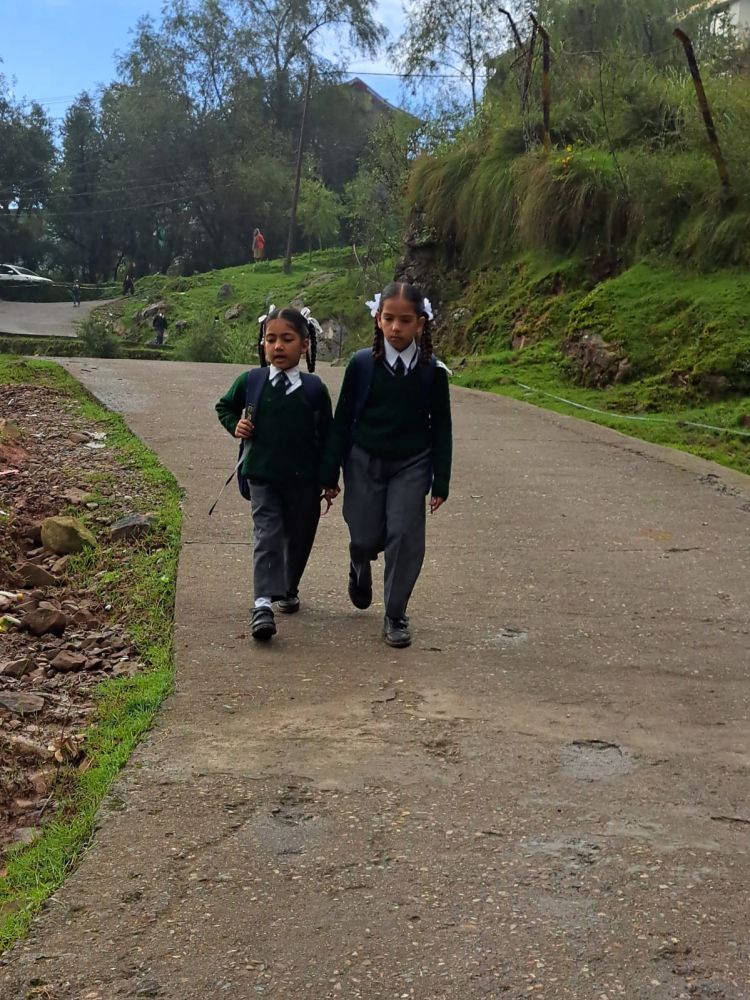
As I walked back, I saw more children arriving. Some held hands, forming little chains of laughter and chatter. Mothers stood on top of the hill, calling out instructions to their kids from afar. Many of these children walk from distant villages across the hills visible from my hotel, all to attend this small but lively school.
It was a simple yet touching glimpse into the rhythm of village life, filled with dedication, innocence, and community spirit.
Once I returned to the hotel, I ordered a cup of tea and sat for some time in the library. Sitting there with my tea, watching the morning view of the majestic Dhauladhar Range, I wrote about what I had experienced that morning.
Later, I went back to our room and saw that both my son and husband were still sleeping. I tried to wake them up, and we eventually went for breakfast. After breakfast, my husband sat on the balcony, attending to his official work while enjoying the serene view of the Dhauladhar range. Meanwhile, I spent some quality time with my son.
In the afternoon, we went out shopping and bought a Kullu half-sleeve jacket from a shop owned by a President Awardee. For the past two days, I had been longing to visit the waterfall whose soothing sound we could hear from our hotel balcony. I decided to go there alone with my son, but everyone suggested that we take a car.

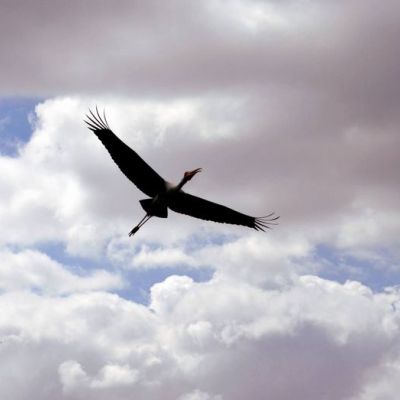
So, I hired a car for three hours, even though I knew we would return within an hour. The road was not properly paved; it passed through hills covered in dense forest. On the way, we spotted a wild hen — actually called the Kalij pheasant. It looks like a wild chicken, but more colorful and elegant.
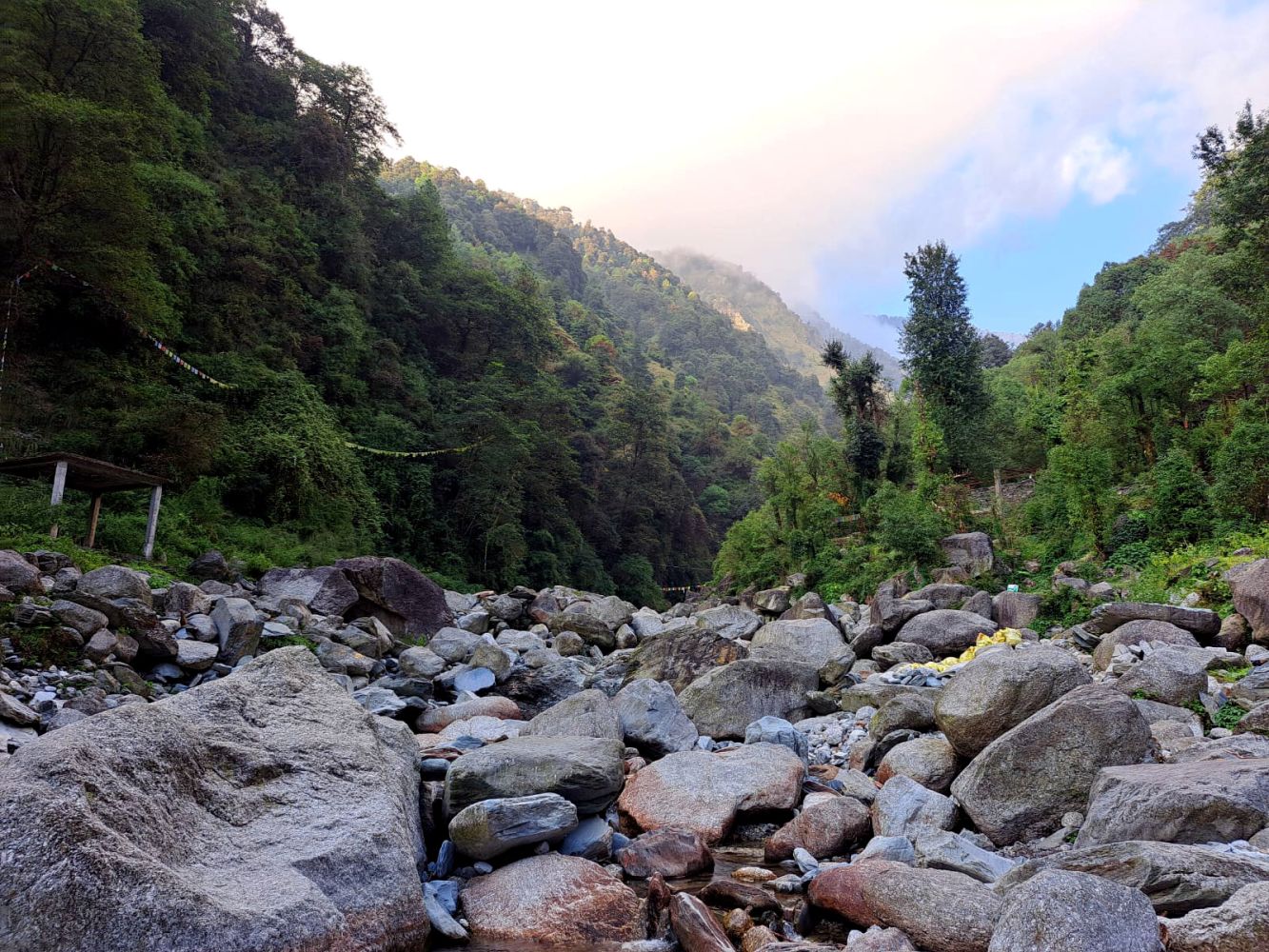
When we reached the waterfall, the scenic view of the surrounding hills and the cascading water was simply incredible. Words cannot truly express what I felt in that moment. I silently thanked God for bringing me to a place that felt like heaven.
I returned before sunset, quietly packed everything, and prepared to leave this beautiful place the next morning, with everlasting memories etched in my heart forever.