
Purulia: A Journey beyond the Ordinary
In the land of red soil and Santhal roots, we found stories, simplicity, and soul.


Purulia, the Lal Matir Desh (Land of Red Soil) of West Bengal, I never imagined beneath its red soil lie countless hidden treasures and untold stories of history waiting to be discovered. It was a one-night, two-day trip. We chose Baranti, a small village in Purulia, as our base to explore many nearby tourist attractions. We travelled together in a tempo traveller with my in-laws, my husband’s three uncles and aunts.
We started from Kolkata around 8:45 AM and stopped for breakfast at Shefali Restaurant near Burdwan town. Though the restaurant isn’t fancy, we chose it because it is quite popular for serving fresh and tasty breakfast.
We ordered chapati with potato fry and tea. The potato fry was so delicious that everyone ended up having more chapatis than they had initially planned! Bengalis are very particular about their potatoes, and West Bengal offers a wide variety of them. No wonder the simple aloo pyanj bhaja (potato and onion fry) tasted so special.

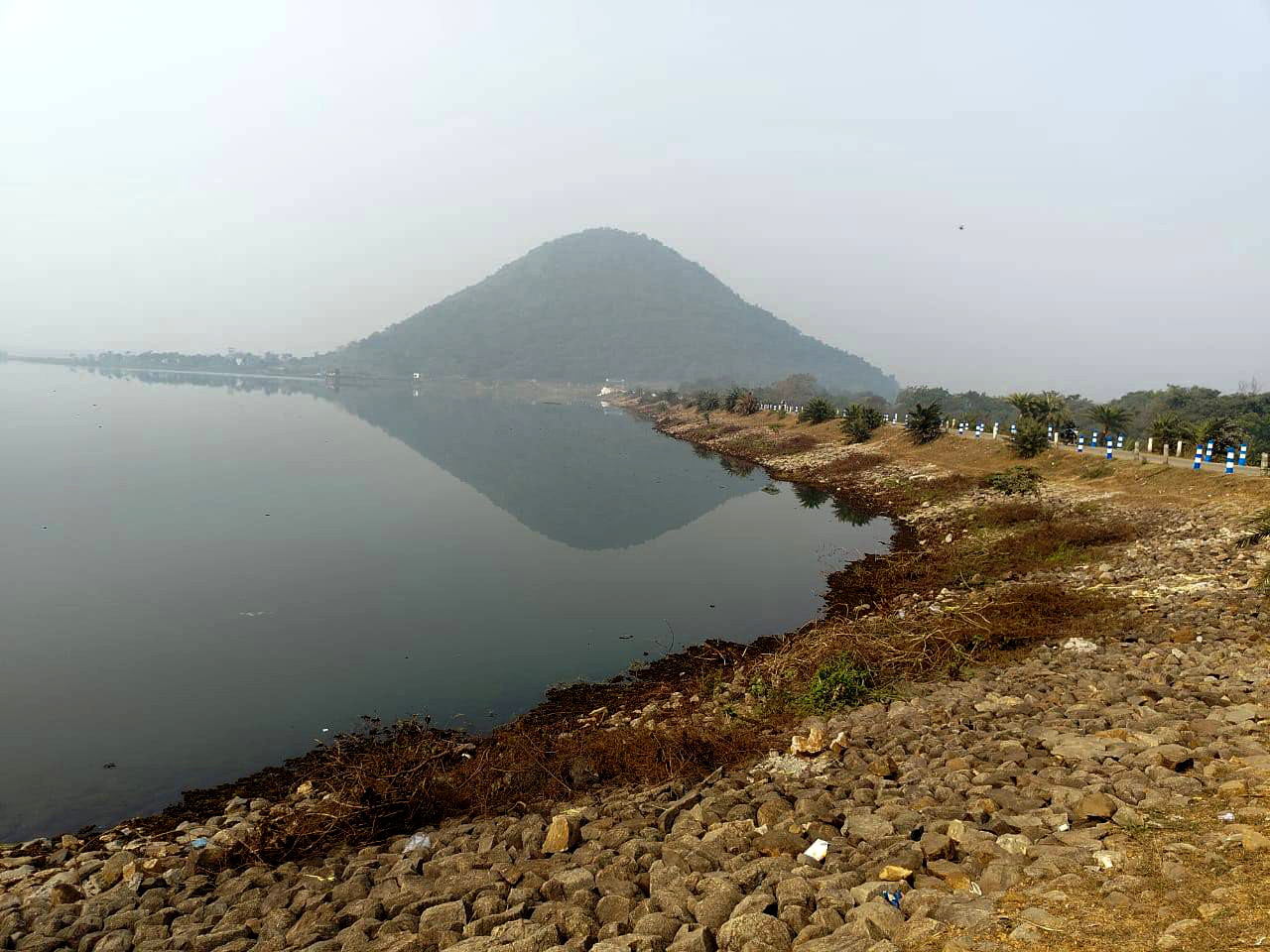
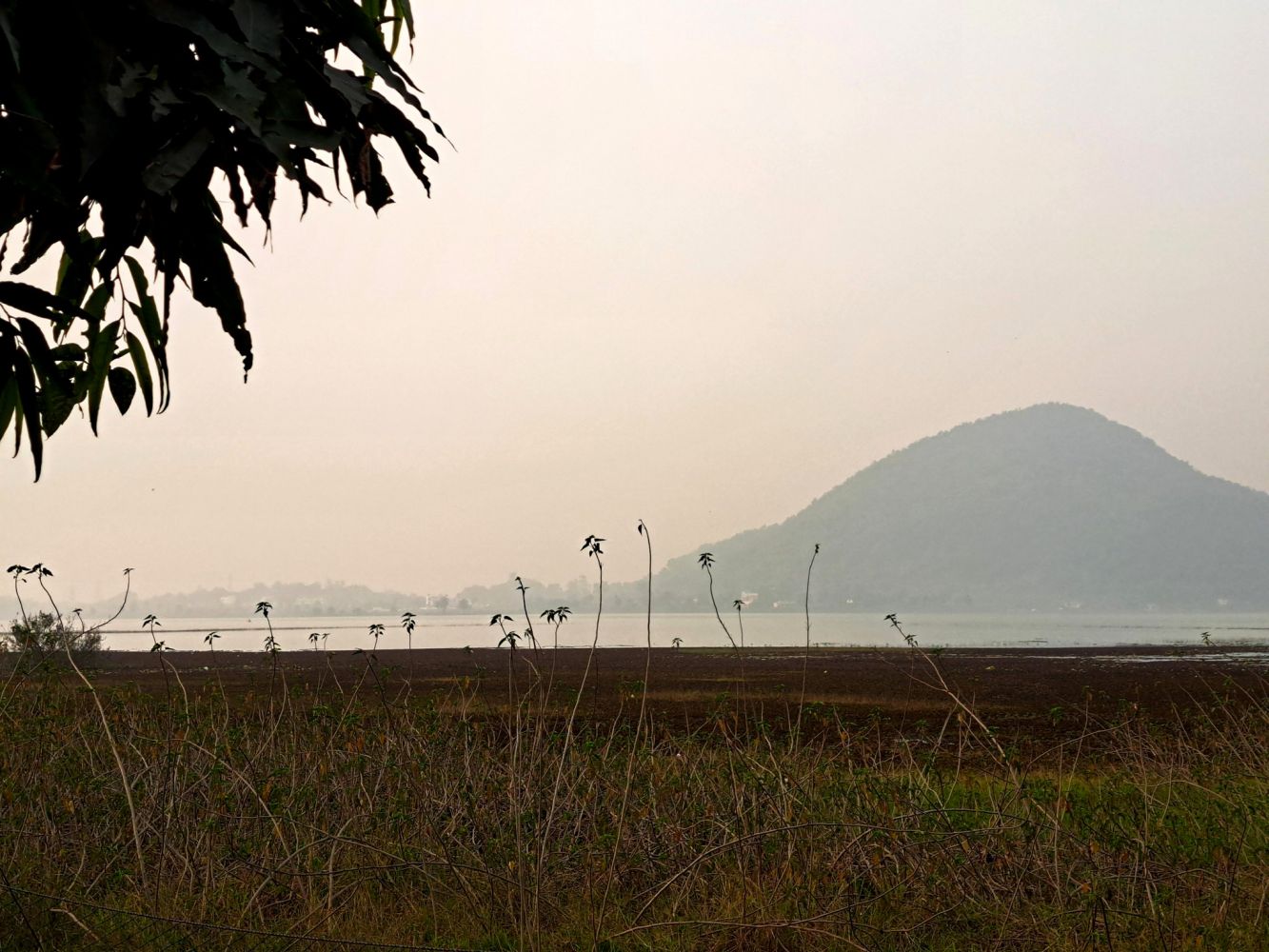
We reached Baranti around 3:30 PM. The resort where we stayed was located right on the bank of Baranti Lake. The view of the fog-covered lake, with a lonely hill standing quietly beyond it, was truly mesmerizing.
After freshening up, we enjoyed a delicious fish thali for lunch at the resort. Our plan for the afternoon was to visit Susunia Hill in the Bankura district. As we drove towards Susunia, we passed through villages inhabited by the Santhal tribes. It was a very interesting experience.
Once we entered Bankura district, we noticed both Santhal women and Bengali women. I could clearly observe that the style of wearing a saree was different among Santhal women. However, the only wish that remained unfulfilled during this trip was watching and listening to the traditional Santhal dance and songs.
Purulia is part of the ancient Chotanagpur Plateau, one of the oldest landmasses in India, formed billions of years ago. Over time, continuous erosion by wind, rain, and heat wore away the softer rocks, leaving behind isolated masses of harder rock standing tall against the plains. Many such hills in Purulia and Bankura districts are known as 'Island Mountains', rocky elevations that rise abruptly from flat surroundings. Susunia Hill is one such example, standing proudly amidst lush greenery.

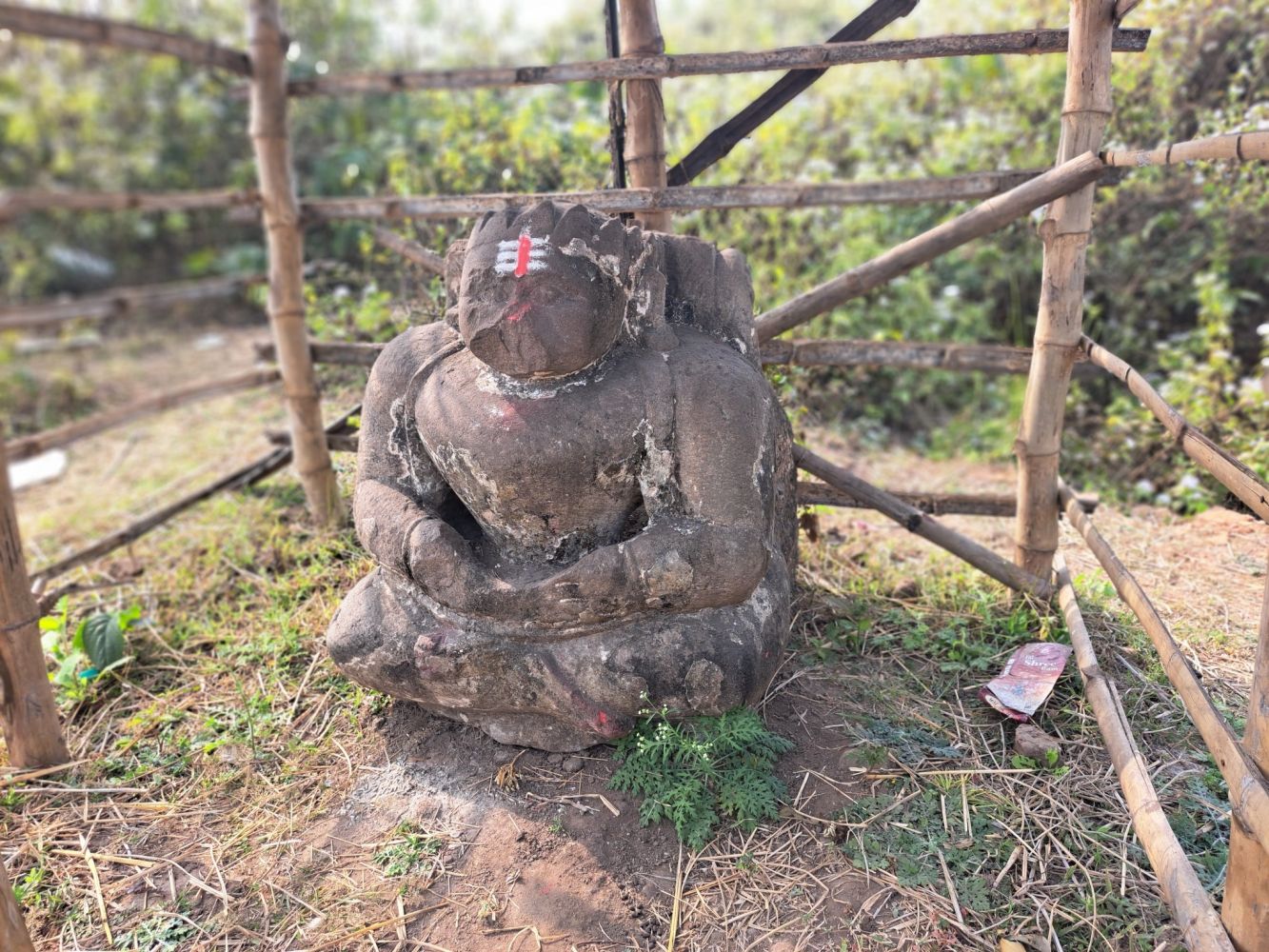
Susunia is well known in West Bengal for rock climbing and mountaineering training. The hill also carries historical significance. An ancient stone inscription of King Chandravarman, dating back to the 4th century, can be found here, along with a carving of Lord Narasimha etched onto the rock surface.
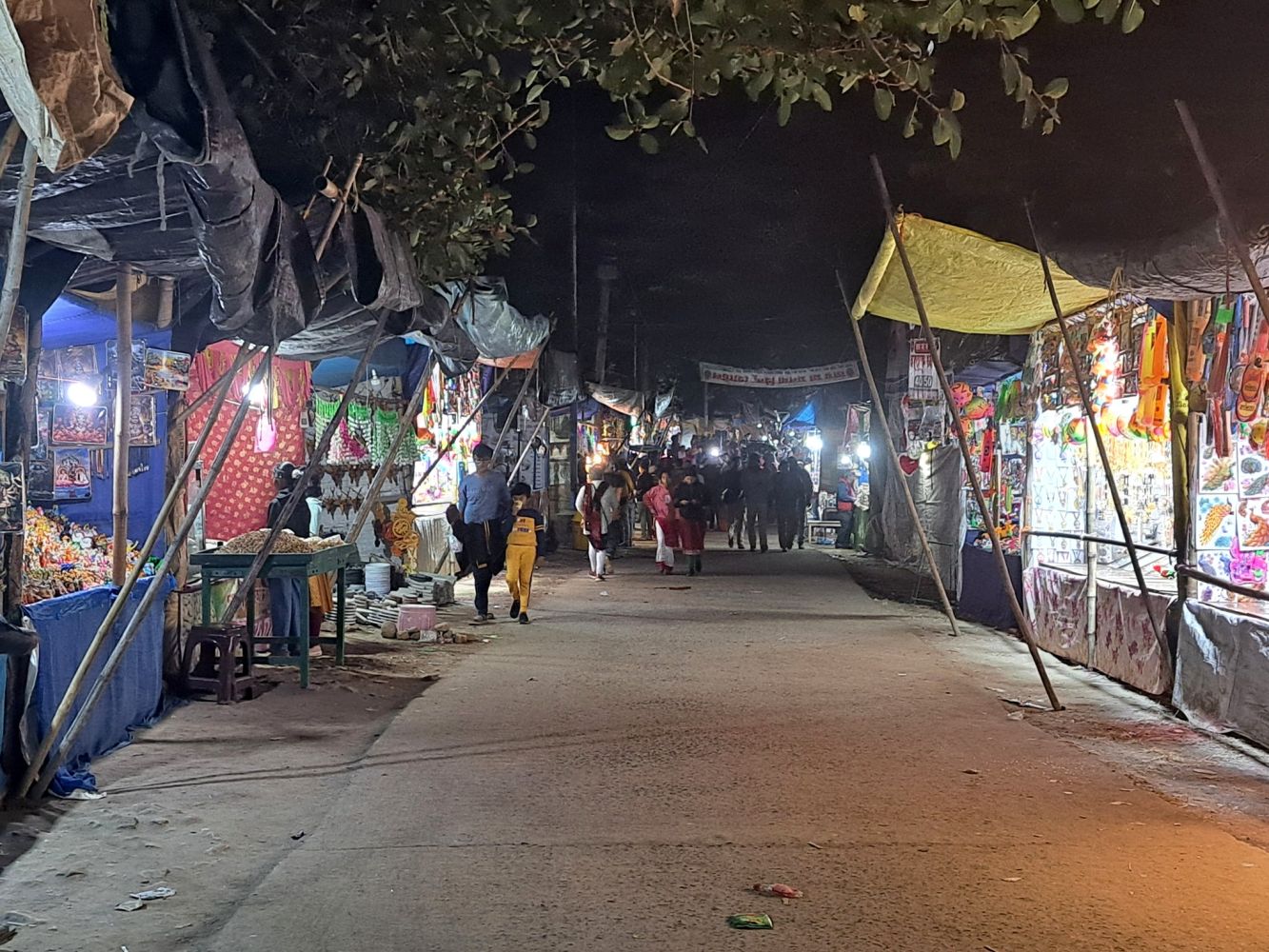
About an hour’s drive from Baranti brought us to the foothills of Susunia. To our delight, a rural fair, the Susunia Hill Mela, was in full swing. We learned that this fair is held every year in mid-January during Poush Sankranti. Stalls displayed beautiful handcrafted stone plates, pottery, and terracotta items. I bought a medium-sized stone plate with 'Susunia Pahar' engraved inside it as a souvenir for everyone.
After crossing the lively mela, we reached the natural spring locally known as 'Dhara'. The water flows throughout the year and is believed to have medicinal properties.

On our way back, we experienced something unique Tandoori chai for the first time in our lives. The preparation itself was fascinating. A clay cup is heated inside a traditional tandoor until it turns red hot. Freshly prepared tea is then poured into the super-heated cup. Instantly, the tea bubbles and releases smoky steam, giving it that distinctive 'tandoori' flavour. It was truly a memorable experience.
Once we returned to the resort, everyone was eager to have tea in the chilly winter night. We had booked five rooms, three of which shared a long, stretched verandah (balcony). Sitting there together, we enjoyed our tea, discussed what we had loved about the day, and planned for the next one. Most importantly, we counted how many of us would wake up early to taste the fresh date palm juice the next morning.
Date palm juice, popularly known as Khejur Rosh, is the fresh sap collected from the date palm tree early in the morning before sunrise during winter, especially in rural Bengal. During the cold months, skilled villagers climb the trees in the evening and tie small clay pots to collect the sap overnight. Before sunrise, the pots are brought down, filled with fresh, clear, mildly sweet juice that is incredibly refreshing.
Early that morning, I received an alarm call from my mother-in-law: “Come out of the room quickly if you want to taste the khejur rosh!”
The excitement of waking up before sunrise to taste fresh khejur rosh, sweet and pure, collected straight from the trees in the misty winter dawn is truly unforgettable.
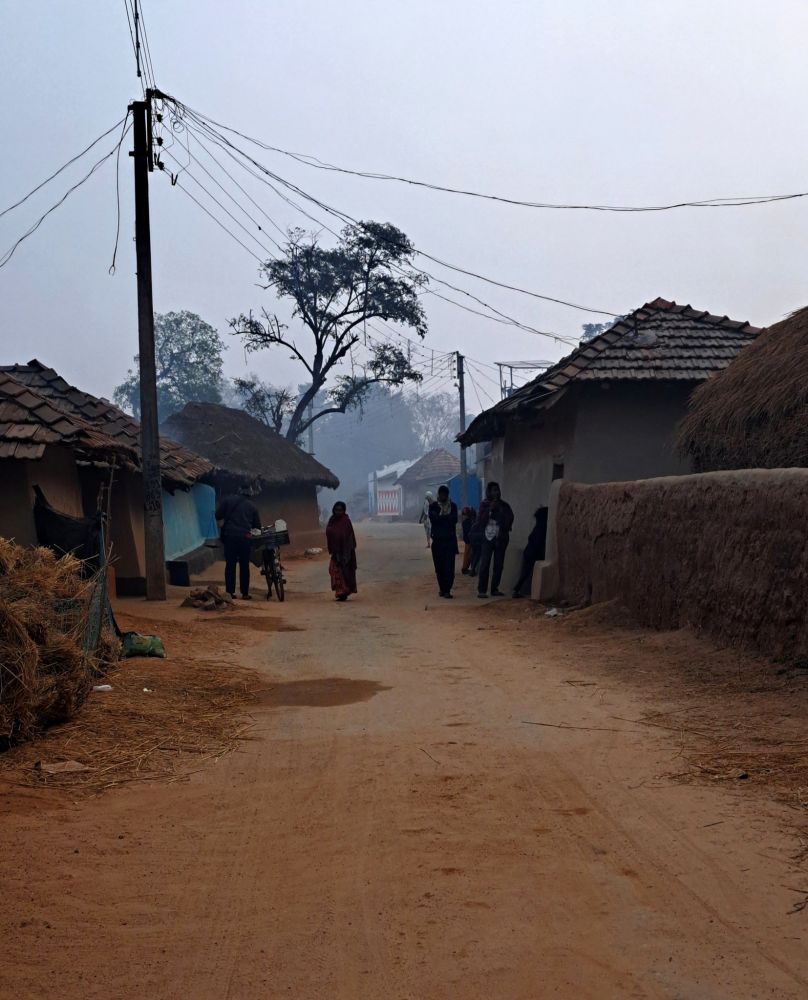
We then went out to explore the Santhal village and observe their way of life. The first thing we noticed was a small cemented structure, the kind we usually see built in memory of someone. At the center, several dhol and madol, traditional drums, were hanging.

Something was written on the structure, but the script was unfamiliar to me. Nearby, a Santhal lady was washing utensils at a roadside tap. When we asked her about the structure, she told us that it was the temple of Marang Buru, a revered Santhal deity. She also explained that the script was Ol Chiki, the writing system of the Santhali language.
The script was created by Pandit Raghunath Murmu in 1925 and it is now recognised as the official script for Santhali literature in many parts of eastern India. We knew that only a month back, on 25 December 2025, the Constitution of India had been officially published in the Ol Chiki script for the first time.
Standing there, listening to her, I realized how little we often know about the rich heritage that exists quietly beside us. The unfamiliar script was not just writing, it was identity, history, and pride carved into a simple village structure.

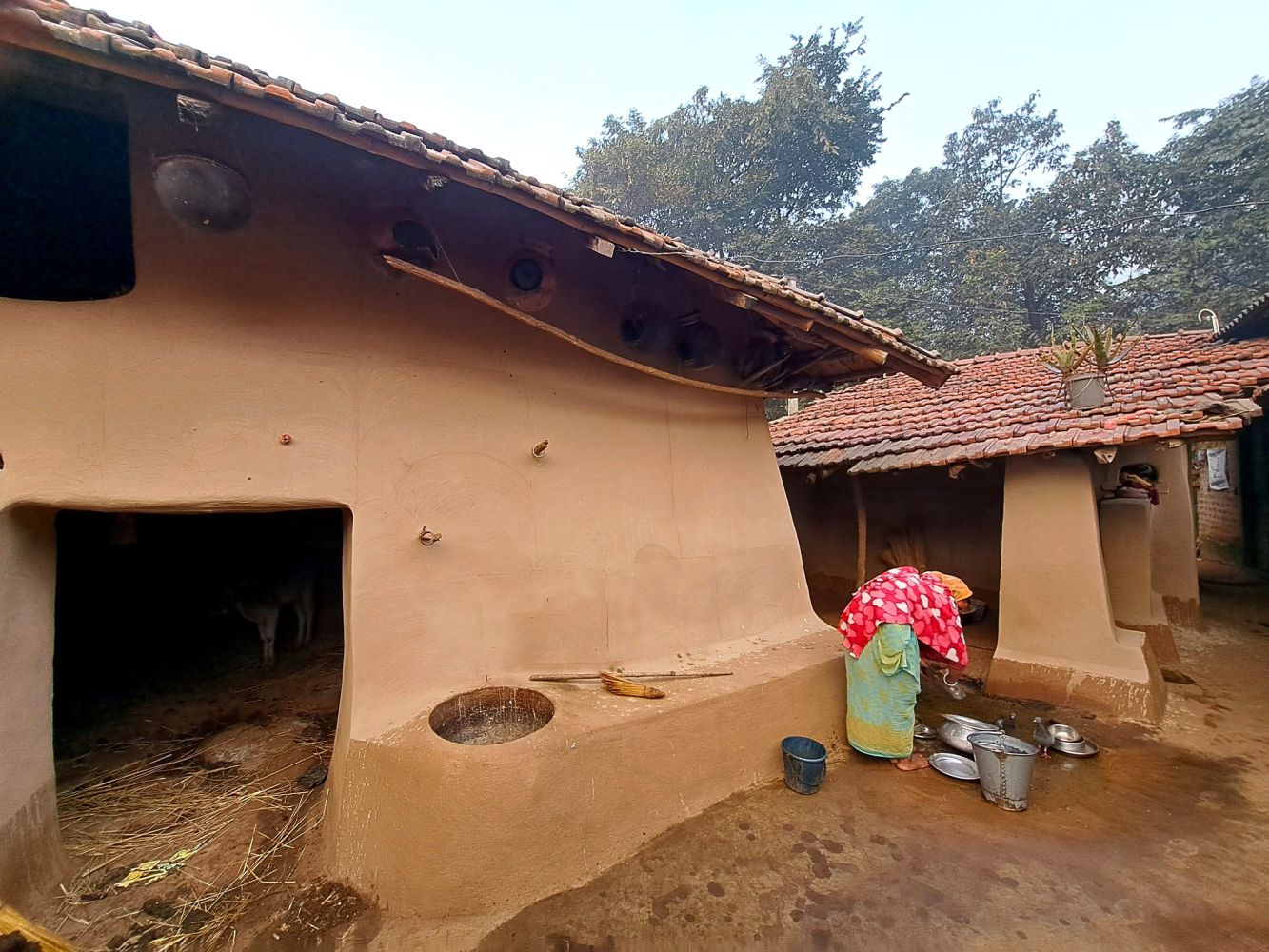
We saw Santhal houses made of clean, polished clay, some of them beautifully painted on the outside. Curious to see the inside, we requested a young boy for permission to enter one of the houses. He smiled and agreed immediately.
As we stepped inside, we found a courtyard surrounded by three clay houses. Two of them were bedrooms, one was the kitchen, and another small structure outside served as a cattle shed, beside which stood a pot-like structure filled with water for the cows to drink.
In the courtyard, there were two clay ovens, one used for daily cooking and the other for boiling freshly harvested paddy to prepare rice. The simplicity and neatness of the space reflected a life deeply connected to nature and tradition.
We walked for a while and watched the sunrise slowly appear behind a vast stretch of land dotted with trees, with a small hill standing quietly in the distance.
After returning to the resort and freshening up, we enjoyed a delicious breakfast of loochi (a kind of poori) with ghoogni (spiced chana curry).

Before leaving the resort, we bought beautiful artificial flowers made from natural date palm leaves. A few Santhal children had crafted them by hand and brought them to the resort to sell. Their creativity and shy smiles made the purchase even more special.
Our first destination on the second day was a small hut standing in the middle of a vast field filled with date palm trees. On the other side of the land, the hut appeared simple, but it was actually a shop selling khejur gur jaggery made from date palm juice.
My in-laws were extremely excited to buy the jaggery. They purchased both solid and liquid varieties. The liquid jaggery was so delicious that it could be enjoyed on its own as a dessert.

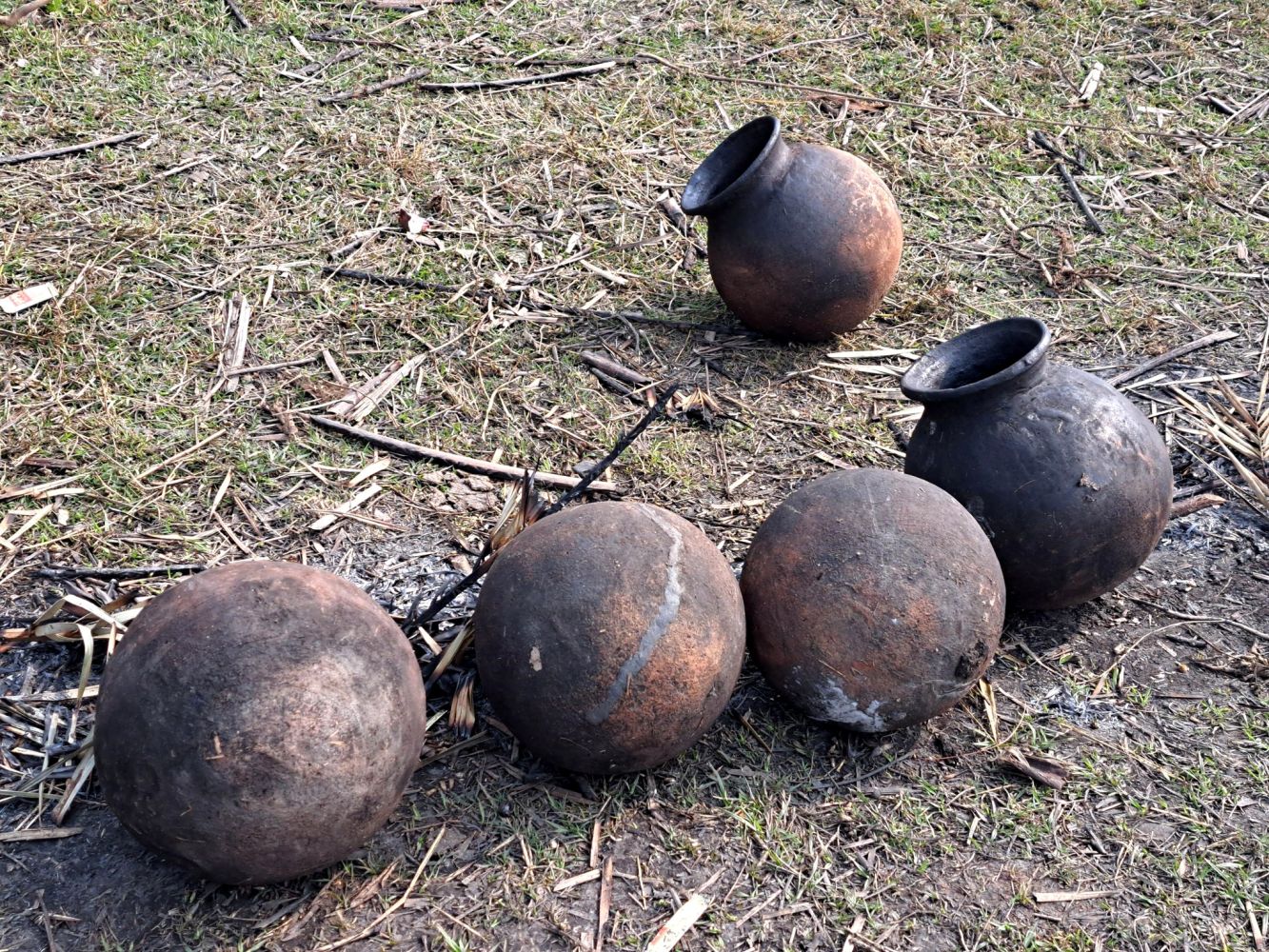
While they were busy buying jaggery, I walked closer to the hut and noticed a large oven where the fresh date palm juice was being boiled to prepare the jaggery. Nearby, a few clay pots were kept out in the sunlight. The collected date juice is first stored in these pots. After pouring the juice into a large vessel for boiling, the clay pots are left in the sun to dry completely, ensuring no juice remains inside before they are reused to collect the next batch from the trees.
Our next destination was Garh Panchkot, a historic fort complex located at the foothills of Panchet Hill. The fort structures that stand today were mainly built during the 17th–18th century by the rulers of the Panchkot dynasty, who governed this region for several centuries.
The Panchkot dynasty is believed to have been founded around the 9th–10th century CE by Damodar Sekhar (Singh Deo). The rulers were associated with the Malla lineage and played an important role in shaping the political and cultural landscape of the region. Under their patronage, Garh Panchkot flourished as a political, cultural, and religious center.

However, in the mid-18th century, during the Maratha invasions of Bengal, locally remembered as the Bargi attacks, Garh Panchkot was attacked and heavily damaged. Much of the fort complex was destroyed, and the royal family later shifted their capital. Eventually, the site was abandoned, turning into the silent ruins we see today.
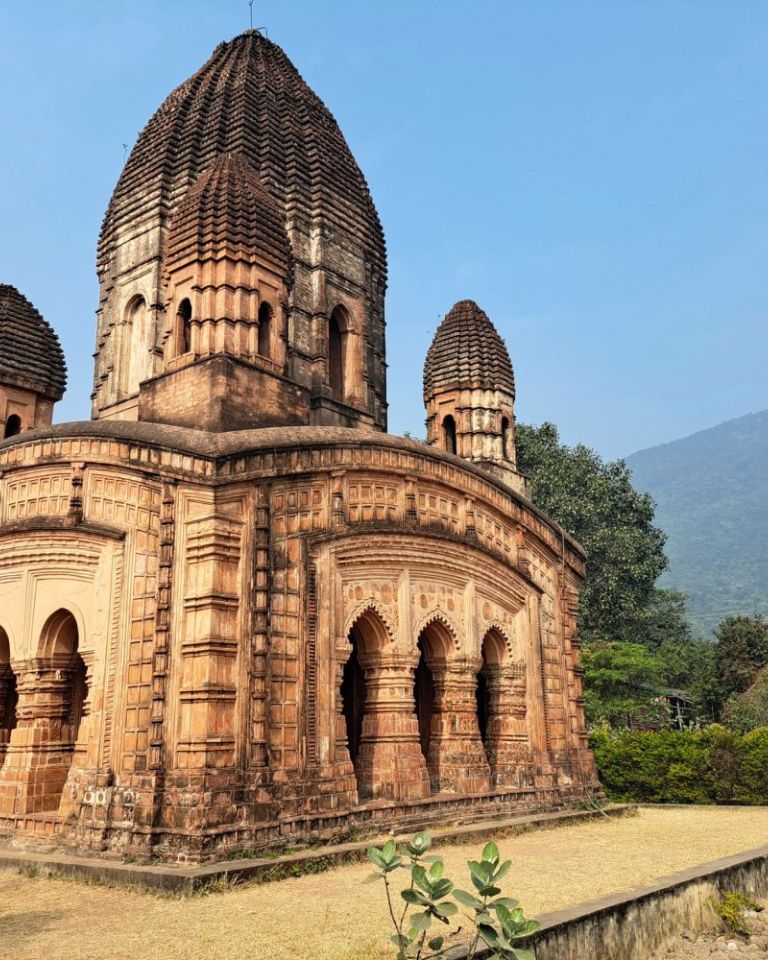
The dynasty patronized Shaiva and Vaishnava temples. Even in ruins, the stone temples with intricate carvings reflect Bengal temple architecture with influences from Odisha styles. The area continues to hold cultural significance, especially during local festivals and folk traditions.
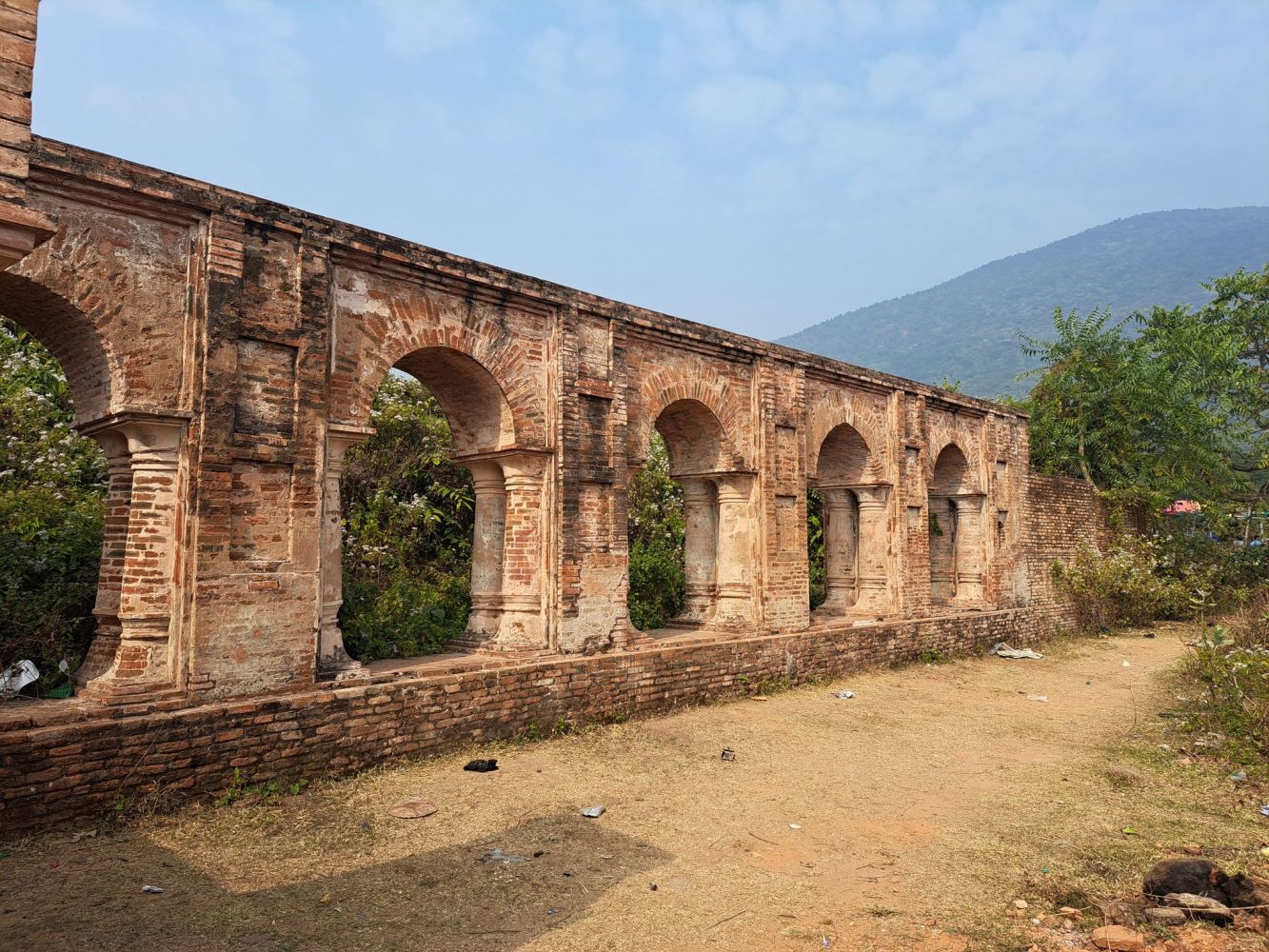
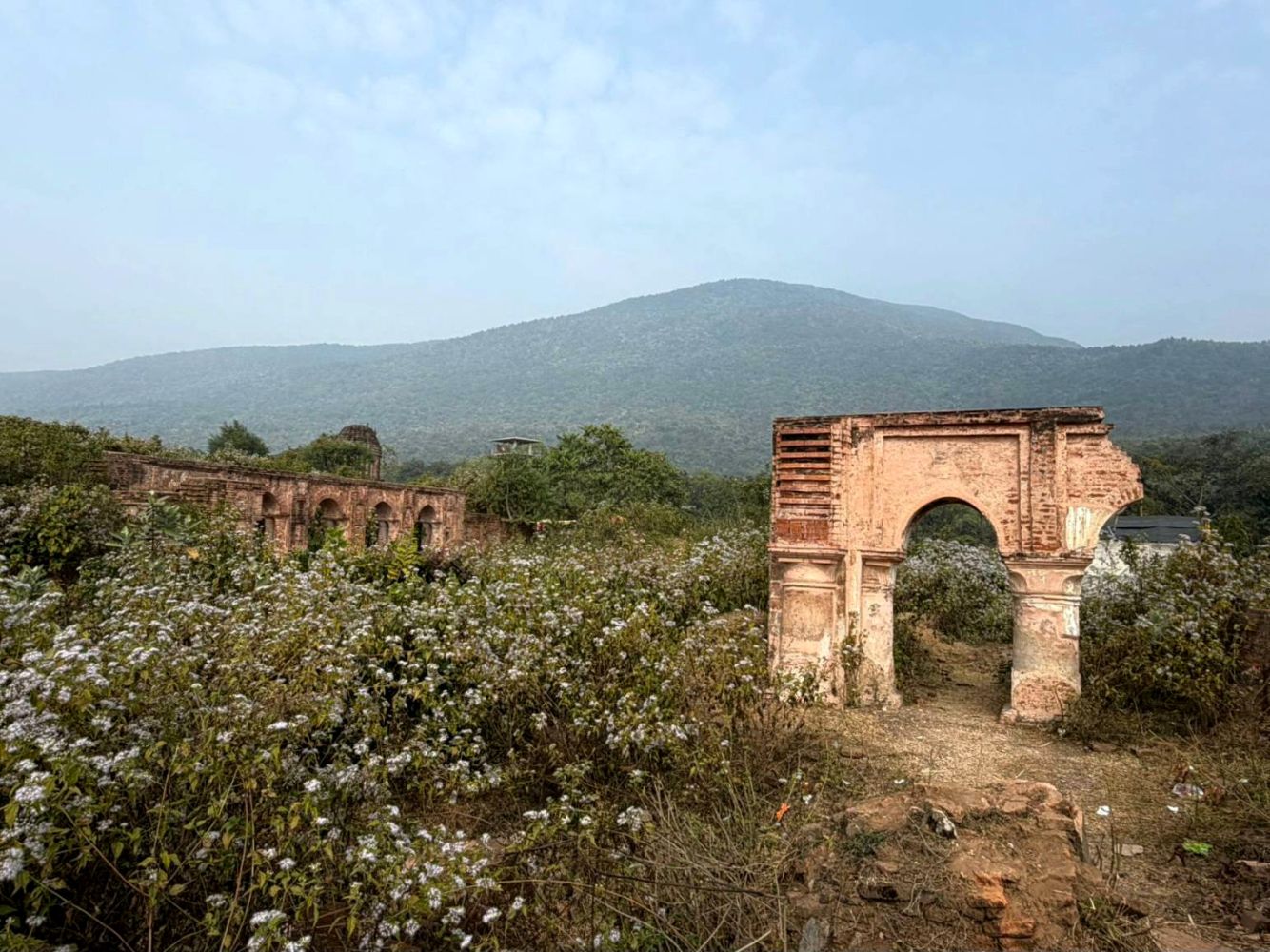
The temples are now in an almost ruined state, surrounded by hills, forests, and vast open landscapes. We took a few photographs near the ancient structures and tried to imagine the grandeur of the past from the broken gates, weathered walls, and stories shared by the local people.

The temples are now in an almost ruined state, surrounded by hills, forests, and vast open landscapes. We took a few photographs near the ancient structures and tried to imagine the grandeur of the past from the broken gates, weathered walls, and stories shared by the local people.

Our next stop was Panchet Dam, built across the Damodar River near the border of Jharkhand and West Bengal. It was constructed by the Damodar Valley Corporation (DVC) as part of the Damodar Valley Project in 1959. The Damodar River was once known as the “Sorrow of Bengal” because of its frequent and devastating floods. The construction of this dam significantly helped in controlling floods and supporting agriculture and power supply in the region.
The vast stretch of water, surrounded by hills and greenery, created a breathtaking view. We spent some time sitting on the bank of the reservoir, enjoying the calmness. Though we initially planned to go for a boat ride, we eventually dropped the idea and simply soaked in the peaceful surroundings.
We then visited Maithon Dam, where the wide expanse of water met the hills in the distance. This dam is built across the Barakar River, a major tributary of the Damodar River. It is also located near the Jharkhand and West Bengal border. Older than Panchet Dam, Maithon Dam was completed in 1957 as part of the Damodar Valley Project. However, as it was a public holiday, the area was quite crowded, and we could not fully enjoy the serenity of the place.
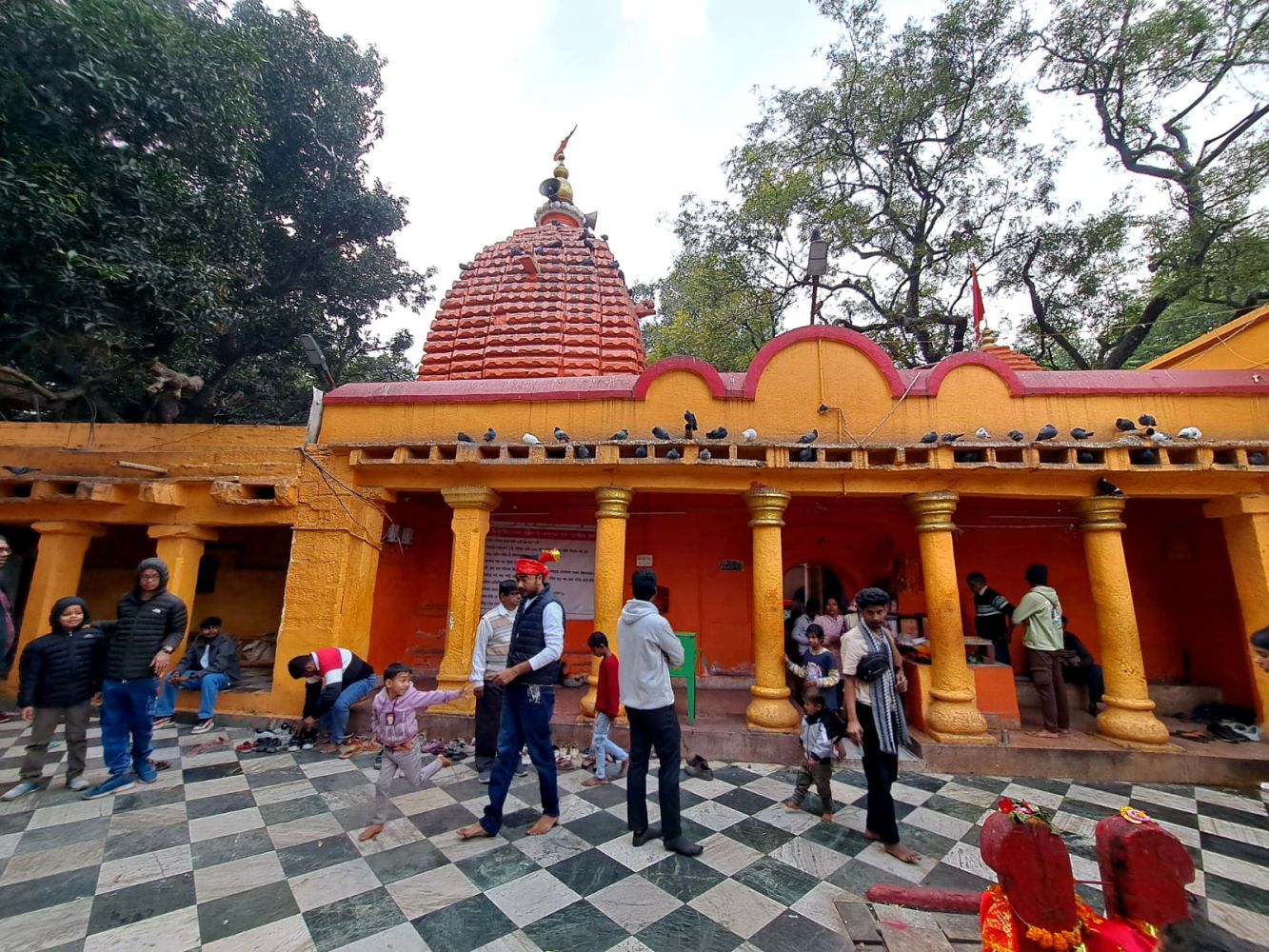
While returning from Maithon Dam, we visited the over 500-year-old Maa Kalyaneshwari Temple. After offering our prayers, we continued our journey toward Kolkata, stopping for a late lunch along the way.
On our way back, we stopped for tea and bought langcha, a traditional Bengali sweet, from Shaktigarh. Popularly known as the 'Langcha Hub of Bengal' Shaktigarh has dozens of sweet shops lined up along the highway, attracting travellers with freshly made, syrupy sweet.
We returned carrying stories of Santhal life, timeless ruins, memories of hills, and quiet beauty of Bengal.