
Leh – Exploring the Heart of Ladakh (Part 1)
Experience the charm of Leh through ancient monasteries, stunning Himalayan landscapes, vibrant local culture, the Ladakh Festival, authentic cuisine, and practical high-altitude travel tips in this memorable Ladakh journey.

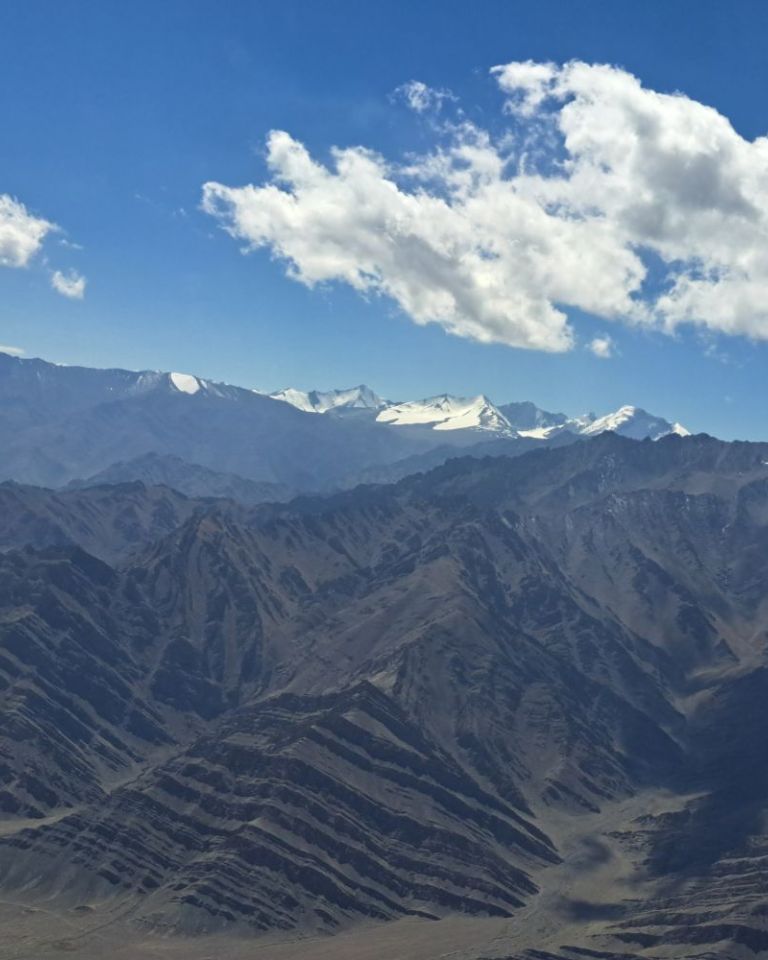
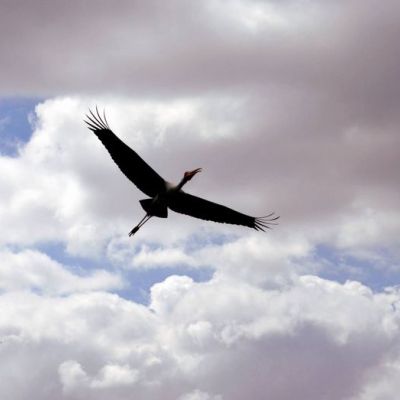
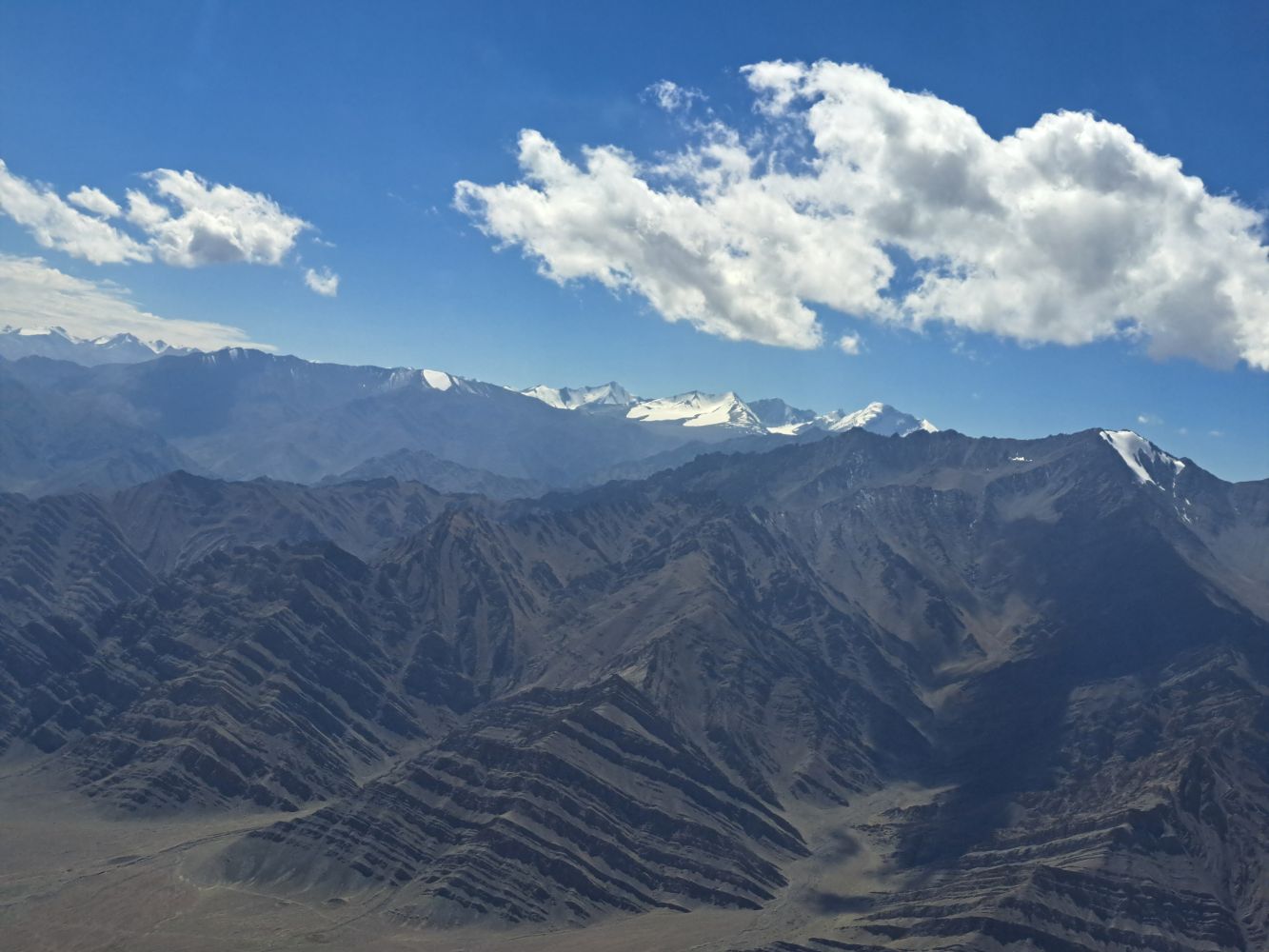
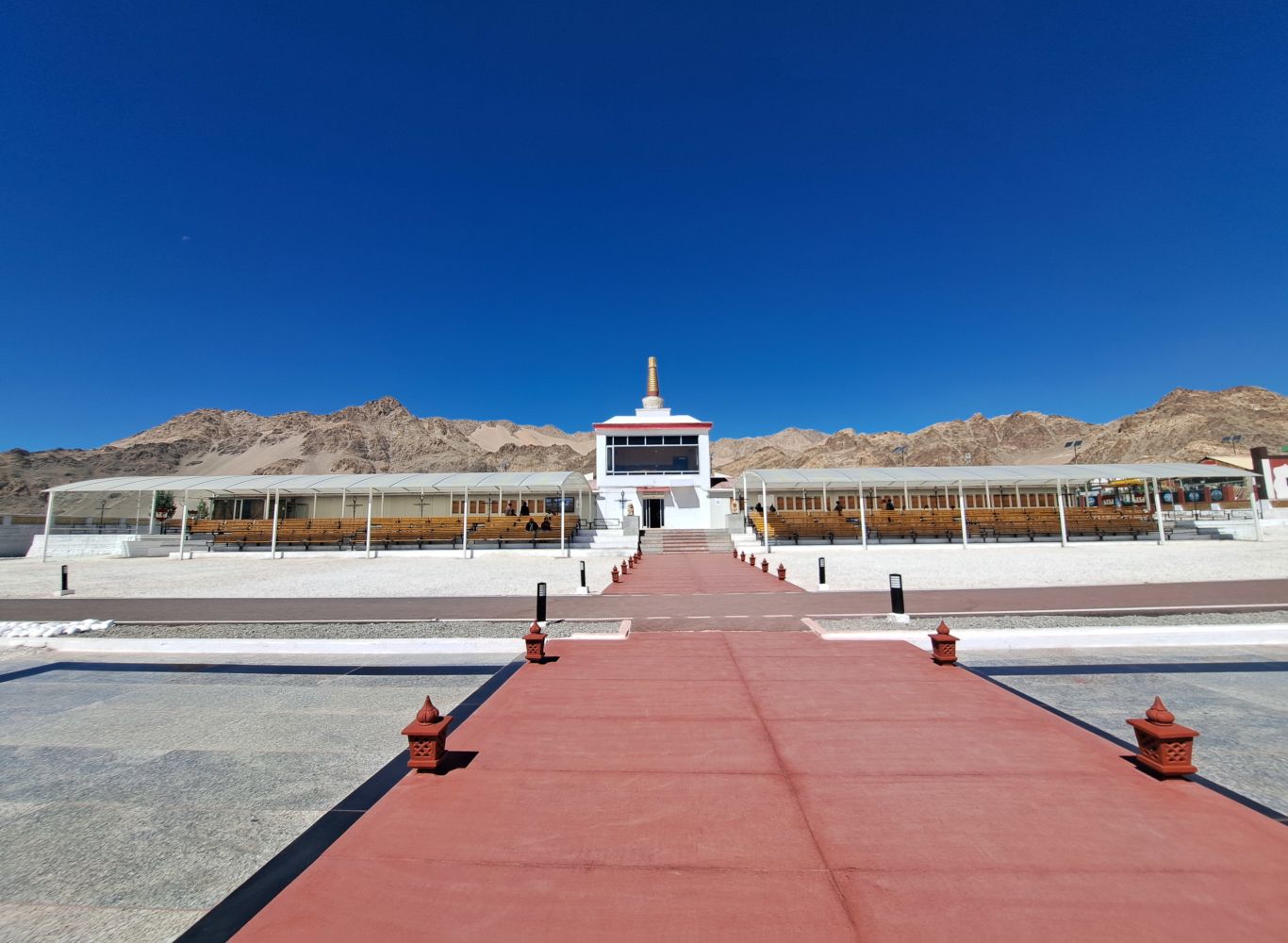
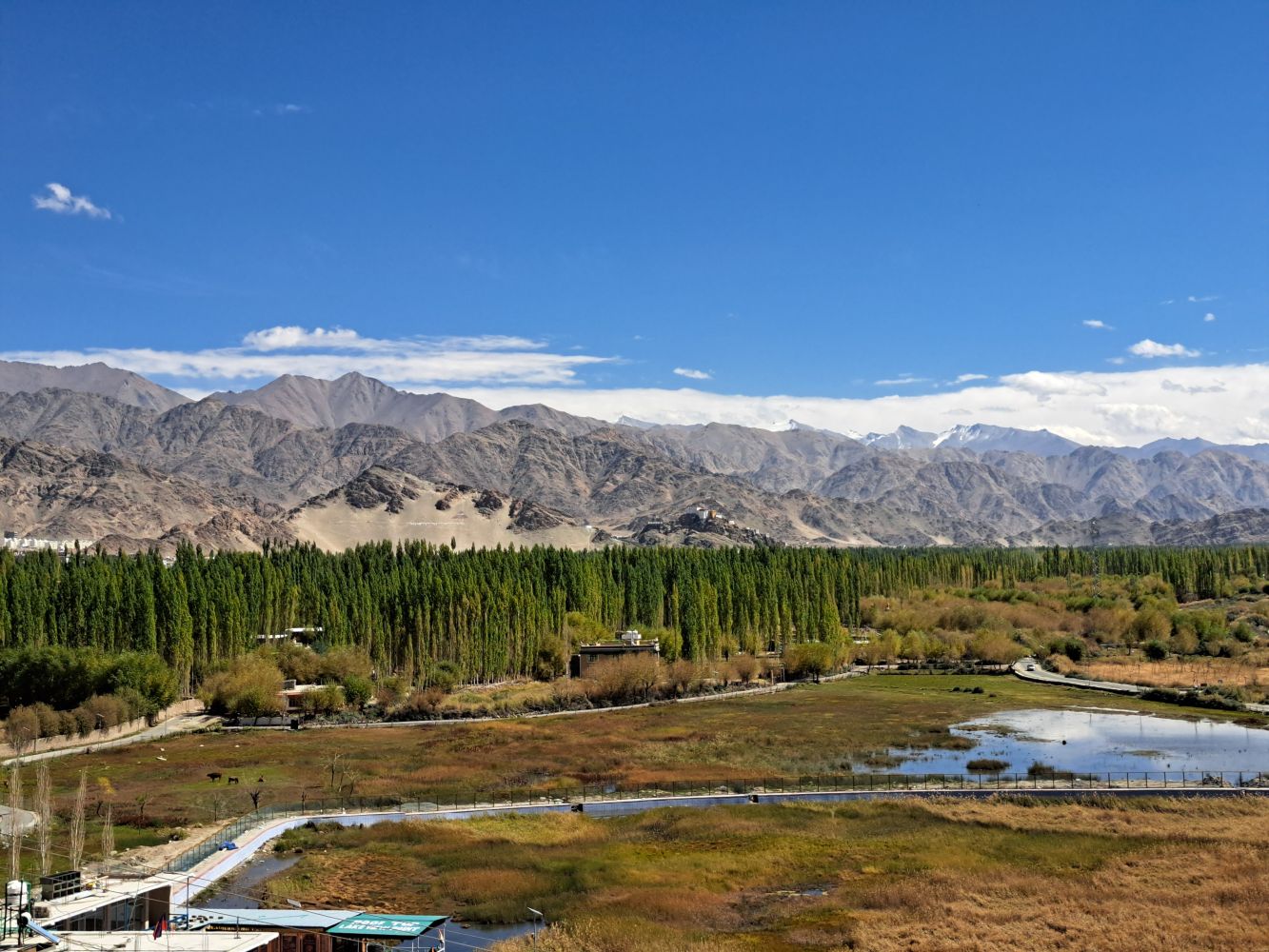
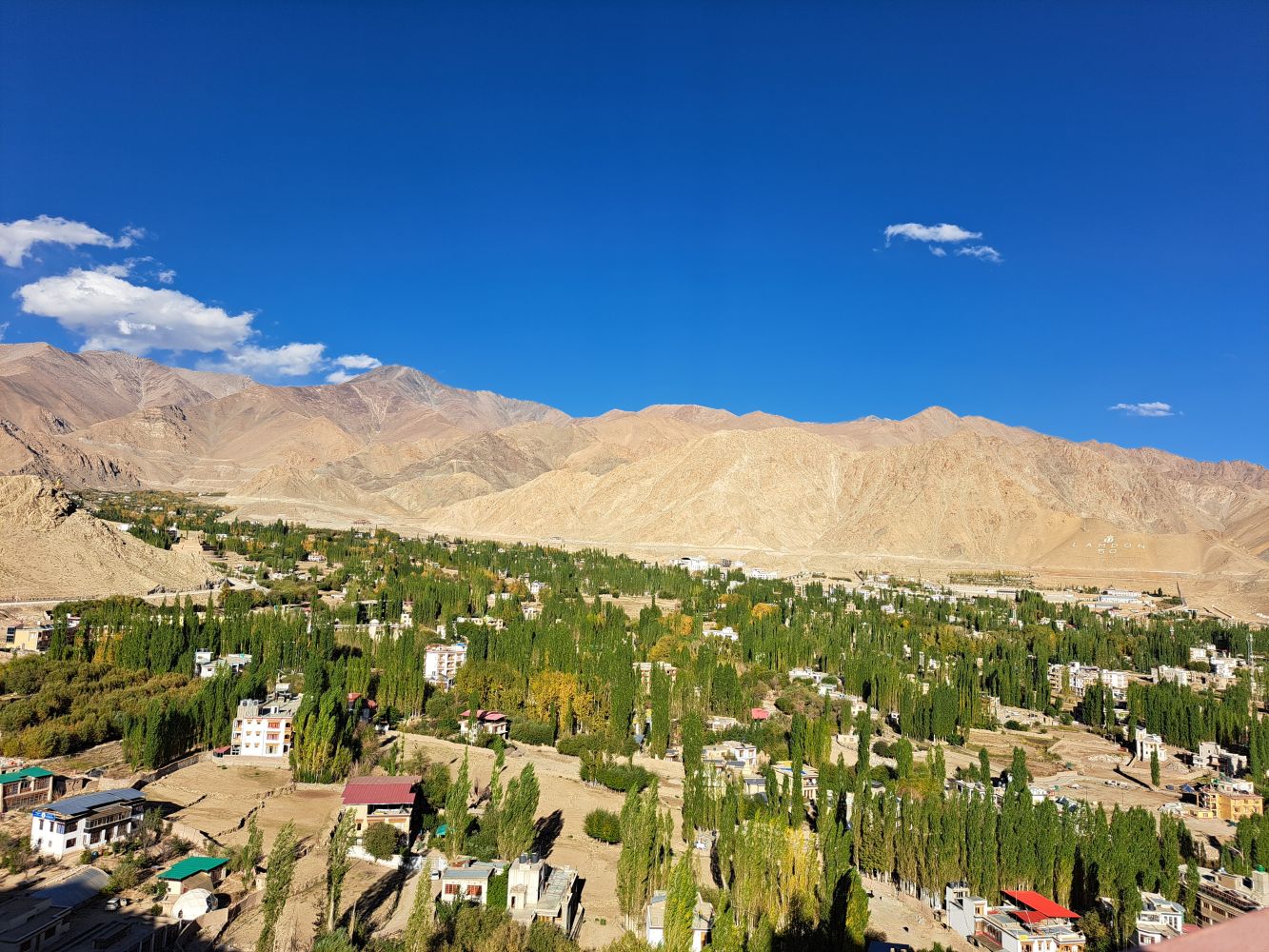
Rugged yet colourful, barren yet breathtaking. A place where the blue of the sky seems to dissolve into the waters, creating ever-changing shades of blue and turquoise. Where life moves at a gentler pace than in bustling cities, and people welcome you with a simplicity, warmth and openness that make you feel at home, just as you are. A land where life flourishes even in the thin air of high altitudes.
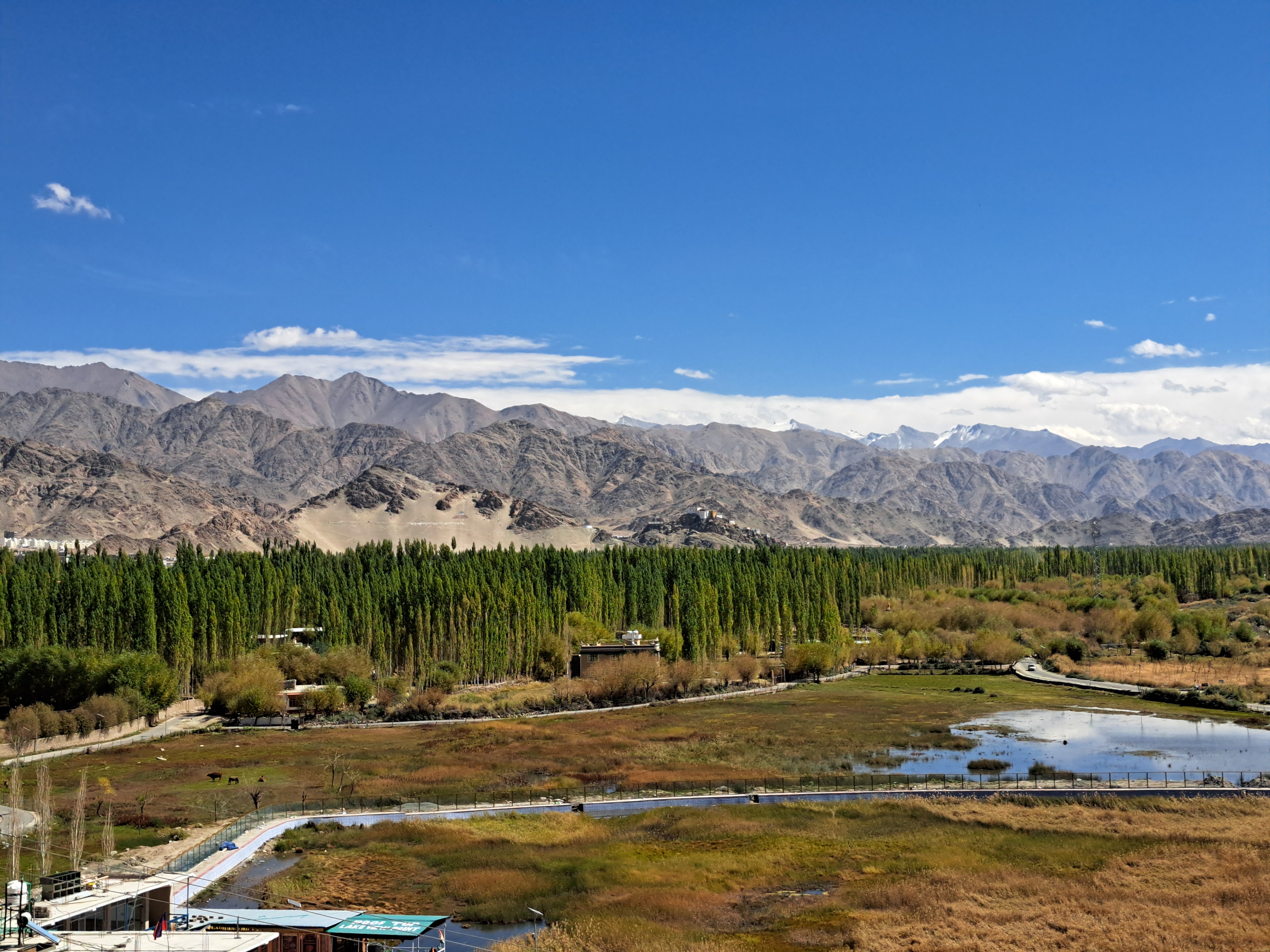
By now, you have probably guessed it. Yes, it is Ladakh, a land that offers extraordinary yet soothing experiences, leaving behind memories that stay with you forever.
Unlike my other trips, this one was not planned by me. The tour was organised by Jatrik Travel Agency, Kolkata, which took care of everything, from accommodation and food to transportation. The itinerary was thoughtfully planned, not exhausting or overly hectic, yet allowing us to cover all the major attractions.
Usually, I prefer not to travel with agencies because they have fixed itineraries that we are expected to follow. For me, a trip is not just about visiting places and ticking them off a list. It is about enjoying the journey, stopping whenever I want to capture a beautiful view, trying local food and drinks, and experiencing a place at my own pace.
However, our tour manager made a genuine effort to give the tour a more personal touch by accommodating our wishes wherever possible. This made the experience more enjoyable and allowed us to experience the journey in a way that felt closer to my own style of travelling.
We had a morning flight from Bengaluru to Leh via Delhi. There are two main routes to reach Leh by road: one from Srinagar and the other from Manali. Alternatively, you can take a flight directly to Leh, either from Delhi or via another connecting city.

Ladakh welcomes you with stunning views from the flight, with rugged mountains and snow-covered peaks stretching as far as the eye can see. We arrived in Leh around 1 PM, where a vehicle arranged by Jatrik Travel Agency was waiting to pick us up from the airport. As we stepped out of the airport and our car began its journey towards the hotel, I felt blessed by God.
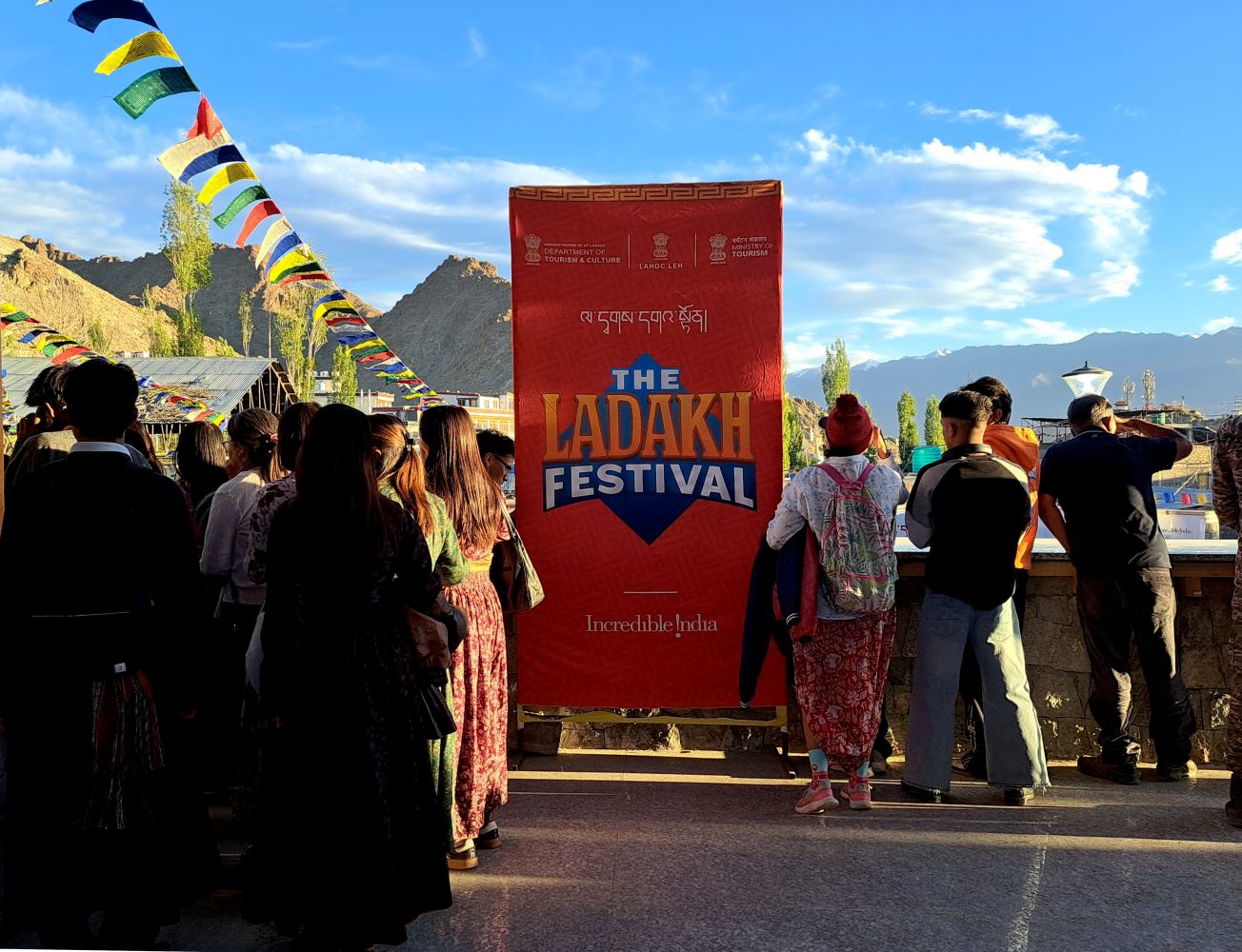
On the way, I noticed a banner announcing that the Ladakh Festival was beginning on the very day of our arrival. The festival is a three-day celebration in which people from different regions come together to showcase their unique cultures through traditional dances, music, colourful costumes and folk songs. The thought of witnessing such diverse cultural traditions in one place excited me even more. I immediately planned to visit the festival the following day, after completing our local sightseeing.
Finally, we reached our hotel. Our accommodation for the stay was Hotel Evergreen Ladakh, booked by the travel agency. Upon arrival, the hotel staff welcomed us warmly with a traditional silk scarf and a cup of Kawa tea.

After freshening up, we were invited for lunch. It was an elaborate spread, and that was just the beginning. Throughout our stay, we were treated to a wide variety of dishes at both lunch and dinner. The best part was that everything was delicious! Much of the credit goes to the head chef and coordinator of Jatrik Travel Agency, who ensured that every meal was a delightful experience.
That day was reserved for rest, in accordance with the advice to allow time for acclimatisation after arriving in Ladakh. The high altitude and low oxygen levels can put considerable stress on the body, so it is important to take it easy during the initial days and give your body time to adjust.
A few tips from my experience:
- Allow time to acclimatise: Follow official guidance for high-altitude travel that is to avoid strenuous activities during the first 24–48 hours and do not ignore symptoms of altitude sickness.
- Diamox, only after medical advice: Consult your doctor before taking Diamox (acetazolamide). It is not suitable for everyone, and a sulfonamide allergy or other medical conditions should be discussed with your doctor.
- Pack warm clothing: Woollen socks, a warm cap and gloves are essential, along with woollen sweaters and jackets to protect yourself from the cold.
- Carry a windproof jacket: A windcheater or windproof jacket is a must-have, as the wind can make the temperature feel much colder, especially at higher altitudes.
- Carry camphor: There is no scientific evidence that camphor helps relieve breathlessness at high altitudes, although some travellers report feeling better after using it.
I experienced some uneasiness and breathlessness whenever I bent down to pick something up and then returned to an upright position. So, I decided to take complete rest. In the evening, I spent some time in the hotel lobby and garden, enjoying the peaceful surroundings before and after tea.
The ideal time to travel to Ladakh is from mid-April to mid-October. If you want to witness snow-covered landscapes, April to May is a good time to visit. For clear blue skies and stunning views of the mountains, mid-August to mid-September is ideal. From mid-September to mid-October, sudden snowfall may block roads and cause travel difficulties.
The next day’s itinerary was planned for local sightseeing in Leh. During the night, the temperature dropped to -3°C.
Our tour manager informed us that breakfast would be served at 7:30 AM, as we had to leave for sightseeing at 8 AM. The schedule remained more or less the same for the rest of the trip.
I woke up at 6 AM, just before the bed tea was served. After my morning tea, I took a bath despite the freezing temperature of -3°C! Everyone got ready and gathered for breakfast at 7:30 AM.

The breakfast spread was generous, with a wide variety of delicious dishes. After a hearty breakfast, we settled into our six-seater Innova and set off to explore the beautiful sights of Leh.
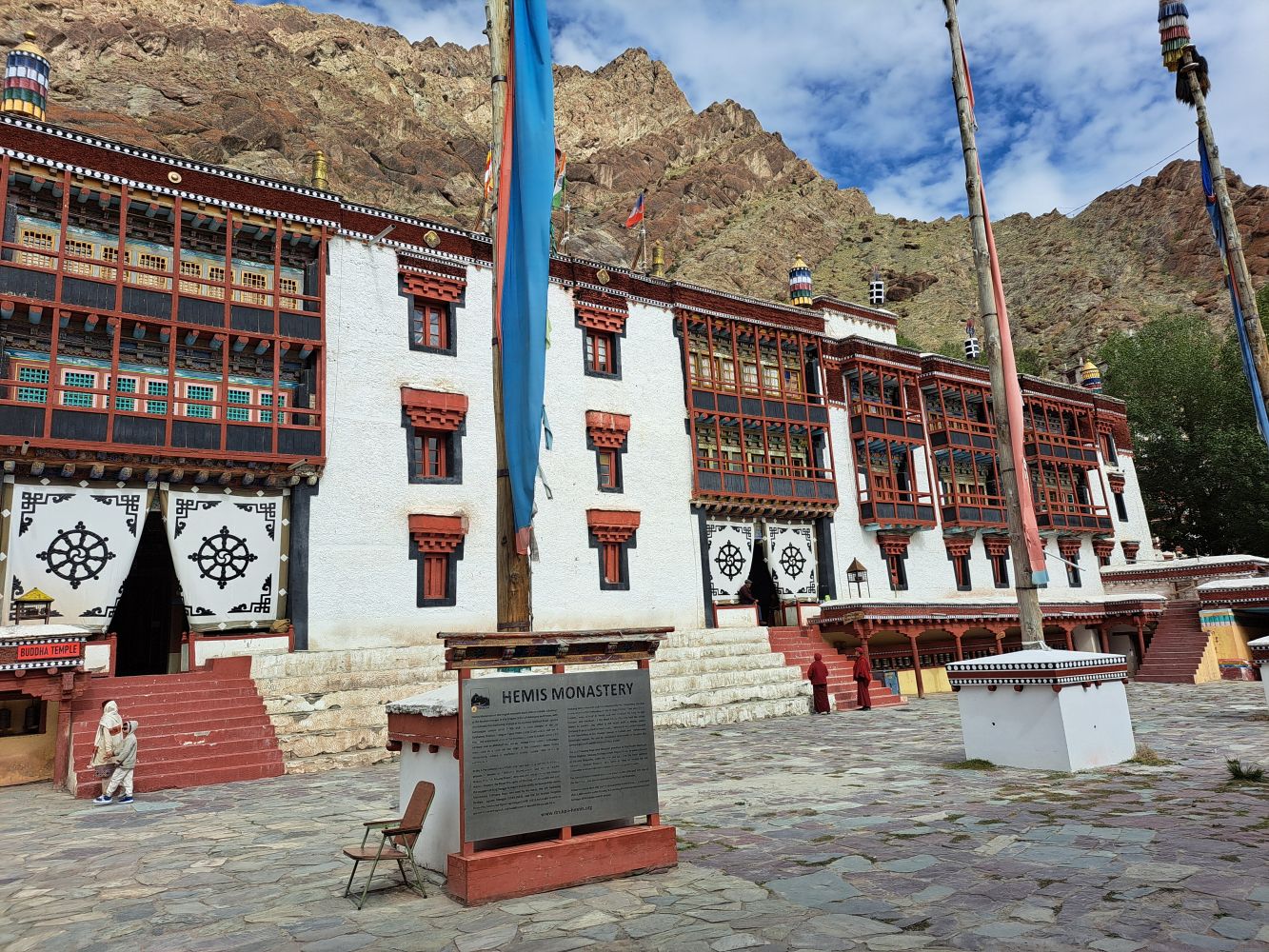
Our sightseeing tour was started with the farthest destination and gradually make our way back towards the hotel, visiting the other attractions along the way. Our first stop was Hemis Monastery, located around 45 km from our hotel. It took us almost an hour to reach there.

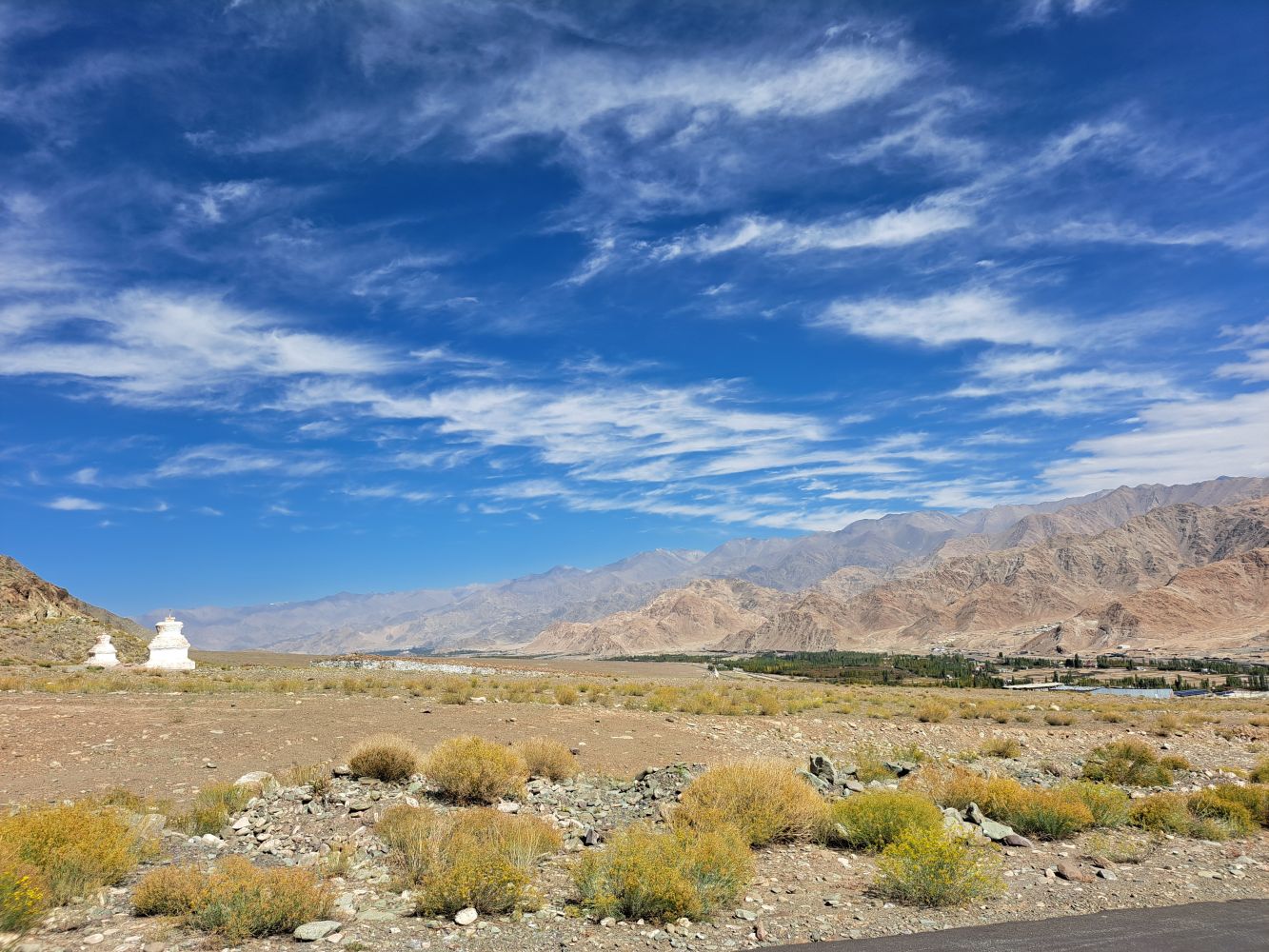
The journey itself was a visual treat. As we drove towards the monastery, the surrounding landscapes looked picture perfect. In fact, everywhere we looked in Ladakh, we were greeted by breathtaking scenery, with rugged mountains and vast, open landscapes stretching into the distance.
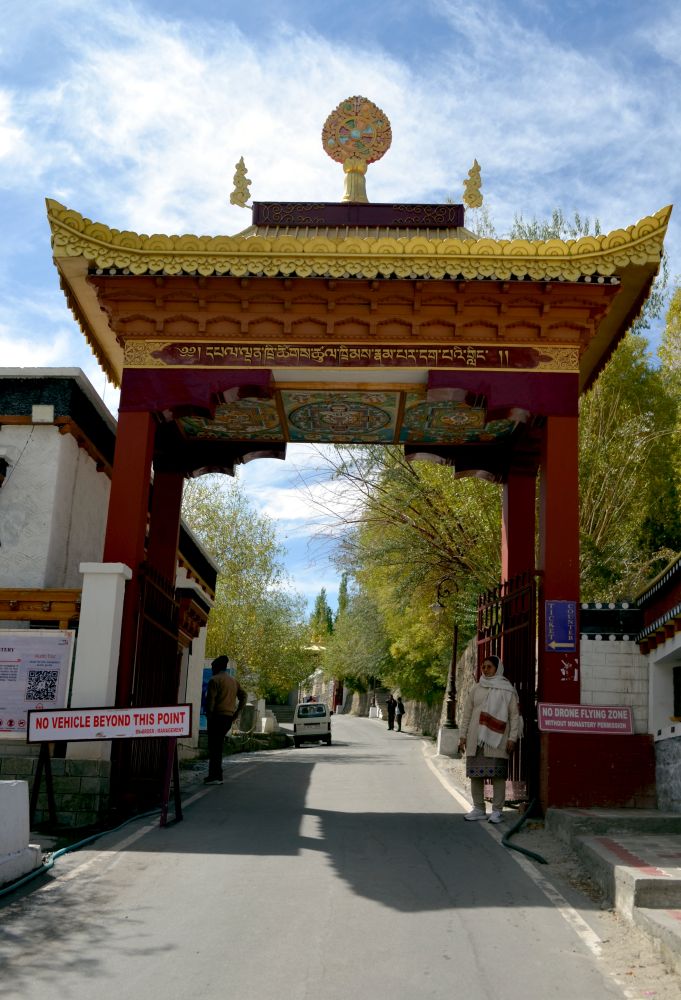
From the parking area, we had to climb a flight of stairs to reach the monastery situated on the hillside. Given Ladakh’s high altitude, it is advisable to walk slowly, without rushing or overexerting yourself. Even a short climb can leave you breathless at such an altitude, so it is important to take your time.
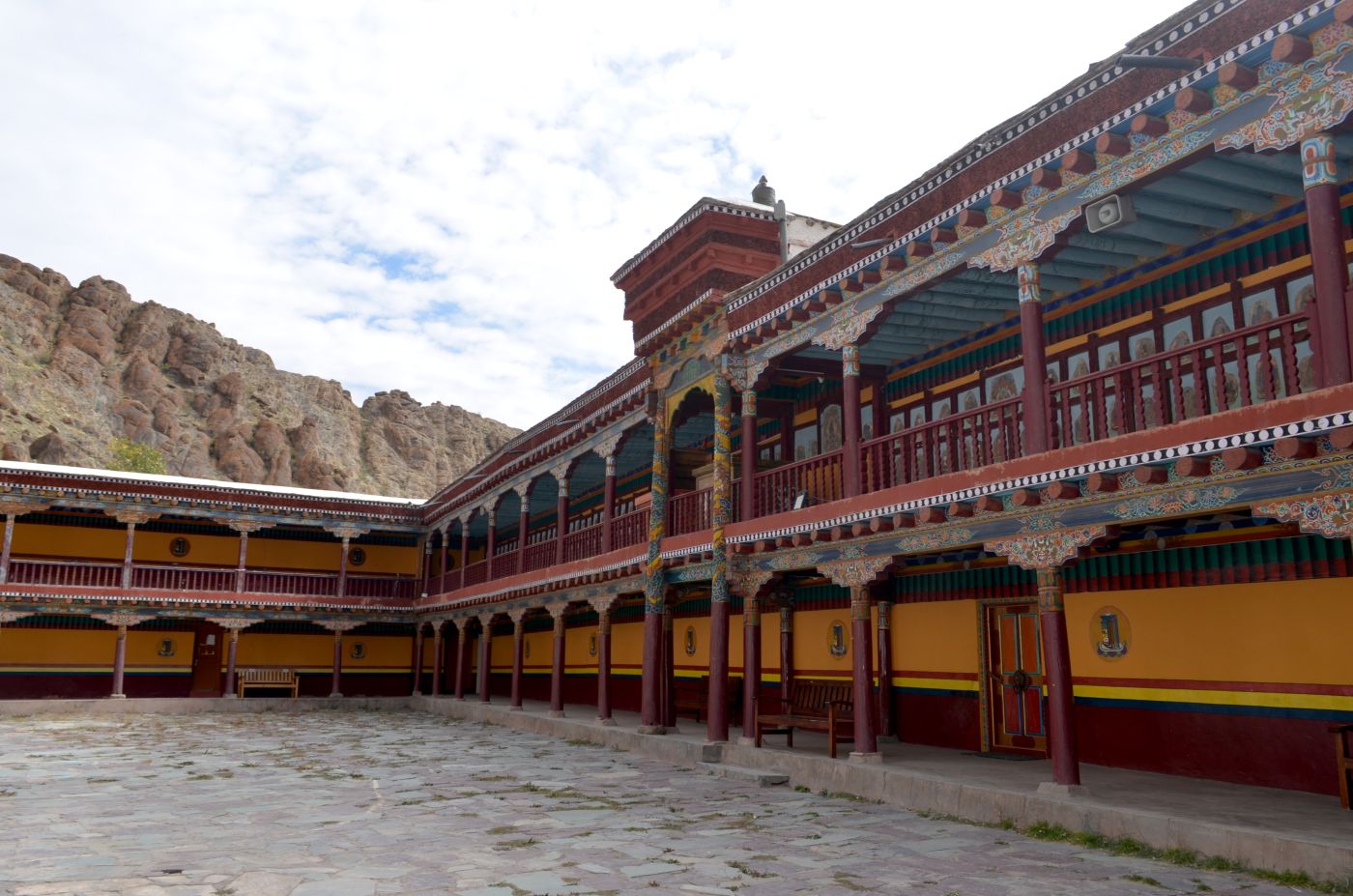
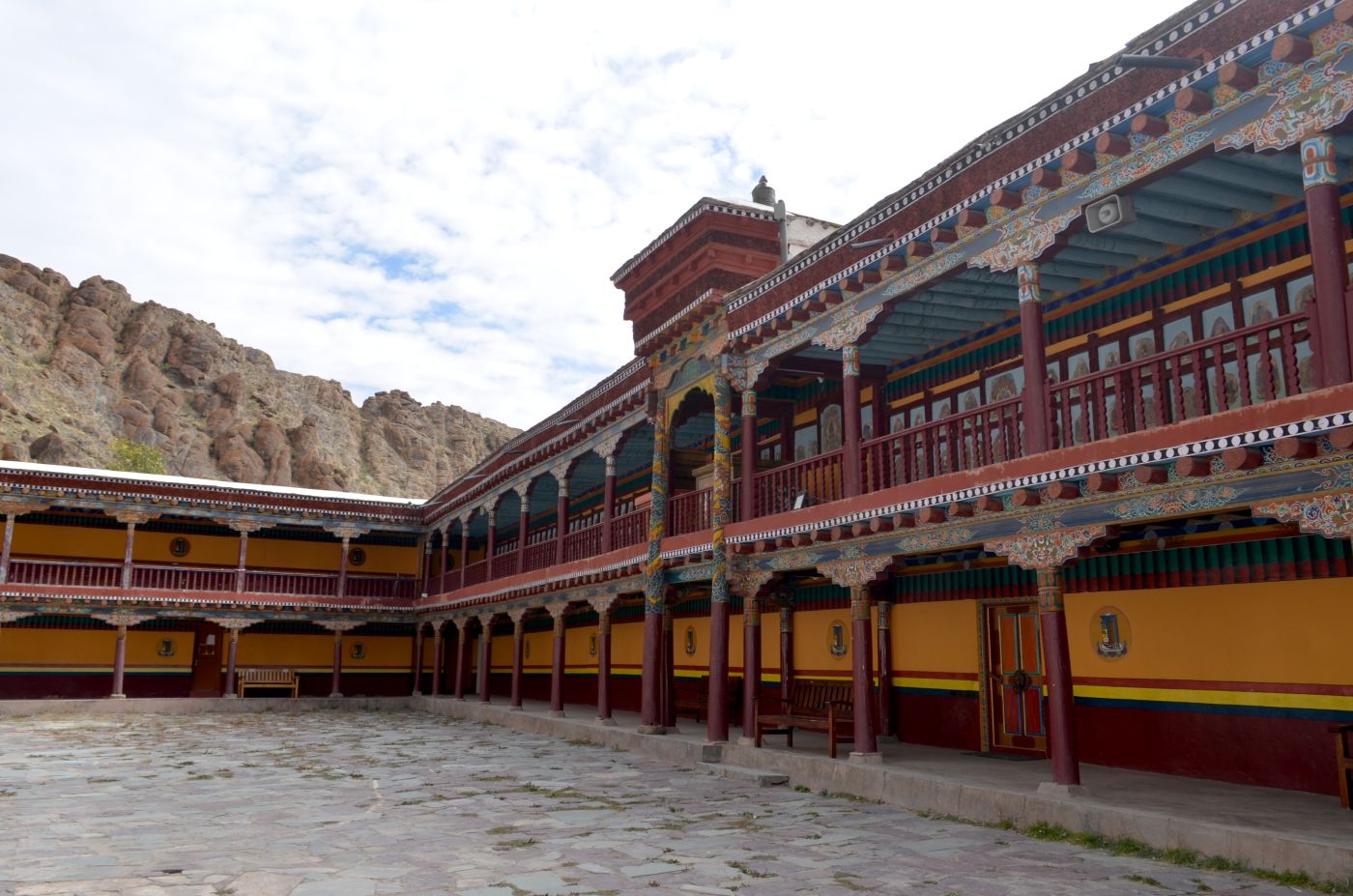
Hemis Monastery is one of the largest and most famous Buddhist monasteries in Ladakh. It was re-established in 1672 under the patronage of King Sengge Namgyal, who ruled the Namgyal dynasty of Ladakh. The monastery is believed to have existed as an older Buddhist religious site before being re-established in 1672 under King Sengge Namgyal.

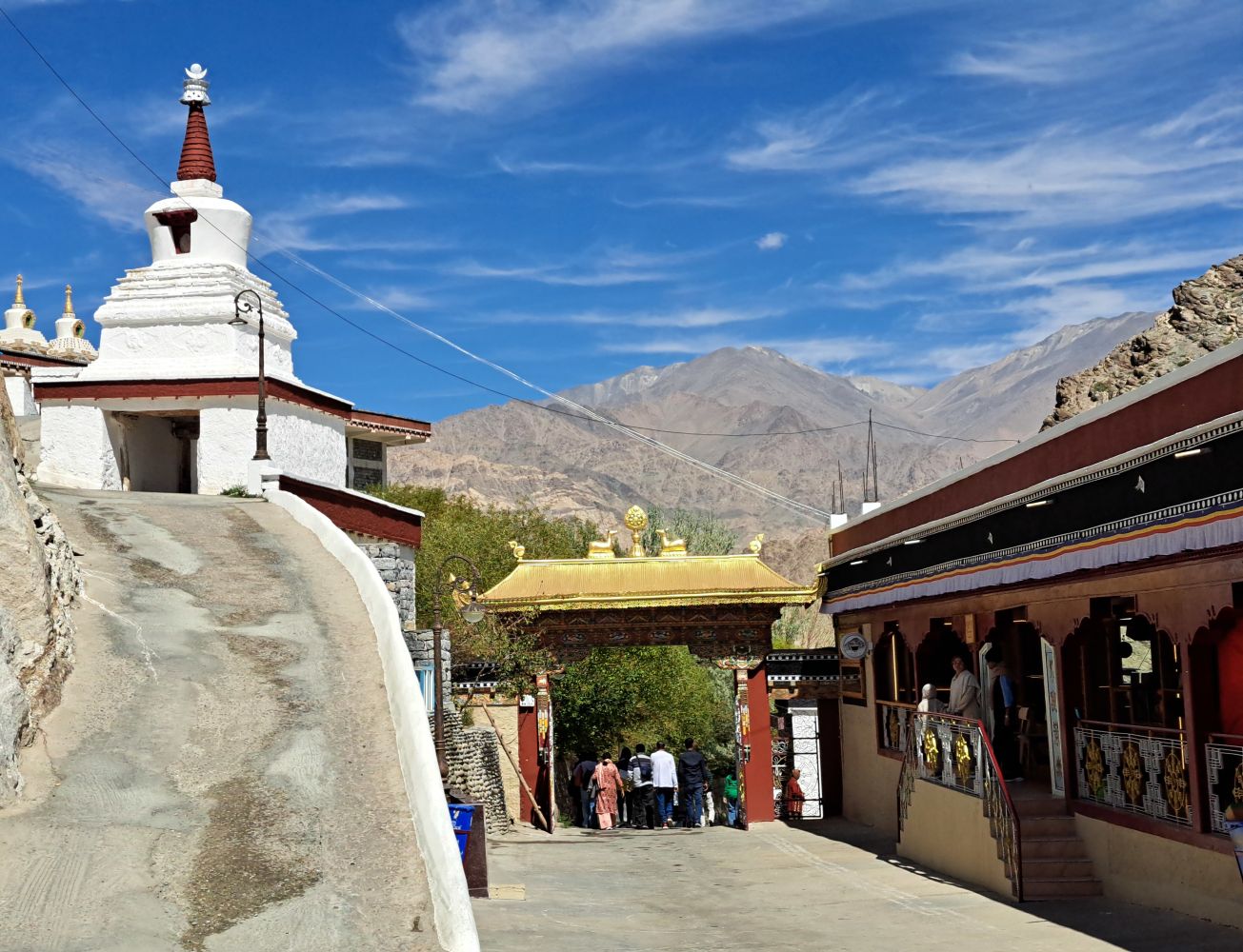
This historic monastery belongs to the Drukpa lineage of Tibetan Buddhism. Nestled amidst the rugged Himalayan mountains, it features whitewashed buildings, wooden balconies, colourful decorations and a spacious courtyard where religious ceremonies take place. Its traditional architecture, colourful prayer flags, ancient Buddhist paintings and peaceful surroundings offer a glimpse into Ladakh’s rich Buddhist heritage.
Hemis Monastery is particularly famous for its annual Hemis Festival, during which monks perform sacred masked dances in honour of Guru Padmasambhava, popularly known as Guru Rinpoche. The festival’s rituals symbolise the triumph of good over evil and attract visitors from different parts of the world.

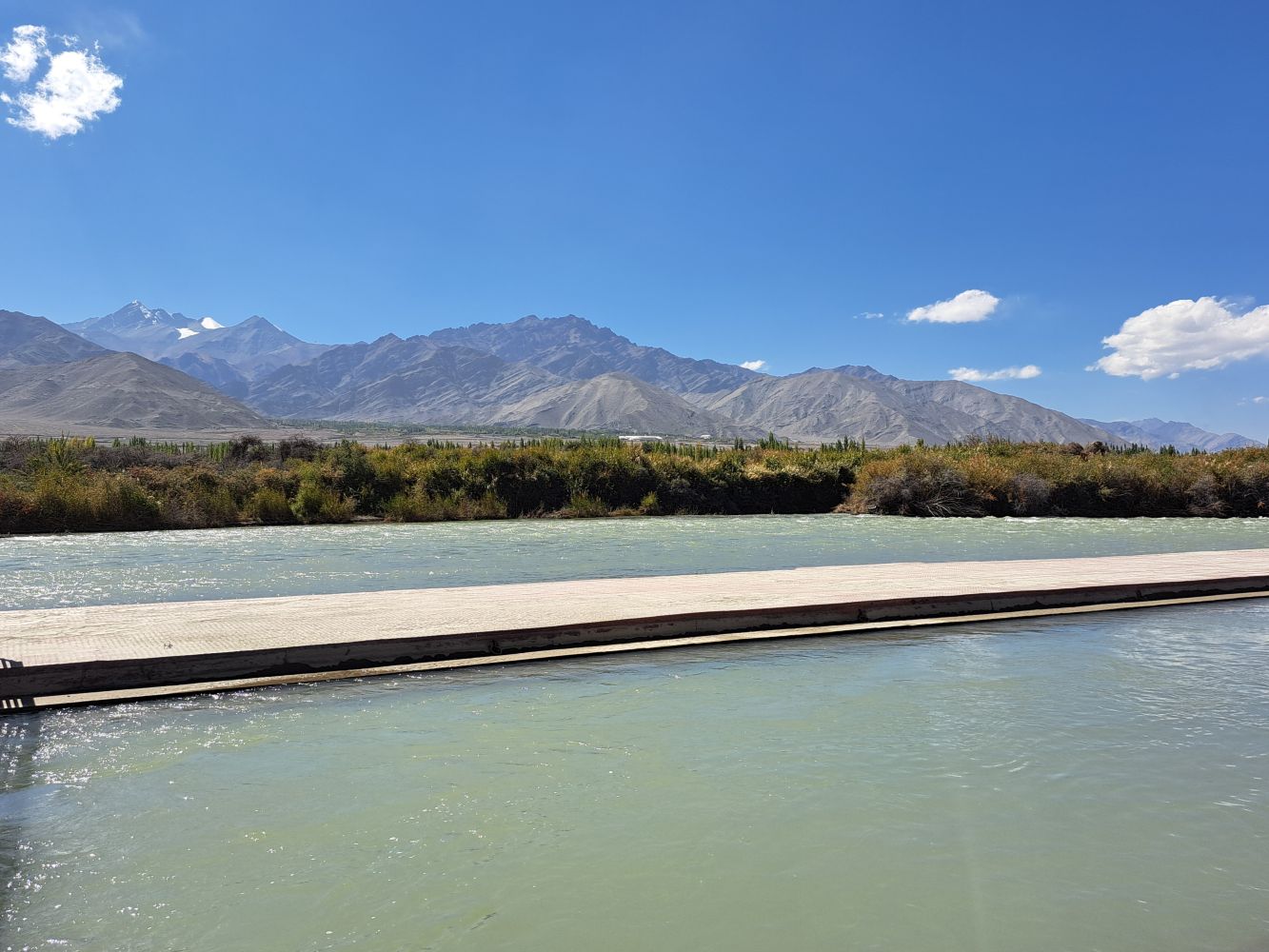
As we continued towards our next destination, Thiksey Monastery, we crossed the Sindhu (Indus) River and took the Leh–Pangong Highway. We headed towards Leh city and all the tourist spot was on the way. It is difficult to put into words the breathtaking views of the valley and the Sindhu River. We stopped near a bridge, just before crossing the river, to take a few photographs and capture the stunning beauty of the Sindhu River and the surrounding valley.
During the journey, our driver shared some interesting information about Ladakh’s economy. He explained that tourism, government services, employment in the defence sector and the academic sector contribute significantly to the region’s economy. Agriculture is also an important part of local life, with barley, wheat, buckwheat and potatoes among the crops cultivated here.
As we continued our conversation and admired the spectacular landscapes along the way, we finally reached Thiksey Monastery, our next destination.

Thiksey Monastery is one of the most striking Buddhist monasteries in Ladakh, situated on a hilltop. The monastery's multi-level arrangement of white, red and ochre buildings resembles the Potala Palace of Tibet. It was established in the 15th century, belongs to the Gelug school of Tibetan Buddhism.
One of the monastery’s greatest attractions is its approximately 15-metre-high statue of Maitreya Buddha, the Buddha of the future. It was created in connection with the 14th Dalai Lama’s visit in 1980. The whitewashed buildings, red and ochre temples, prayer halls and ancient Buddhist paintings reflect the rich cultural and spiritual heritage of Ladakh.
The main monastery complex is uphill from the parking area. You need to walk up a series of stairs and sloping pathways around 5-15 mins to reach the entrance. You need to walk slowly and take breaks if you feel breathlessness.

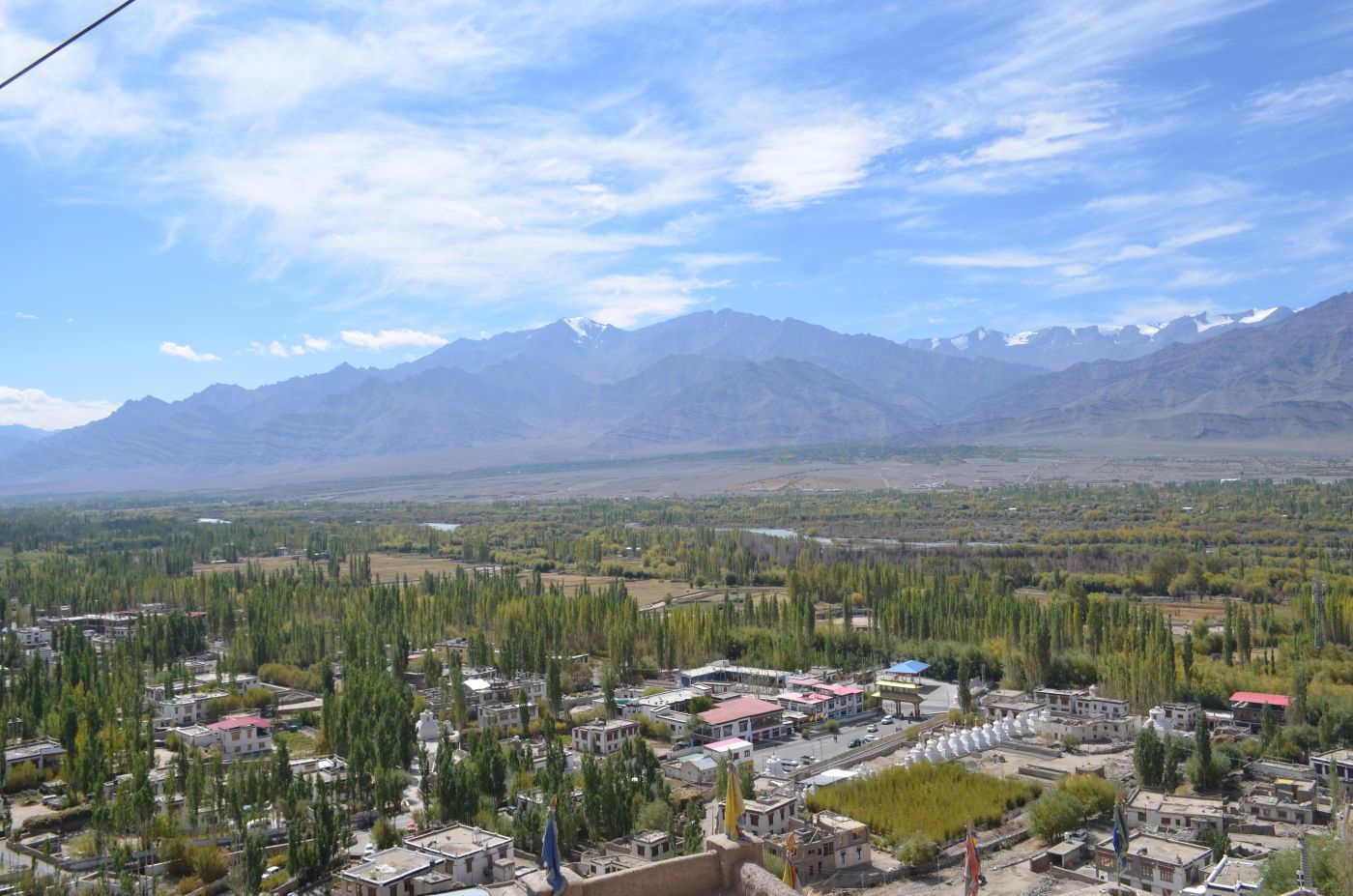
Once you reach the hilltop, you will get to see the sweeping views of the surrounding villages, the Indus Valley and the Himalayan landscape. The setting is especially beautiful for photography.
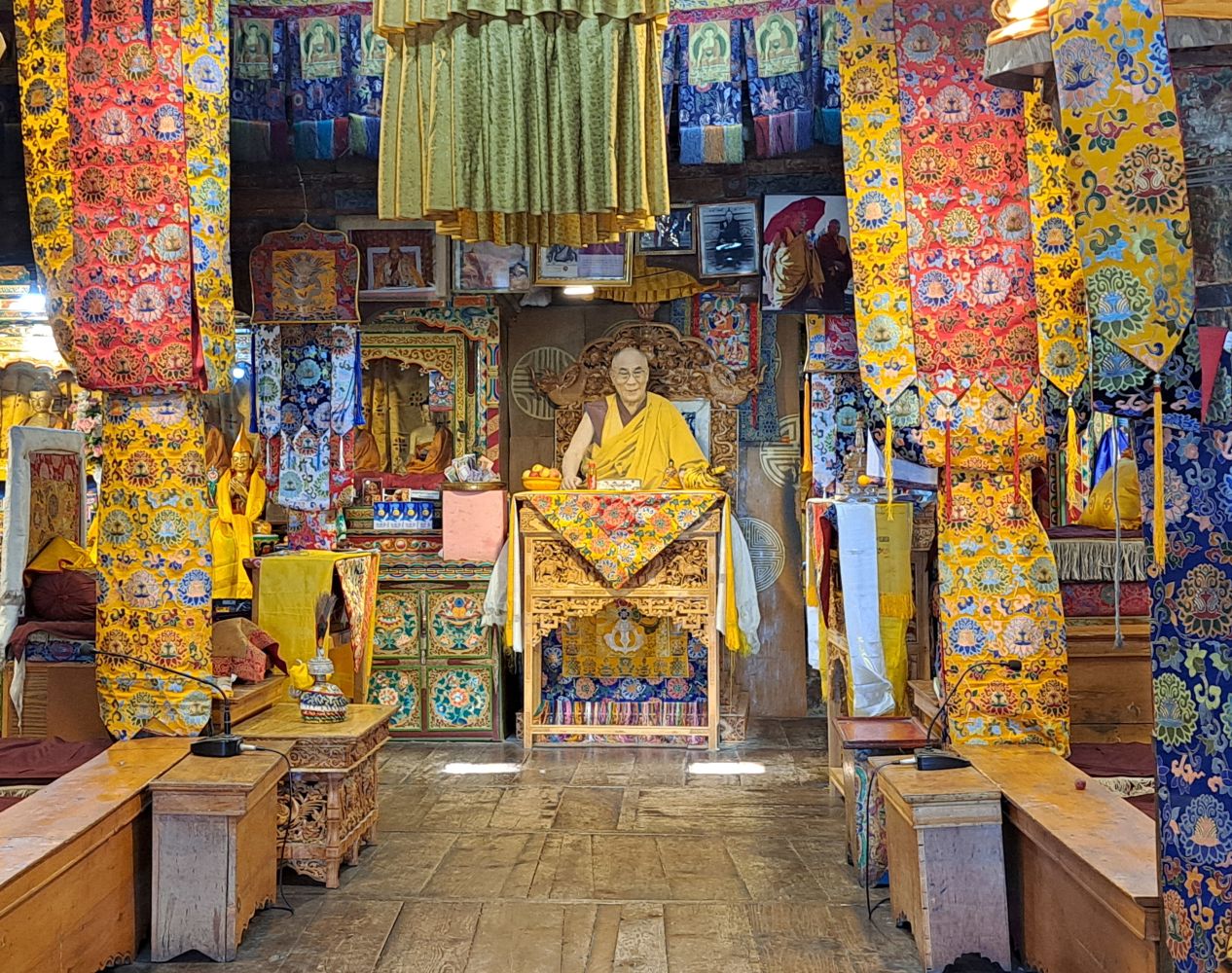
We first visited the temple of Maitreya Buddha, followed by the Dalai Lama Temple. After that, I saw a temple of Mahakala, protector of Dharma, for the first time in my life. I was curious to learn more about this fierce-looking deity in Tibetan Buddhism and came to know that Mahakala is worshipped as the guardian of Buddhist teachings and spiritual practitioners. His fierce appearance symbolises the power to overcome obstacles and negative forces. It was fascinating to discover this aspect of Buddhist beliefs.

The entry fee for both Hemis and Thiksey Monasteries is 50/- per person. After returning to the parking area, we headed towards our next destination, Shey Palace.
Shey Palace is a historic royal palace located in Shey village. Shey was an early capital of Ladakh before Leh became the principal royal seat. Even after the shift to Leh, Shey continued to serve as a summer residence for the royal family.
The present Shey Palace and monastery complex was built in 1655 by King Deldan Namgyal in memory of his father, King Sengge Namgyal, a prominent ruler of the Namgyal dynasty. It was built later than Leh Palace and reflects the royal legacy of the Namgyal dynasty in Ladakh.

Although much of the palace now lies in ruins, its remaining structures offer a glimpse into Ladakh's royal heritage and traditional architecture. The complex features stone and mud-brick walls, wooden beams and flat roofs suited to the region's cold, dry climate. The adjoining temple is particularly famous for its magnificent copper-gilt statue of Shakyamuni Buddha. From its elevated location, visitors can enjoy panoramic views of Shey village, its agricultural fields, the rugged mountains and the Indus Valley.
Throughout our tour, my mother had been experiencing nausea and headaches, which had prevented her from climbing to the top of Thiksey Monastery. However, she was determined to climb up to Shey Palace.

Unfortunately, she was a little disappointed with the visit. Apart from the traditional architecture, the temple and the panoramic views of the village and surrounding mountains, there was not much to explore inside the palace itself. Nevertheless, the visit offered us another glimpse into Ladakh's royal past.
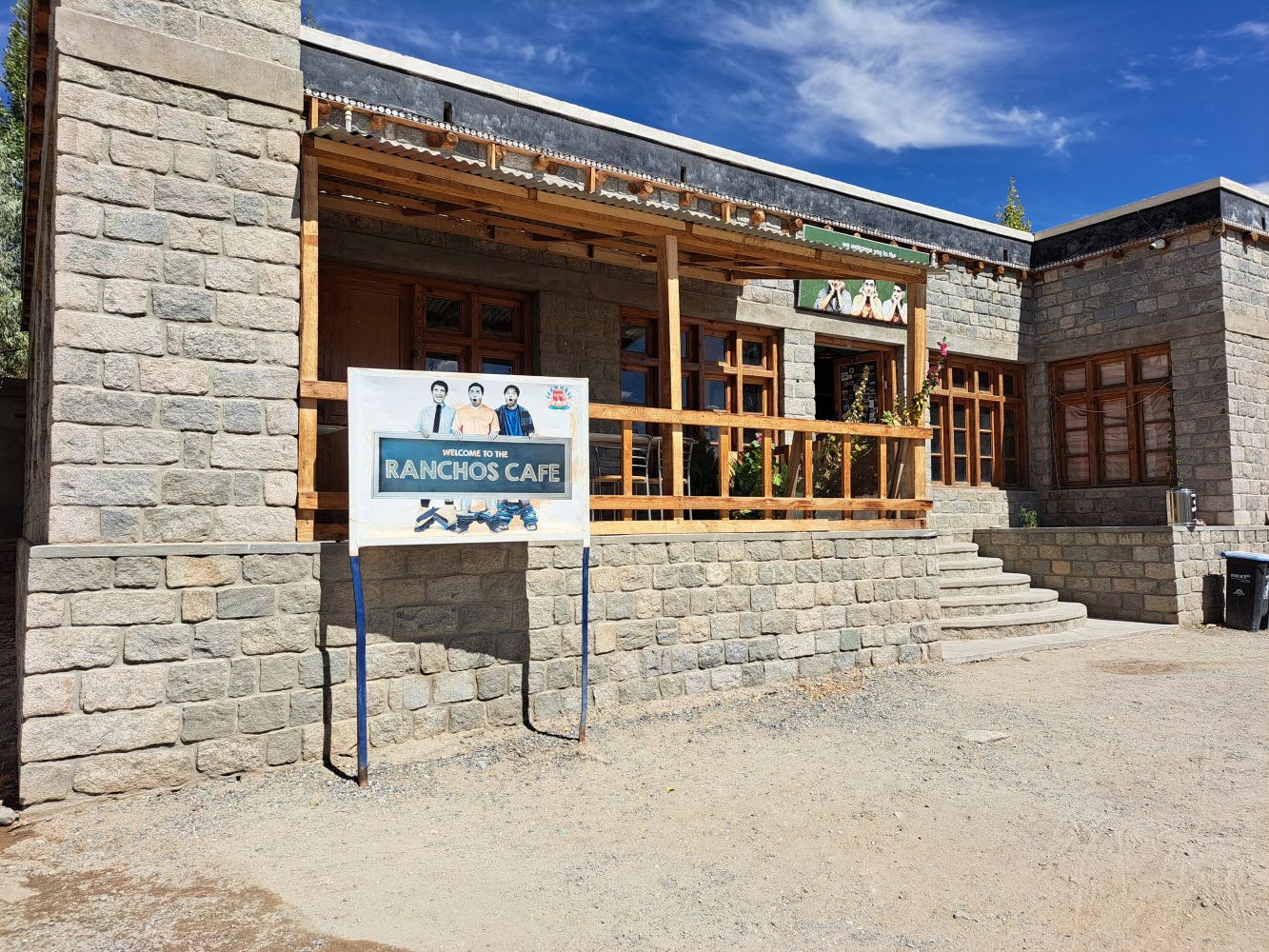
Another site we visited in Shey village was Druk Padma Karpo School, popularly known as Rancho’s School or the 3 Idiots School. The school opened on 24 September 2001 and aims to provide modern education while preserving Ladakhi culture, language and traditions. It became famous after appearing in the 2009 Bollywood film 3 Idiots, making it a popular tourist attraction in Ladakh.
The school administration prioritises students’ privacy and generally does not allow visitors to enter the main school premises without permission.

As we entered the tourist spot, we found shops selling souvenirs such as T-shirts and caps bearing the name Rancho’s School. We also saw the house featured in the film 3 Idiots, where the schoolchildren drop an electric bulb when Chatur urinates against the wall. Visitors take photographs at this spot and relive the memorable scene from the movie. There is also a cafe called Rancho’s Cafe inside the premises, where visitors can relax.
Our next destination was the bank of the Sindhu River, where vehicles were parked along the riverbank. The bank was cemented, with a few steps leading down towards the water.

The Sindhu River had always held a special place in my heart. When I was around four or five years old, I watched Bharat Ek Khoj on Doordarshan, narrated by Girish Karnad. I remember learning about the Sindhu Valley Civilization through the programme, even before reading about it in books. I was particularly fascinated by the part that discussed the decline of the civilization and the possible role of floods in the region. That childhood memory stayed with me over the years, making the experience of finally seeing the Sindhu River in person truly overwhelming.
I helped my son touch the river water. I also stepped into the river barefoot, but I could not stand there for long because the water was so cold that my feet felt as if they were freezing! We took a few photographs by the river, capturing a moment that held a special meaning for me.
We then headed towards our hotel for lunch. But before reaching the hotel, we completed what I considered the most important task of our Ladakh tour, buying an oxygen cylinder to keep with us throughout the trip.
Your travel agency may provide an oxygen cylinder, but we decided to arrange our own as an additional precaution, especially for visits to high altitude places like Khardung La and Pangong Lake. At such altitudes, you never know how your body might react, even if you are otherwise healthy.
My father took Diamox and remained relatively comfortable throughout the tour. However, my mother could not take it because of her reported sulfa allergy, and she experienced nausea and headaches during the trip. I did not take Diamox, and surprisingly, I was the one who eventually needed supplemental oxygen at Pangong Lake, not my elderly parents!
You may find portable, hand-held oxygen canisters for around 500/- and larger oxygen cylinders for approximately 2,500/-, depending on the supplier. In our case, we were told that the larger cylinder could be kept for three to five days.
After lunch, our tour manager advised us to rest for an hour before setting out again. Our next destination was Shanti Stupa, where we would continue exploring the beautiful city of Leh.

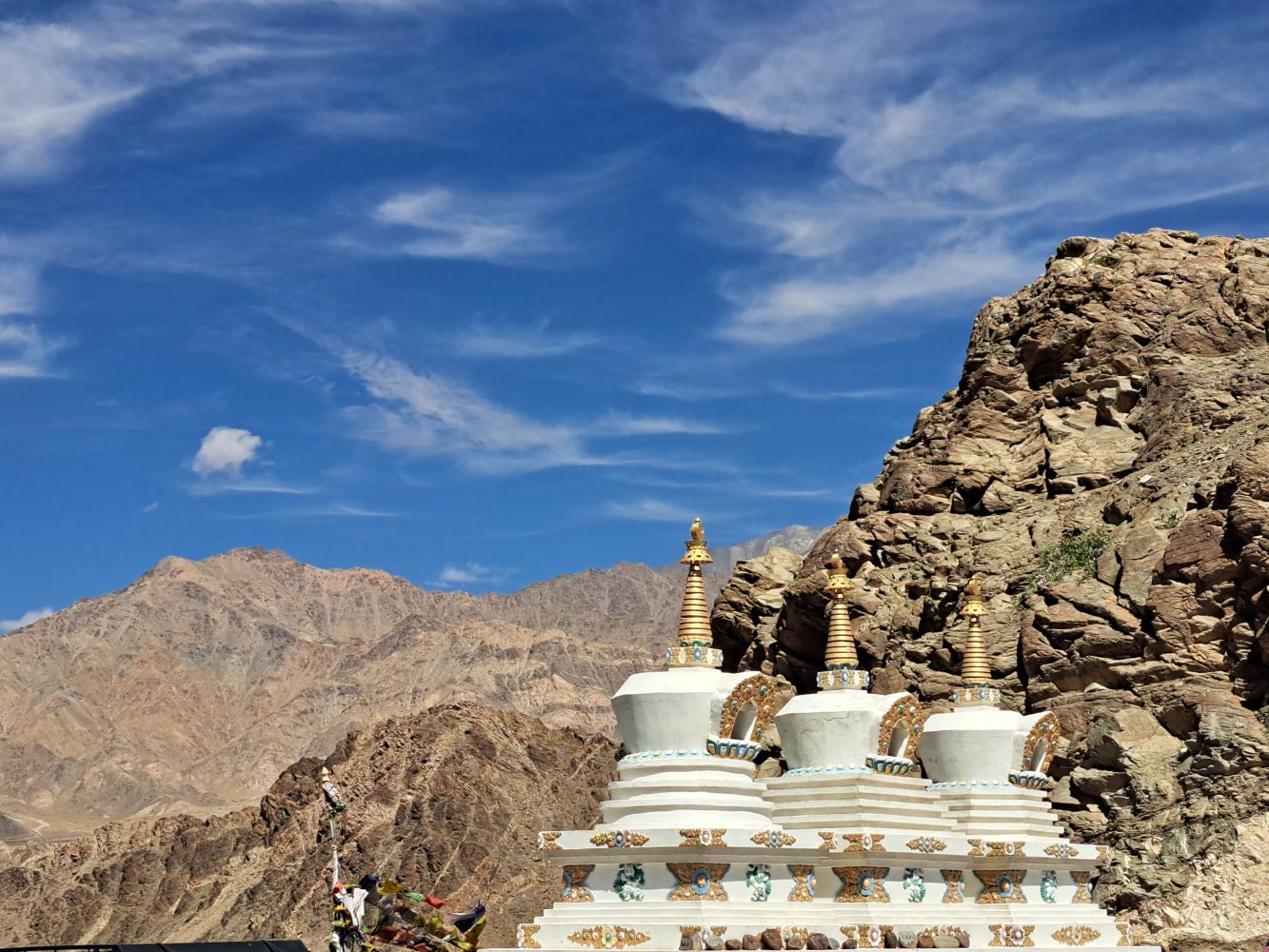
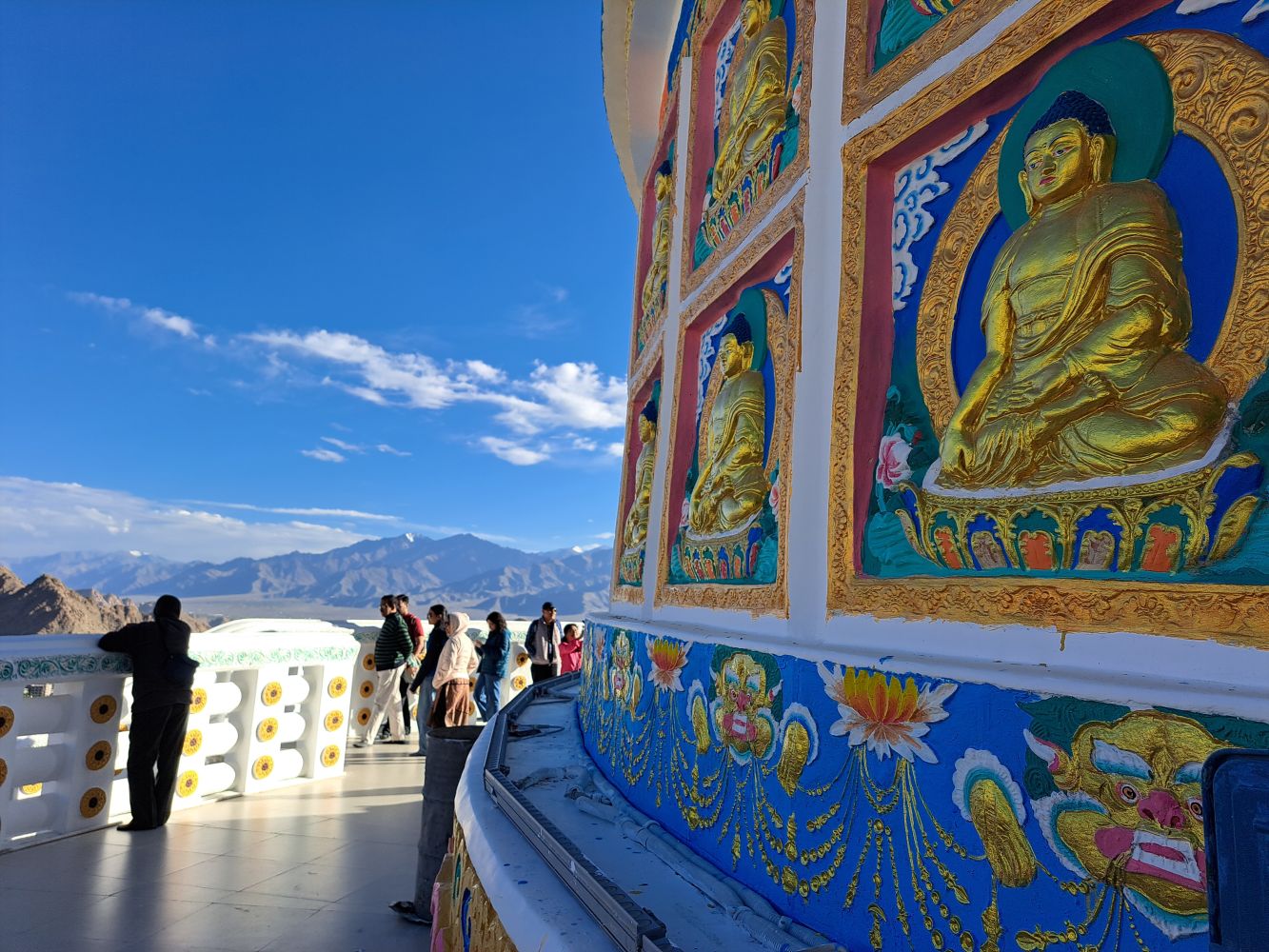
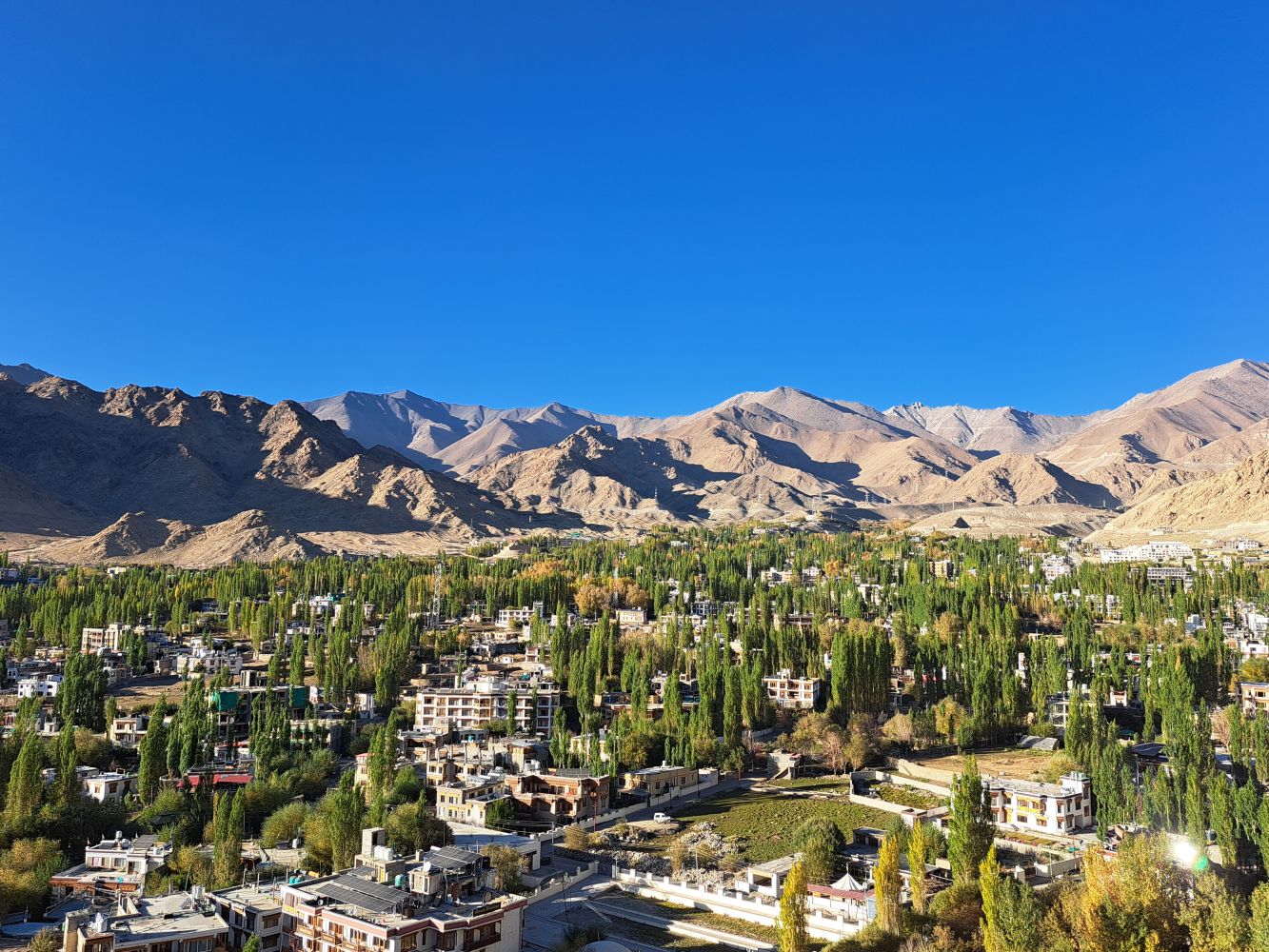
Shanti Stupa is situated on a hilltop in Leh. From the top, you can see the entire city spread out below, surrounded by vast, rugged mountains stretching far into the distance. It was inaugurated by the 14th Dalai Lama in 1991. The project was initiated by Japanese Buddhist monk Nichidatsu Fujii to promote world peace through Buddhist monuments. The stupa was built with the participation of Ladakhi and Japanese Buddhists. It symbolises peace, harmony and the universal message of Buddhism. The stupa also has colourful panels showing important events in the life of Buddha, including his birth, enlightenment and attainment of nirvana.
We reached the stupa in the evening, just in time for sunset. It was a beautiful evening, and we stood admiring the sweeping views of Leh city and the surrounding mountains from the stupa's terrace as the sun began to set.
As the stupa is situated at an elevated location, climbing the steps can be tiring at Ladakh’s high altitude. One of our fellow travellers experienced breathlessness during the visit. So, take your time while climbing and rest whenever needed.
Finally, one of the most exciting moments of our journey arrived. Our driver dropped us off at the Ladakh Festival, and we entered the festival grounds with great excitement.

There was an open-air theatre where a performance had just ended. A few men and women were sitting on the floor, writing something on sheets of paper placed on small, stool like tables in front of them. The theatre was surrounded by stalls selling traditional food.
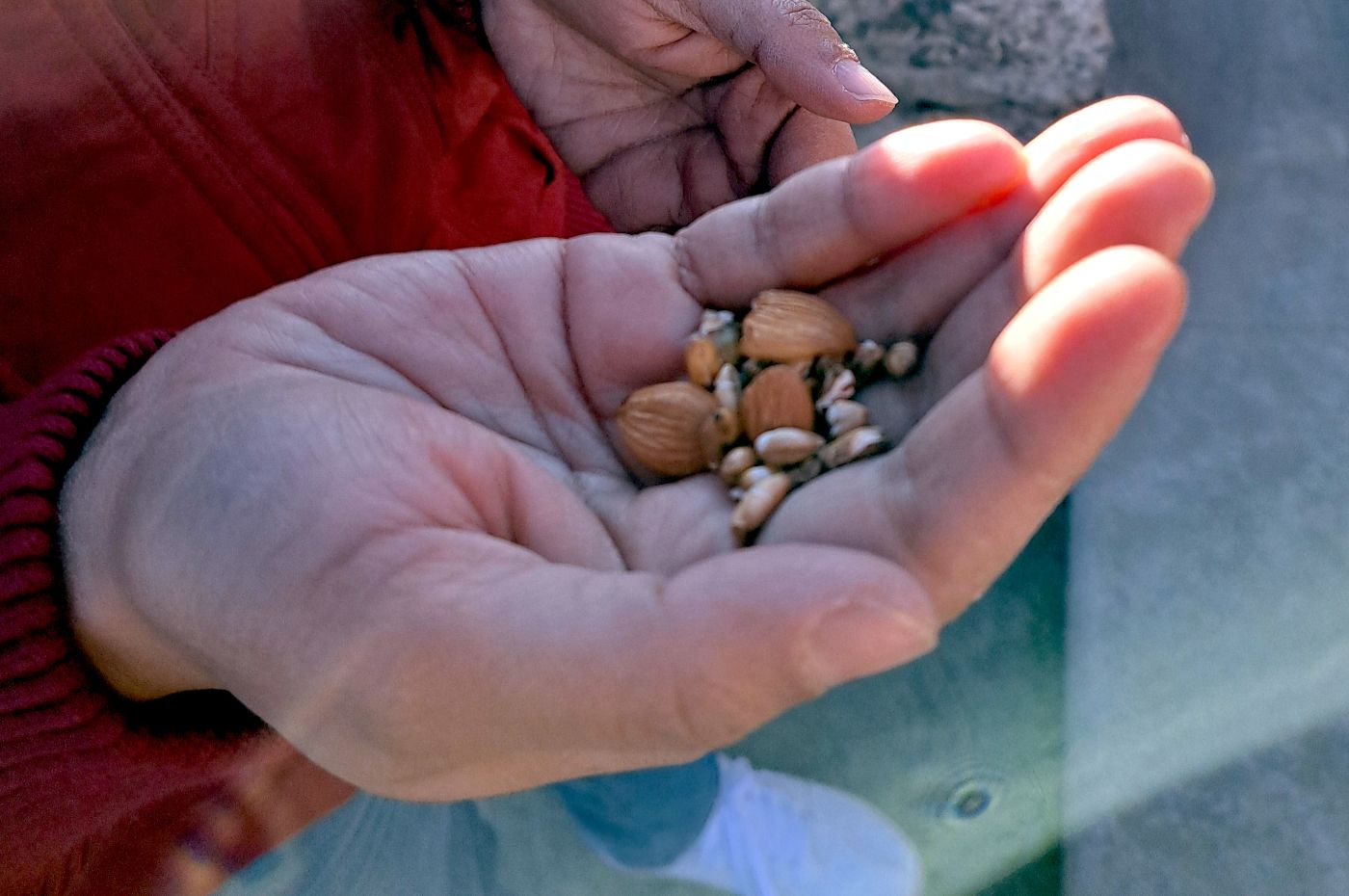
Suddenly, a group of men dressed in traditional attire approached us and offered us a snack made from dry-roasted green gram and almonds. Later, we learnt that offering these snacks was a traditional way of welcoming guests. It was a lovely gesture that gave us a glimpse of Ladakh's hospitality.
Outside the theatre area, there were stalls selling Pashmina shawls and other warm clothing. We spotted a simple shawl without any decorative work and thought of buying it for my grandmother. When I asked the price, the seller quoted 4,500/- and said it was Pashmina. I was a little surprised because Pashmina shawls are often associated with intricate embroidery work. The seller explained that those shawls were not necessarily made from original Pashmina and that genuine Pashmina wool comes from the fine undercoat of the Changthangi goat. Later, we enquired about a similar shawl at another shop, where the price quoted was 13,000/-. I bought a bottle of sea buckthorn juice from an organic shop. Sea buckthorn, sometimes called as the Ladakhi berry, is a hardy shrub that grows in the cold, mountainous regions of the Himalayas. Its orange berries have tangy taste and nutritional value. I was curious to try this local speciality and bring home a taste of Ladakh.

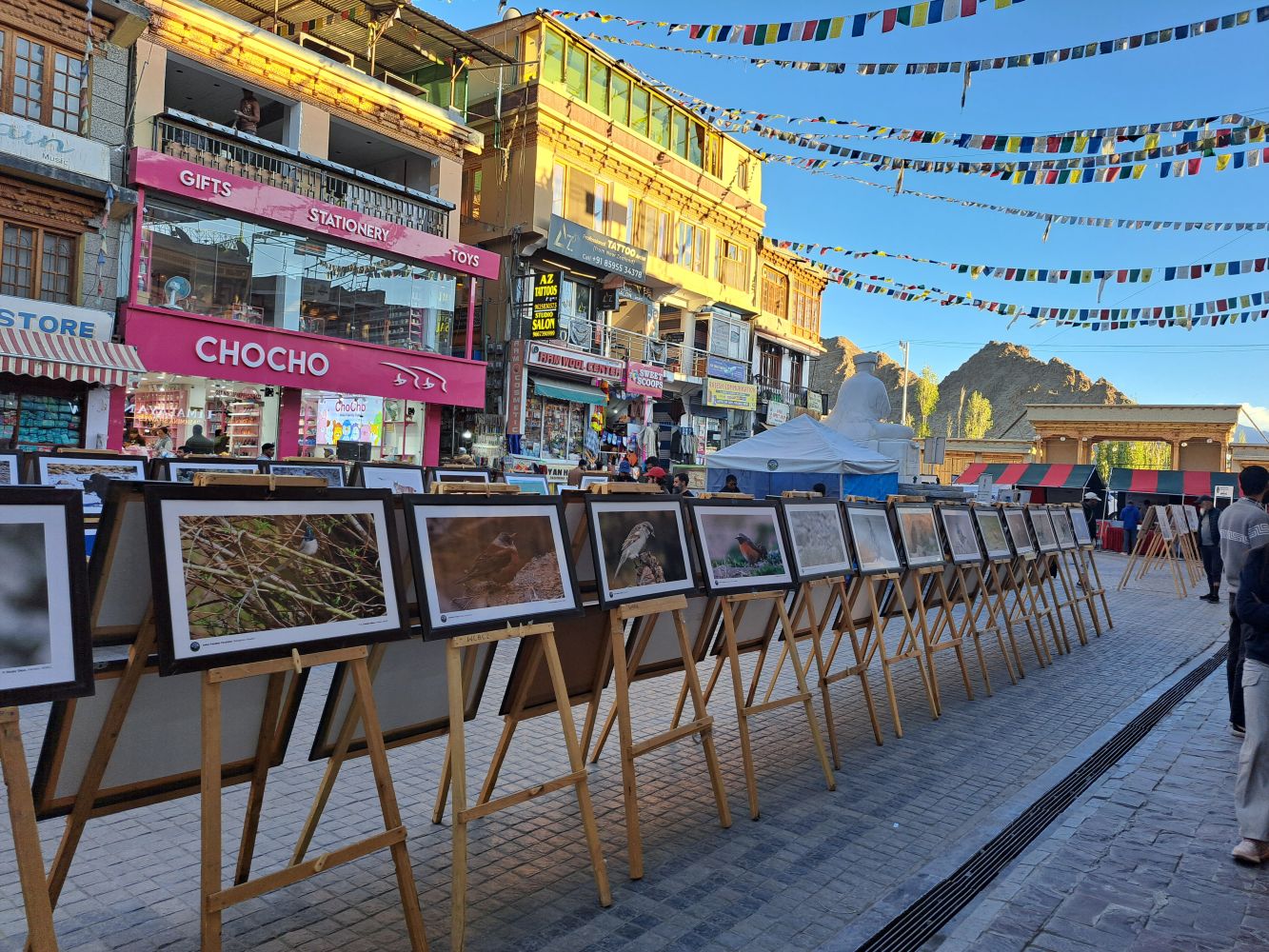
Afterwards, we headed to the Leh market, hoping to find something authentic to Ladakh. However, we found that many of the shops were selling Kashmiri handicrafts and products rather than items distinctive to Ladakh. Many women were sitting along the streets, knitting woollen items and selling woollen caps, socks and mufflers, with prices ranging from 250/- to 350/-. We bought a woollen cap and a pair of socks for my 91 year old grandmother. If you want to buy Ladakh's special yak cheese and apricot jam, Leh Market is the best place to shop for these local products. We also bought a refrigerator magnet as a small souvenir of our visit.
While returning from the market, I noticed a few women dressed in traditional attire hurrying somewhere. When I asked them where they were going, they told me they were heading to the Polo Ground for a performance. I was interested in watching it, but my parents were already very tired and did not want to go any further. So, we returned to the hotel for the night, missing the opportunity to witness the performance.
This concludes our local sightseeing tour of Leh. The following day, we began our journey to Khardung La Pass, followed by Nubra Valley, Turtuk village and Pangong Lake. After completing this tour, we returned to Leh. The next day, we headed to Kargil for a two-day, one-night trip before returning to Leh once again. These journeys will be described in separate sections of this travelogue.
On our rest day, before bidding farewell to Ladakh the following day, we visited a few places in Leh that had not been covered during our local sightseeing tour and explored some local Ladakhi cuisine. These final experiences gave us another opportunity to appreciate the region’s culture, food and charm. I will cover these experiences in this section of the travelogue before concluding our journey through Leh.
Our rest day tour began with a visit to the Hall of Fame in Leh, a museum maintained by the Indian Army to honour the courage, sacrifice and achievements of soldiers who served during the Kargil War and in the challenging high-altitude terrain of Ladakh.
We entered a room on the right side of the museum, where an Indian Army personnel was explaining the events of the Kargil War in front of a replica of the hills and mountain peaks where the war had taken place.
However, what touched me most deeply were the letters written by soldiers to their families. These letters had been preserved in frames and displayed in the room. Behind every letter was a soldier who had loved ones waiting for him at home, perhaps hoping that he would return safely. Many visitors around me were in tears as they read the letters. It was difficult to hold back one’s emotions while thinking about the love soldiers carried for their families while serving the country and the dreams that remained unfulfilled.
The Army personnel then narrated the tragic story of a very young soldier who, shortly after completing his training, was posted to the Siachen border and lost his life in an avalanche.

The museum also showcases the history of military operations, weapons, military equipment and exhibits that highlight the difficult conditions in which the Indian Army operates. Outside the museum, there is a tower where diyas are lit in memory of the soldiers who sacrificed their lives for the country. In front of the tower, there is a gallery where a light-and-sound show is also held.
Every soldier remembered here had a life, a family and dreams of their own. Their courage reminds us that the peace and security we enjoy come at a price that many families have paid with the loss of someone they loved. Their sacrifices should always be remembered with pride, gratitude and the deepest respect.

We decided to go out for lunch, as I had planned to explore authentic Ladakhi cuisine during our stay in Leh. Almost everyone recommended Naamza, which is known for serving popular Ladakhi food. However, our driver, who had accompanied us throughout our Ladakh tour, suggested a newly opened rooftop restaurant called Mila Cafe. He told us that they served homemade-style, authentic Ladakhi food. I checked its online ratings and found that it had a perfect 5/5 rating. That convinced me to give it a try, and we decided to visit Mila Cafe.
I must take a moment to mention our driver, who was extremely helpful and considerate throughout the journey. When I needed oxygen at Pangong Lake, he was called for assistance with operating the oxygen cylinder. He came immediately and assured us that we could call him anytime during the night if I needed oxygen again. His sense of responsibility made us feel safe and reassured.
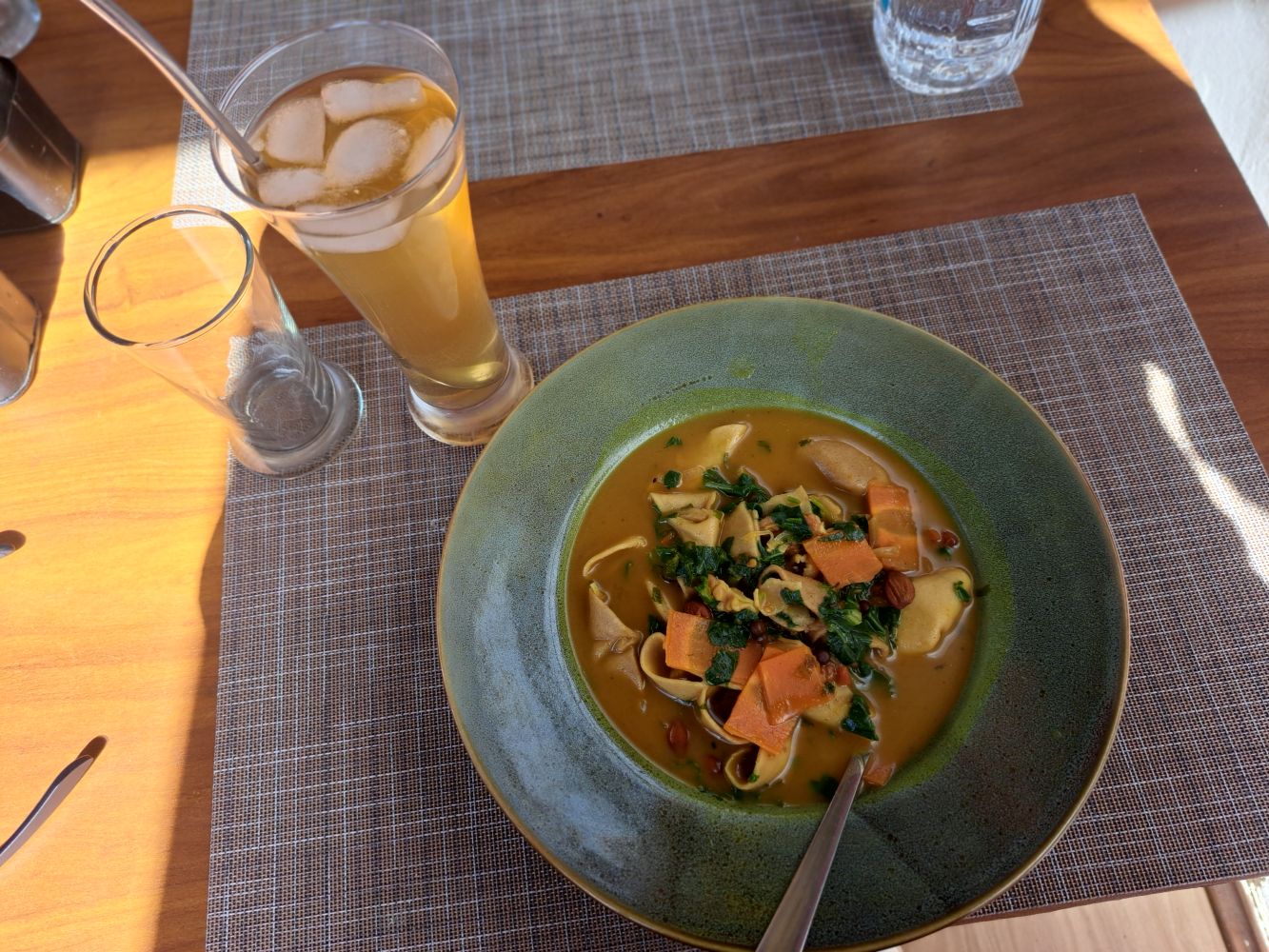
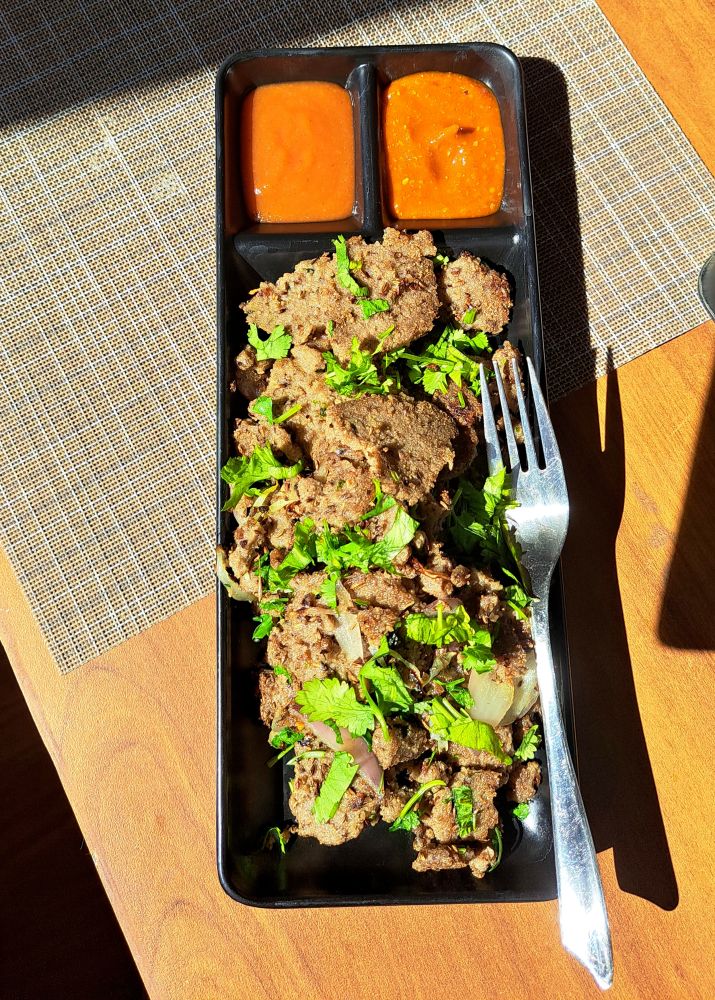
At the restaurant, we ordered Chutagi, Paba with Dangthur, and Zhandang Fry. Chutagi is a traditional Ladakhi dish made of dough pieces cooked in a thick, flavourful vegetable stew. Paba is prepared using buckwheat flour and is traditionally eaten with Dangthur, a preparation of curd or buttermilk. Zhandang Fry is a local Ladakhi preparation made by frying zhandang, a regional ingredient.

We thoroughly enjoyed the meal, along with the beautiful rooftop views and the pleasant ambience of the restaurant. Every dish was delicious, and we were happy to have tried these local specialities. However, the combination of Paba and Dangthur was my personal favourite. It was a wonderful opportunity to experience the flavours of traditional Ladakhi home style cooking.
We then moved on to Leh Palace. Leh Palace is a nine-storey structure that offers a glimpse into Ladakh's royal past and traditional architecture. The entry fee is 25/- per person, and Leh Palace is open from 7:00 AM to 4:00 PM.

The palace was built in the 17th century by King Sengge Namgyal of the Namgyal dynasty. Constructed using traditional materials such as stone, mud and timber, it reflects the architectural style adapted to Ladakh's harsh climatic conditions.
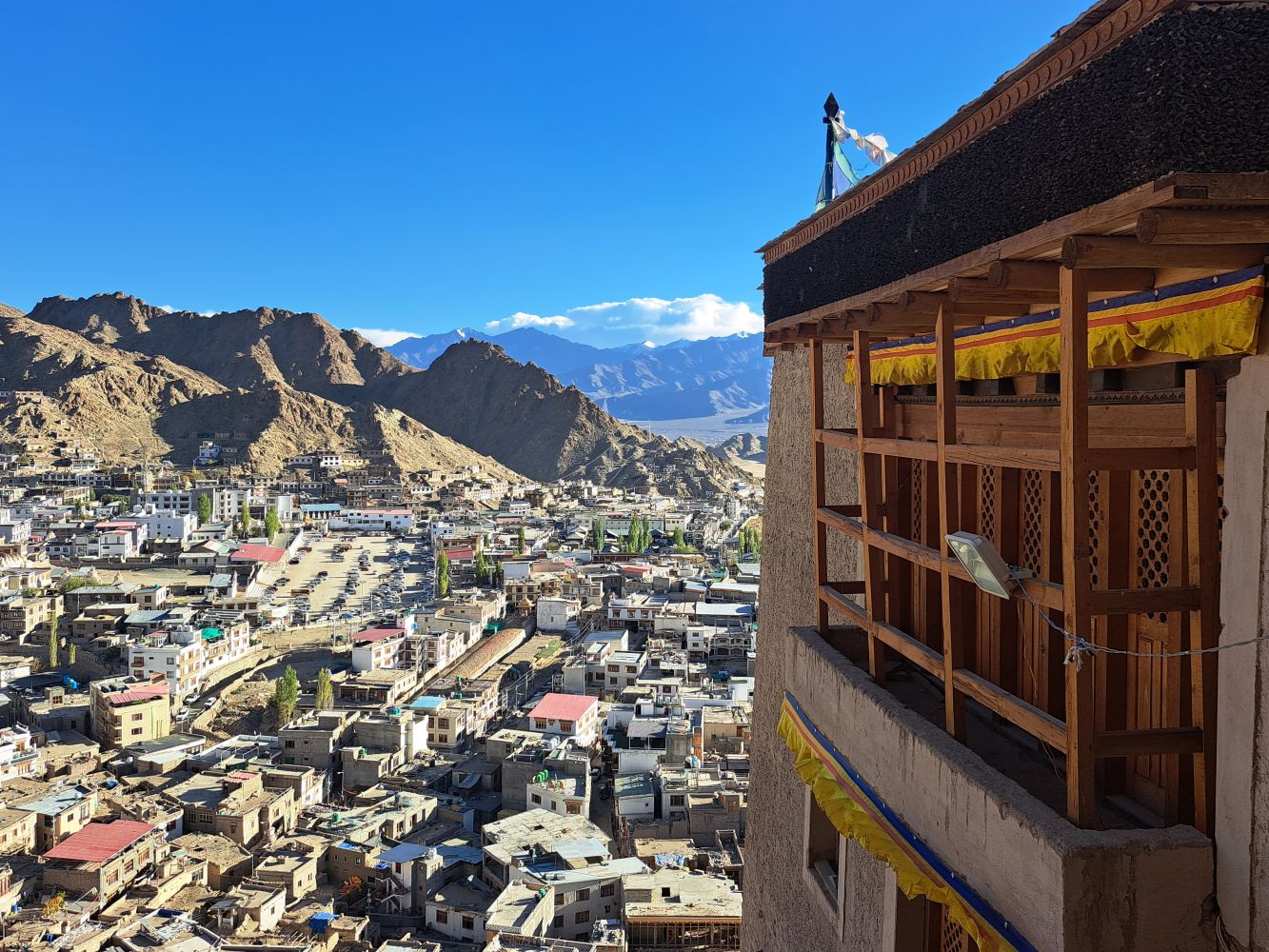
The palace had more than 100 rooms. Although parts of the building now lie in ruins, its remaining rooms and corridors preserve memories of its royal past. The fourth floor houses the main entrance and administrative area. A museum displaying royal artefacts, paintings, jewellery and other historical objects is also located on the same floor. A Buddhist prayer room is located on the fifth floor, while the sixth floor once housed the main living quarters of the King and Queen, along with a large kitchen. There is also a room where a 15-minute video presentation explains the royal history and architecture of the Namgyal dynasty. The uppermost level contains a small shrine, while the rooftop offers spectacular panoramic views of the old town of Leh, the surrounding mountains and the vast landscape.
Walking through the palace corridors gave us a glimpse of the royal life that once existed within these walls. However, by the time we reached the sixth floor, my mother was experiencing severe breathlessness. She was unable to walk further, and we did not have any oxygen with us. A young woman who was visiting the palace and happened to be in the video room offered her some camphor. My mother was initially hesitant to use it but eventually accepted it and felt some relief. After resting for a while, she regained enough strength to climb to the ninth floor.
We were all mesmerized by the view from the top. The entire landscape looked like a beautiful painting spread out before us. I spent some time admiring the view and taking photographs, trying to capture as much of it as I could. At the same time, I felt a little sad knowing that the very next day we would have to leave this beautiful place.
You can visit the nearby Namgyal Tsemo Monastery in the evening to enjoy the beautiful sunset views over Leh and the surrounding mountains.

After returning to the hotel, I mentioned to our tour manager that one of my wishes had remained unfulfilled during the Ladakh trip: trying butter tea. Unfortunately, it was not served at our hotel. Our tour manager kindly requested the hotel owner to arrange some for us. The owner's wife graciously prepared a flask of butter tea, which was served in beautifully decorated Chinese-style cups. I enjoyed the warm tea so much in the chilly weather that I ended up having two cups.
I wasn't sure whether I would ever return to Ladakh, but I knew that I would miss much more than its scenic landscapes and mountains. I would miss the overall vibe of the place, something I had gradually become attached to during our stay.
I would miss the peace, the simplicity and the warmth of its people. I would remember the smile of that elderly man, perhaps around 70 years old, carrying a heavy load on his back while walking along the mountain road for nearly two kilometres. I would remember the hospitality extended to complete strangers, the kindness of people who went out of their way to help, and the simplicity of everyday life.
There was something remarkably genuine about Ladakh. Nothing felt artificial, neither the surroundings nor the behaviour of its people. Life seemed free from the constant rush, competition and complexities that have become so much a part of city life. There was a sense of peace and simplicity that I rarely experience in an urban environment.
Perhaps this was what I had become so attached to. It wasn't just Ladakh's breathtaking beauty; it was the way the place made me feel. And that was something I knew I would carry with me long after leaving its mountains behind.
With this, I conclude the Leh chapter of our Ladakh journey. But there is much more to share about our Ladakh experience. I will take you through our journeys to Nubra Valley, Turtuk village and Pangong Lake in Part 2, followed by our Kargil trip in Part 3 of this travelogue.